Newgrange Winter Solstice: How Sunlight Fills a 5,000-Year-Old Tomb
Newgrange in Ireland was built around 3200 BC so that solstice sunrise lights its inner chamber. How the roof box works, who built it and how to visit.
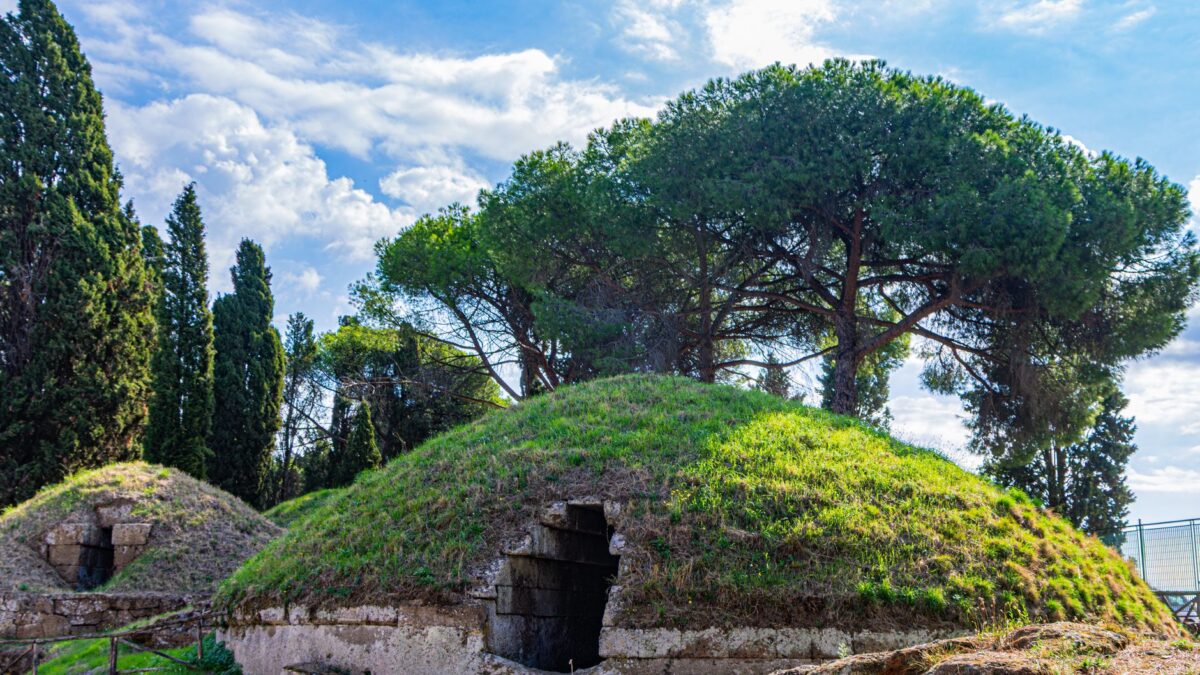
Newgrange is a Neolithic passage tomb in the Boyne Valley of County Meath, Ireland, built around 3200 BC, which makes it more than 5,000 years old and older than both Stonehenge and the Great Pyramid of Giza. Its builders aligned it so that on the mornings around the winter solstice, December 21, the rising sun shines through an opening above the entrance and lights the floor of the inner chamber for roughly 17 minutes. For the rest of the year the chamber stays dark.
What is Newgrange?
Newgrange is a large circular mound of earth and stone with a long passage leading to a burial chamber at its center. The mound is about 280 feet (85 meters) across and roughly 40 feet (12 meters) high. A ring of 97 large kerbstones lies around its base, many of them carved.
The tomb is the best known of three great mounds in a bend of the River Boyne, along with Knowth and Dowth. Together with dozens of smaller monuments, they form Brú na Bóinne, which UNESCO listed as a World Heritage Site in 1993.
The people who built Newgrange were farmers. They raised cattle, grew cereals and made pottery, and they had no metal tools and no writing. Moving and shaping the stones took organized work by a large community over many years.
How does the solstice sunlight reach the chamber?
The light enters through a roof box, a rectangular stone opening set above the doorway. The passage is about 60 feet (19 meters) long and climbs gently uphill toward the chamber, so the floor at the back sits higher than the entrance. A beam coming through the door alone would hit the passage floor long before it reached the end. The roof box lets the low sun of a December dawn shine over that rise and along the passage.
A few minutes after sunrise, a narrow band of light moves up the passage and onto the chamber floor, widens, and then shrinks back as the sun climbs. The whole event lasts about 17 minutes. It happens on several mornings around the solstice, roughly December 18 to 23, because the sun’s rising point barely moves along the horizon in those days. Cloud often blocks it completely, which is common in an Irish December.
Archaeologist Michael J. O’Kelly, who excavated Newgrange between 1962 and 1975, saw the chamber light up at the solstice in 1967 and confirmed that the roof box had been built for that purpose.
What is inside the tomb?
The passage ends in a cross-shaped chamber with three side recesses. Large shallow stone basins sit in the recesses, and excavators found burned and unburned human bones in and around them, along with grave goods such as beads and pendants. Newgrange held the remains of a small number of people, which suggests it was reserved for a few important individuals or used for ceremonies as well as burial.
The chamber roof is a corbelled vault about 20 feet (6 meters) high. Each layer of flat stones overhangs the one below until a single capstone closes the top. Grooves cut into the stones carry rainwater away, and the chamber has stayed dry for more than 5,000 years.
What do the carved spirals mean?
The carvings at Newgrange are some of the best known examples of megalithic art in Europe, but nobody knows what they meant to their makers. The entrance stone in front of the doorway is covered with spirals, lozenges and curved lines, and its triple spiral has become a symbol of Ireland. Some researchers read the spirals as the sun or the passing of seasons. Others treat them as abstract patterns. With no written records from the period, every reading is a guess.
The builders also brought stone from far away. The white quartz found around the entrance is thought to come from the Wicklow Mountains, well to the south, and many kerbstones are greywacke brought from the coast. The bright quartz wall seen at the front today is a modern reconstruction based on O’Kelly’s interpretation, and some archaeologists dispute how the original façade looked.
How old is Newgrange compared with other ancient sites?
Radiocarbon dating puts construction at around 3200 BC, several centuries before the main stone phase of Stonehenge and roughly 500 years before the Great Pyramid. Farming communities elsewhere were building and baking in the same era: a find of 5,000-year-old loaves of bread preserved by fire in Türkiye comes from a similar stretch of history.
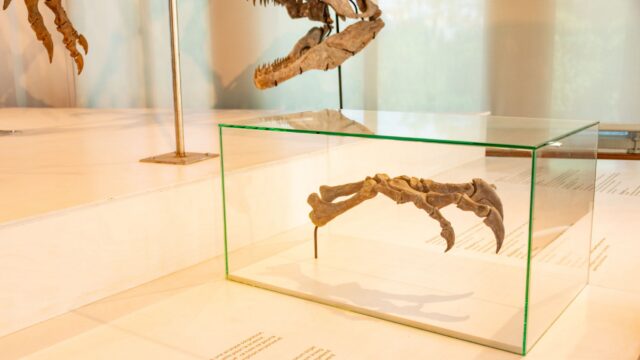
By the standards of human evolution, though, Newgrange is recent. The fossil skeleton known as Lucy, who walked upright 3.2 million years ago, predates it by a vast margin.
Can you visit Newgrange?
Newgrange is open to visitors, but only on guided tours that start at the Brú na Bóinne Visitor Centre near Donore. A shuttle bus takes visitors to the monument, and the tour includes a walk into the chamber, where guides switch off the lights and use an electric lamp to recreate the solstice beam. Tours fill up quickly in summer.
The real solstice sunrise is a different matter. The chamber holds only a small group, so places for the solstice mornings are given out by a free annual lottery run by the Office of Public Works, which manages the site. Thousands of people enter each year and only a handful win. Anyone can stand outside the mound on solstice morning, and the event is often streamed online.
Quick answers
Is Newgrange older than the pyramids?
Yes. Newgrange dates to around 3200 BC, which is about five centuries older than the Great Pyramid of Giza and older than the stone circle at Stonehenge.
What time does the sunlight enter Newgrange?
The beam enters shortly after sunrise, around 9 a.m. Irish time in late December, and lasts about 17 minutes if the sky is clear.
Who built Newgrange?
Neolithic farming communities of the Boyne Valley built it about 5,000 years ago. Their names, language and beliefs are unknown because they left no writing.
Was Newgrange a tomb or a temple?
Archaeologists call it a passage tomb because it held human remains, but its solstice alignment and its size suggest it also had a ceremonial role tied to the turning of the year.