Archaeologists Find 28 Gallic Coins and a Skull at Iron Age Site
Inrap archaeologists in France found 28 Gallic coins, a small metal wheel and skull fragments in a timber building that may be a Leuci sanctuary.
Archaeologists in north-eastern France have found 28 Gallic coins, a miniature metal wheel and fragments of a human skull in the remains of a timber building from the Late Iron Age, more than 2,000 years old. HeritageDaily, citing the French National Institute for Preventive Archaeological Research (Inrap), reported that the building may have been a sanctuary of the Leuci, a Gallic people of the region.
The finds came from preventive excavations near Bure, in the Meuse department, carried out ahead of the Cigéo deep geological storage project.
What the team found at Bure
Little of the building survives. Four large postholes mark where a timber structure of about 7.5 by 5.5 metres once stood. Each post sat in a pit roughly one metre across and more than 80 centimetres deep. The posts appear to have leaned slightly inwards, which the archaeologists suggest could mean the building tapered, perhaps like a pyramid or prism. The structure dates to the Late La Tène period, towards the end of the Iron Age.
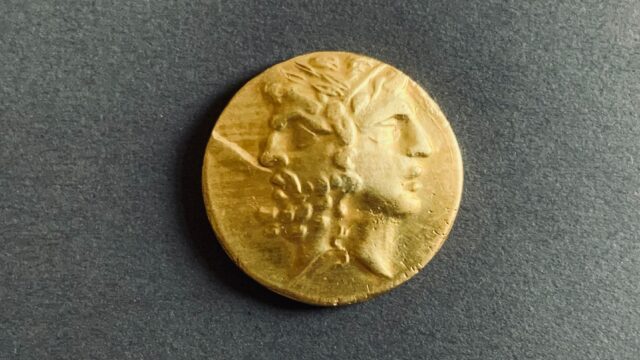
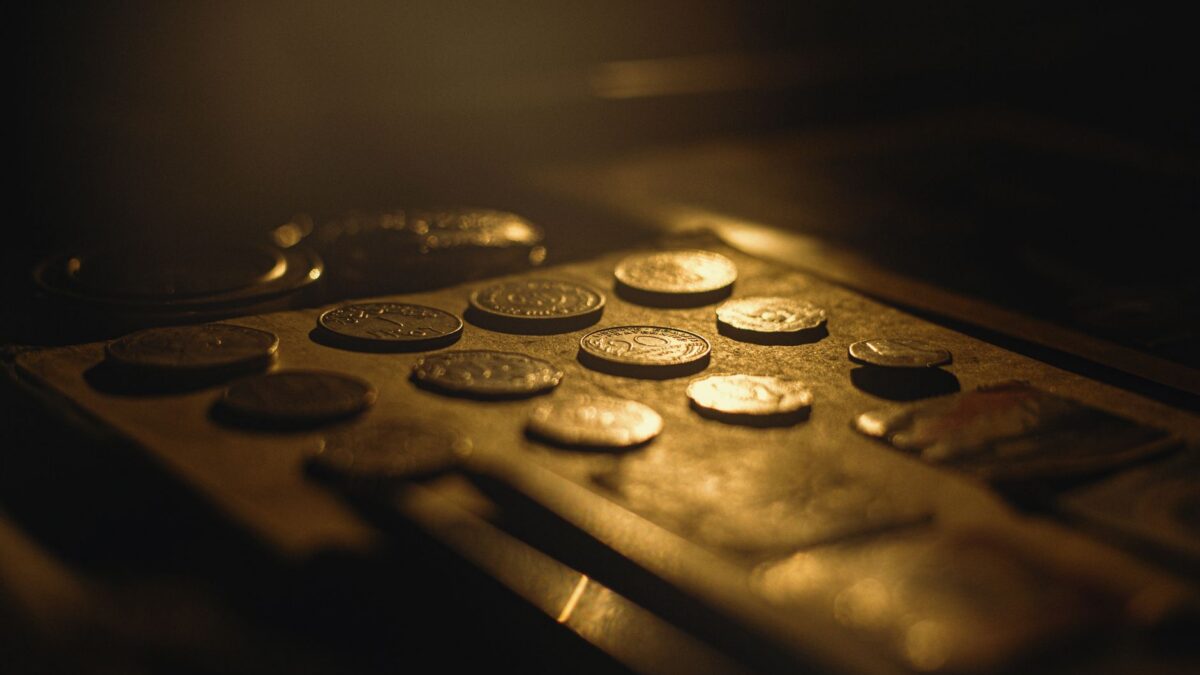
A small pit along one of the longer sides held the 28 coins. They are potins, a type of coin made by pouring molten metal into moulds rather than striking it between dies. Several of the Bure coins still show marks from casting. Their design shows a stylized human head that derives from portraits of Philip II of Macedon, father of Alexander the Great, which Gallic engravers gradually made more abstract. Many also carry what has been read as a boar-shaped military standard above a small symbol resembling a fleur-de-lis or an inverted letter T.
A miniature metal wheel about five centimeters across lay with the coins. Small wheels like it turn up in votive contexts elsewhere (places where offerings were left) and have been read as amulets or offerings, though their exact meaning is uncertain. Other coins came from nearby postholes, so the deposits were not limited to one pit.
At another corner, a posthole contained human bone, including pieces of skull and part of a lower jaw.
Why archaeologists think of a sanctuary
Human skulls have been documented at Iron Age sanctuaries elsewhere in Gaul, sometimes in ritual deposits or displays. That adds weight to a ceremonial reading of Bure. Human remains also occur in ordinary settlements, though, and Bure lacks features seen at better understood Gallic sanctuaries. At Gournay-sur-Aronde and Ribemont-sur-Ancre, large ditches marked the edges of sacred areas.
No enclosure has been found at Bure. A geophysical survey about a month after the excavation showed no ditch, fence or palisade, although erosion may have erased shallower features.
According to Inrap, a sanctuary with a substantial coin deposit from a documented archaeological context would be unprecedented in Leuci territory and exceptionally rare in Belgic Gaul. The oppidum (fortified town) of Boviolles, regarded as the main center of the Leuci, lies about 20 kilometers to the north. The borders of the neighboring Remi and Lingones were around 15 kilometers to the west and south.
How sure is this?
The sanctuary idea is a hypothesis. The building’s original purpose remains uncertain, and Inrap is keeping the interpretation open. The evidence is a set of objects in a structure with no identified enclosure, and the sources do not report dates for the coins or the bone beyond the Late La Tène period. The reports do not mention peer-reviewed publication.
What comes next
Further study of the coins, wheel, human remains and building may show whether these were separate deposits or parts of one ritual practice. The excavation was scientifically led by Luc Sanson of Inrap and supervised by the Grand Est Regional Archaeology Service.
Source: HeritageDaily
Site editor: Nikita Sheikin