Asteroid 1995 BJ4 Grows a Tail and May Be a Record Comet
Asteroid 1995 BJ4 in the main belt has grown a tail, and astronomers are debating whether it is a record-size comet or the result of a collision.
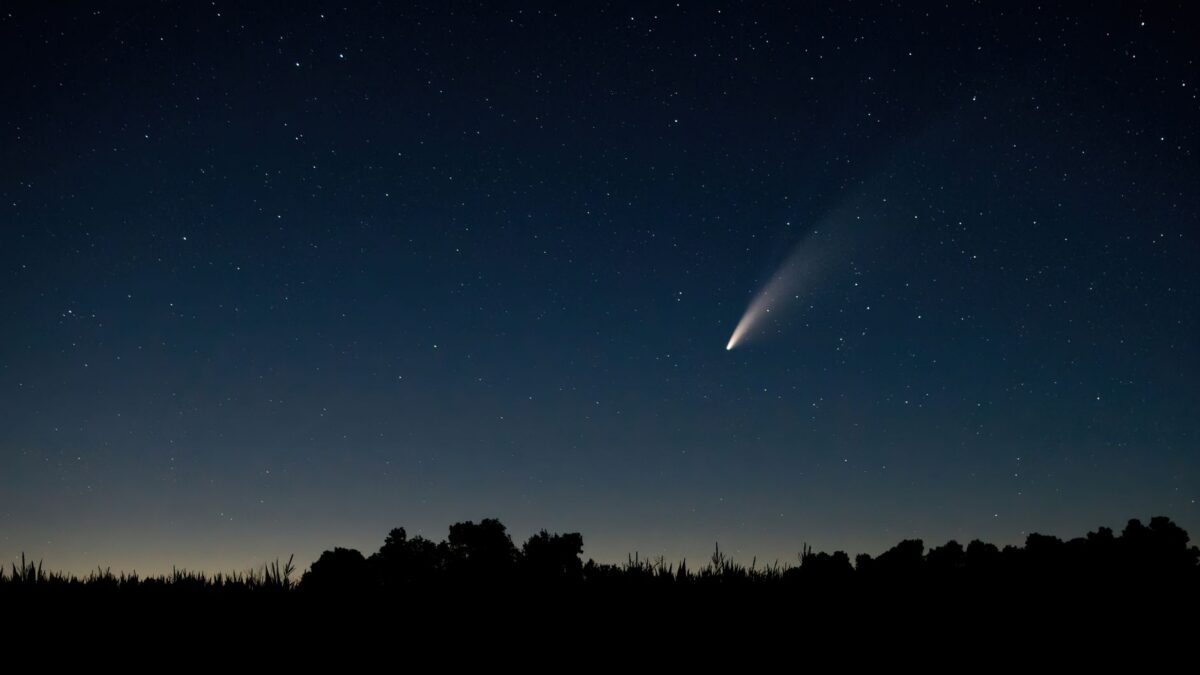
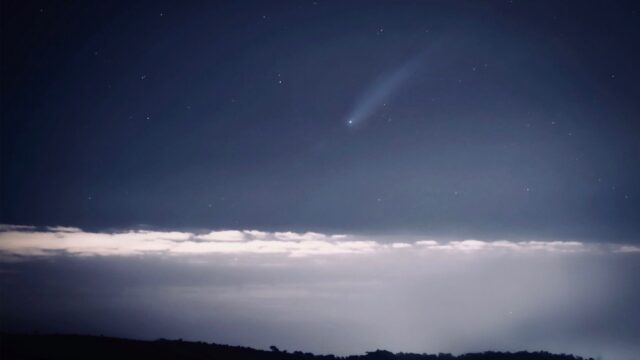
An asteroid in the belt between Mars and Jupiter has sprouted a tail like a comet’s. The object, 6993 (also called 1995 BJ4), is about 7.5 miles (12 km) across, according to EarthSky. If the tail comes from ice turning to vapor, it would be the largest known main-belt comet.
Astronomers cannot yet say which explanation is right. A collision with another body could also have produced the tail, and the two ideas make different predictions for the months ahead.
How astronomers caught the tail
A team led by researchers at Northern Arizona University and other institutions found the activity in images from the Zwicky Transient Facility, a survey that repeatedly photographs the sky. They posted their study on the arXiv server on Oct. 22. It has not yet been peer-reviewed, so the conclusions may change.
The find began with an automated pipeline called the Solar System Notification Alert Processing System, or SNAPS. The team trained a machine-learning model to spot the fuzzy look of active asteroids. On Aug. 5, the model flagged an image of 1995 BJ4 with 99.9% confidence.
Researchers then went back through older images. The tail was already there in pictures from June 25. It was narrow and straight, stretching at least 32 arcseconds past the main body (an arcsecond is a very small unit of angle on the sky).
Asteroid or comet?
Most asteroids are inert rocky bodies, and most of them sit in the main belt. A few occasionally release dust and gas, forming a haze or a tail. These are called active asteroids. Some of them behave so much like comets that astronomers count them as main-belt comets. Only about 20 of those are known.
At roughly 12 km across, 1995 BJ4 is bigger than 99% of asteroids. It also travels farther from the sun than most known active asteroids. Its closest approach to the sun, called perihelion, is about 2.85 times Earth’s distance from the sun, which would make its orbit wider than that of any known main-belt comet.
Two explanations still standing
The team tested whether the asteroid’s spin could be flinging material into space. It turns once every 3.9 hours, which is too slow to account for what the images show, so that idea was dropped.
Two others remain. In the first, another space rock struck the asteroid and kicked up dust. The dust would slowly spread out and the tail would fade. The asteroid looked slightly brighter in June and July than in August and September, which fits that picture.
In the second, sunlight warms ice buried below the surface and the ice sublimates, meaning it goes straight from solid to gas. The escaping gas carries dust along and builds the coma and tail seen on comets. The researchers have not ruled this out.
Why it matters
A confirmed cometary origin would add a very large member to a small group of objects that blur the line between asteroids and comets. Ice surviving inside a body this big, this far from the sun, would also be notable for researchers who study where such ice lives in the belt.
The surface itself is a further puzzle. Its colors and reflectivity do not fit neatly into existing asteroid classes, so what the surface contains is uncertain. Scientists want to learn more about its composition.
What to watch in January 2027
The object reaches perihelion in January 2027. If sunlight is vaporizing ice, activity could pick up as it nears the sun. If the tail keeps fading instead, that would favor the impact explanation. The authors say further observations will be needed to settle it.
Source: EarthSky