Stonehenge Altar Stone Did Not Come From Scotland, 70 Samples Show
Geologists say Stonehenge's six-ton Altar Stone is very unlikely to come from northeast Scotland. See how they tested it and where the search goes next.
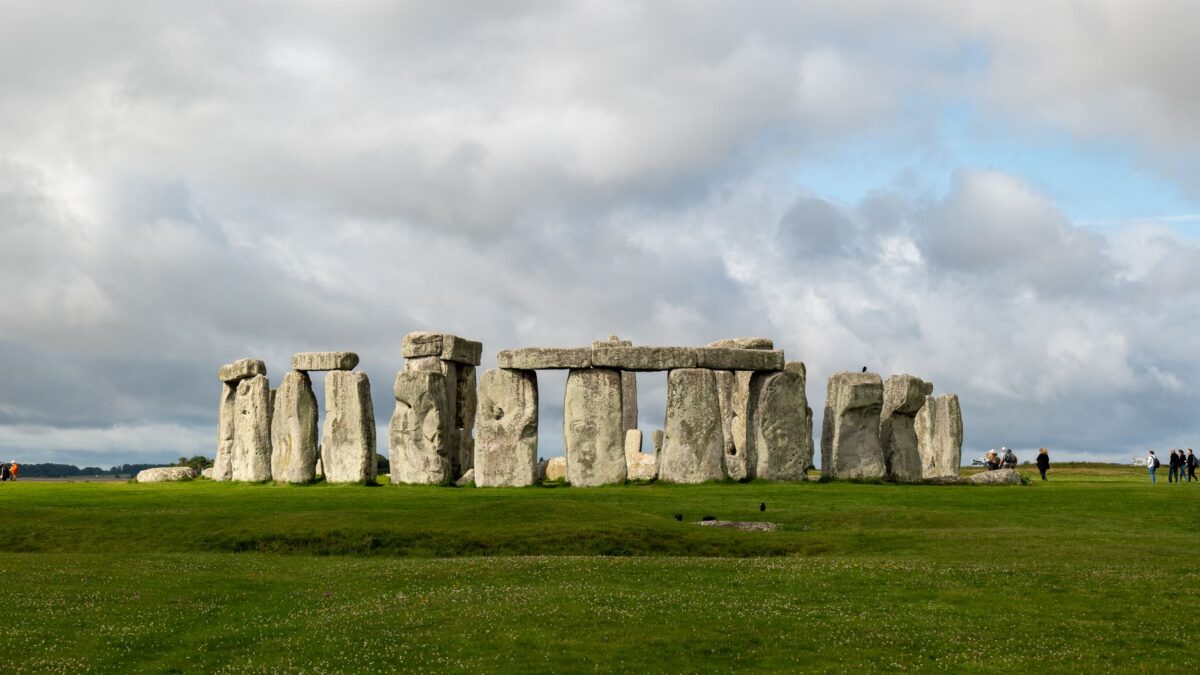
Geologists who collected about 70 rock samples across northeast Scotland found none that matches the Altar Stone, the flat six-ton sandstone slab at the center of Stonehenge. The team concludes that the stone very likely did not come from that region, which reverses a 2024 study that had traced it there.
The result, published this week in the Journal of the Geological Society, leaves the origin of the slab open again, according to Smithsonian Magazine. The search now shifts to other rock formations in northern England, other parts of Scotland and possibly Ireland.
How the team built a “fingerprint” of the slab
The study was led by Duncan Pirrie, an emeritus geologist at the University of South Wales. His group examined the Altar Stone directly and also analyzed pieces of it held in museum collections. They measured its sedimentology (how the grains were laid down), its geochemistry (the chemical makeup) and its mineralogy (which minerals it contains). Together these traits work like a geological fingerprint that a source rock should share.
The researchers then went into the field in Scotland’s Orcadian Basin, the area the 2024 study had pointed to. Co-author Nick Pearce, an emeritus geochemist at Aberystwyth University, told the Guardian that the basin covers thousands of square kilometers, so the only option was to walk it and collect rock. “We’ve taken about 70 samples, brought them back to laboratories and tested them,” he said. None of them lined up with the Altar Stone.
Pirrie called it the most thorough geological study of the stone so far. “So far, none of the locations examined have the same set of characteristics,” he said in a statement.
What is still unknown
The new work narrows the search without naming a new source. Pearce said in the statement that crossing off candidate areas matters as much as finding new ones in this kind of search.
The idea of a Scottish origin had already raised a practical puzzle. That route would mean a trip of at least 465 miles by land, far beyond any other stone at the monument, and people debated whether Neolithic builders dragged the slab south or moved it by water.
Glaciologists also tested a third option earlier this year. Their models of ancient ice sheets showed that glaciers could in theory have carried Scottish boulders as far as Dogger Bank, a landmass now under the North Sea. Even then, people would have had to recover the stone there thousands of years before work at Stonehenge began.
Why it matters for the story of Stonehenge
Stonehenge went up in stages between 3000 B.C.E. and 1520 B.C.E. Its large sarsen stones came from the nearby Marlborough Downs, and the smaller bluestones traveled about 140 miles from the Preseli Hills in southwest Wales. For a long time the Altar Stone was thought to come from those Welsh hills too. The 2024 study pushed that distance past 400 miles.
The slab now lies flat and partly buried under the fallen upright and lintel of the site’s largest trilithon (a pair of standing stones capped by a third). Its name dates to 1620, when the architect Inigo Jones suggested it might have served as an altar.
Finding the quarry would show where the builders traveled and which landscapes they knew. Mike Pitts, an archaeologist who was not part of the study, told the Guardian that knowing the source would place the stone in the world of the people who moved it and show exactly where its journey started.
Where geologists look next
With northeast Scotland and southern Britain both crossed off, the search for the Altar Stone’s birthplace turns to rock formations in northern England, other parts of Scotland and Ireland.
Source: Smithsonian Magazine