Farmer Finds Ramses II Statues Under Cucumber Field in Nile Delta
A farmer in Egypt's Nile Delta reported a carved stone. Archaeologists then found a 1.6-meter Ramses II head and a second royal statue.
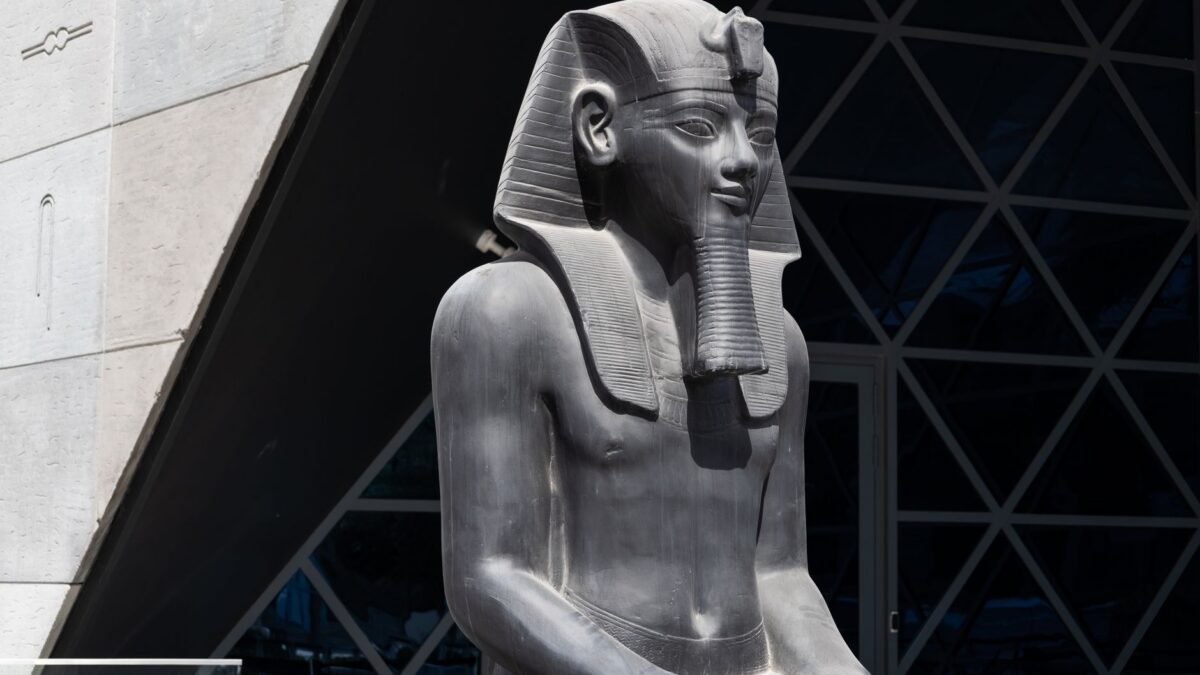
A farmer growing cucumbers in the Nile Delta found a stone with ancient carvings on his land, and the dig that followed turned up the remains of two huge royal statues. One is believed to show Ramses II. The finds came from Behbeit el-Hagar, a village in Egypt’s Gharbia Governorate, and were reported by Euronews, CBS News and Popular Mechanics.
The farmer, Khaled Khalil, called the antiquities authorities instead of moving the object himself. Egypt’s Ministry of Tourism and Antiquities examined the stone, then sent a team from the Supreme Council of Antiquities to excavate. Archaeologists found 3 significant objects close together: a large pink granite block, the head of a colossal statue of Ramses II, and the upper part of a second royal statue.
A 1.6-meter head with a double crown
The head measures about 1.6 meters (5.25 feet) high. According to CBS News, it shows the pharaoh wearing the double crown, the symbol of his rule over Upper and Lower Egypt. The head is in relatively good condition, but the body and base are missing.
Part of the back pillar survives, and it carries the king’s Horus name, Hor Ka Nakht Mery Maat, reported by Popular Mechanics. The name is understood to mean The Strong Bull, Beloved of Truth. A royal name on the stone links the remains to one ruler, which is firmer evidence than facial features or style alone.
From the proportions of the head and pillar, the complete statue could have stood about 8.5 meters (28 feet) tall including its base. Euronews attributed that estimate to Hisham el-Leithy, secretary-general of the Supreme Council of Antiquities.
A second statue of uncertain identity
The second fragment is about 2.4 meters (7.87 feet) long and has a well-preserved face. Its legs, base and part of its headdress are missing. It wears a nemes, the striped head cloth worn by Egyptian kings. Its features resemble those of the first statue, so archaeologists are considering whether it also shows Ramses II. They have not confirmed this.
What the granite block says
The block that first caught the farmer’s eye is about 1.3 meters (4.26 feet) across. Its hieroglyphs include two titles of Ramses II. CBS News reported that they are Nesw-Bity, meaning King of Upper and Lower Egypt, and Sa-Ra, meaning Son of Ra, the sun god.
Together with the statues, the titles raise the possibility that the land was part of an ancient religious or royal complex. Officials are weighing whether the remains point to a temple of Ramses II. They are also checking whether the pieces came from another site and were carried here long ago. Several objects tied to one pharaoh do not by themselves prove a temple stood on the spot.
Why the location matters
According to Euronews, Behbeit el-Hagar already has the ruins of a large temple to Isis, a major goddess of ancient Egypt. The new finds could add to what researchers know about how the area developed.
Ramses II, also called Ramesses the Great, ruled from about 1279 BC to 1213 BC in the 19th Dynasty. His reign lasted more than 6 decades. Euronews named the colossal statues at Abu Simbel among his best-known monuments.
Work on the farm is continuing as researchers study the objects and how they relate to the surrounding ground. CBS News reported that Tourism and Antiquities Minister Sherif Fathy visited the farmer’s hometown and gave him and his wife certificates of appreciation. The couple also received a trip to Saudi Arabia to perform the Umrah pilgrimage.
Source: The Times of India
Site editor: Nikita Sheikin