Archaeologists Find Bronze Age Hillfort With Three Ditches in Czechia
Rescue excavations at Charváty, Czech Republic, found an Early Bronze Age hillfort with ditches up to 3.3 metres deep, plus four burials. Here is what the team found.
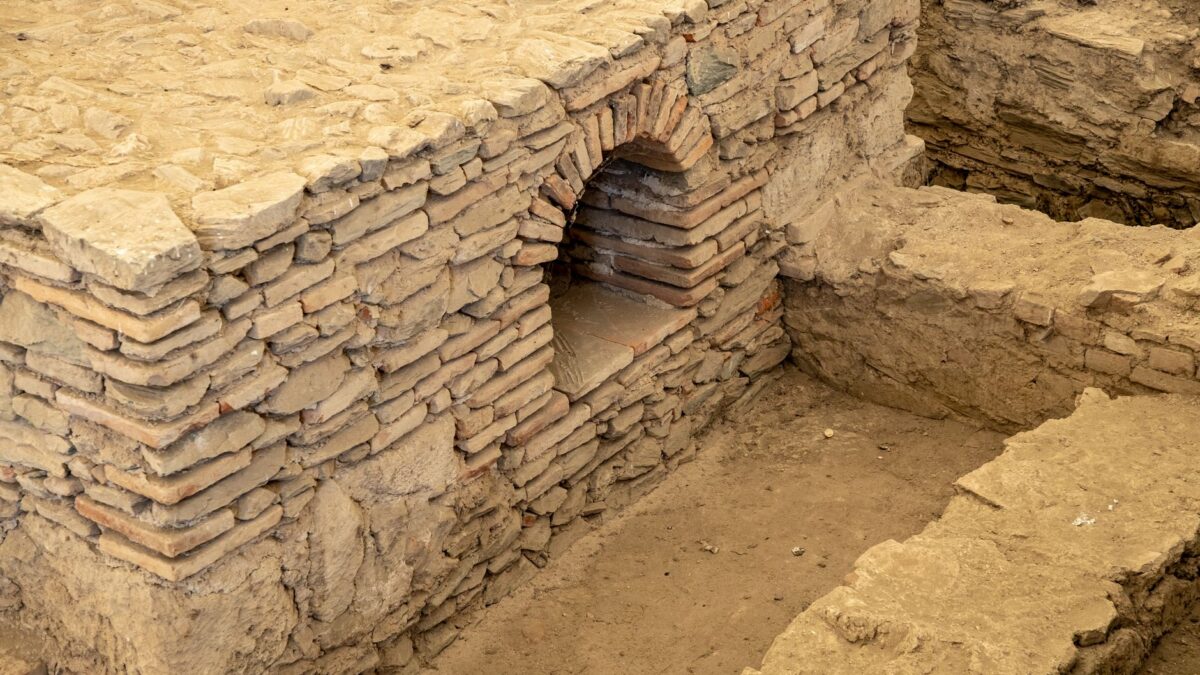
Archaeologists in the Czech Republic have found a previously unknown Early Bronze Age fortified settlement at Charváty, in the Olomouc region, defended by three lines of ditches. The largest ditch was approximately 3.3 metres deep and more than 7.5 metres across at the top, according to HeritageDaily, which reported the work of the Archaeological Centre Olomouc (ACO).
The find came during rescue excavations, the kind carried out before construction destroys a site, ahead of new houses being built. The team documented around 40 archaeological features, including settlement and storage pits, four skeletal burials and the remains of the fortifications.
What the team found at Charváty
The settlement sat on a raised terrace above the Morava River. Steep slopes protected several sides, and the inhabitants dug ditches where the ground was easier to approach. Two of the ditches have been partly excavated: the outer one was about 2.2 metres deep, and the middle one about 3.3 metres.
Based on the evidence so far, archaeologists tentatively link the settlement to the Věteřov culture, a society of the Early Bronze Age. ACO archaeologist Vít Záhorák said the team already knew of prehistoric settlement at Charváty from earlier research, but was surprised to find a fortified one.
Záhorák suggested the site may have mattered beyond its own community. It could have been the seat of a prominent group, or a refuge for people from nearby settlements. Its height above the river may also have let residents watch movement across the surrounding landscape. These are possibilities, not conclusions.
A survey beyond the dig
A geophysical survey by the Institute of Archaeology and Museology at Masaryk University in Brno detected more archaeological features under neighbouring fields and gardens. Geophysical survey reads buried structures from instrument measurements without digging. The results indicate the fortified area continues past the excavation. Possible building remains also showed up, but archaeologists cannot yet say whether they belong to the same Early Bronze Age phase.
Four burials and older traces
People lived at Charváty long before the fortifications. The earliest finds date from the 5th and 4th millennia BC and are linked to the Lengyel and Jordanów cultures. Pits from that time held pottery fragments, animal bones and stone tools.
Of the four skeletal burials, two have been tentatively linked to the Corded Ware culture, dated to approximately 2900-2500 BC. One holds a boy of around ten years buried with a stone battle-axe, an object associated with male Corded Ware graves. The other holds an adult with three ceramic vessels and a flint artefact, but the unusual position of the skeleton leaves its cultural attribution uncertain.
A third person lay in an Early Bronze Age storage pit with no identifiable grave goods. The fourth burial is poorly preserved, face down and missing the skull, and its date is not yet established.
How sure is this?
The report comes from the excavating team through HeritageDaily, not a peer-reviewed paper. The link to the Věteřov culture is described as tentative, and the cultural attributions of two burials are also provisional. Only two ditches have been partly excavated, and the full extent and date of the fortifications are unknown. No radiocarbon dates have been reported yet.
What comes next
The first phase of fieldwork ran from September to the end of October 2026, and more excavation is planned as construction progresses. Human remains, pottery and environmental samples will go to laboratories. Samples from the ditches will undergo pollen and micromorphological analysis (study of soil structure under the microscope), which could reconstruct the ancient environment and show how the ditches filled with sediment, including whether they were cleaned or maintained. Radiocarbon dating could sharpen the chronology of the different periods of occupation.
Establishing the extent and date of the defences should show whether Charváty was mainly a defended settlement or had a wider role for Early Bronze Age communities in the region.
Source: HeritageDaily
Site editor: Nikita Sheikin