Plants Under Arctic Ice Date a New Ice Age Start 2,000 Years Ago
Radiocarbon dates of plants beneath the Barnes Ice Cap suggest ice began regrowing 2,000 years ago, until warming reversed it by the 1960s. Study in Science.
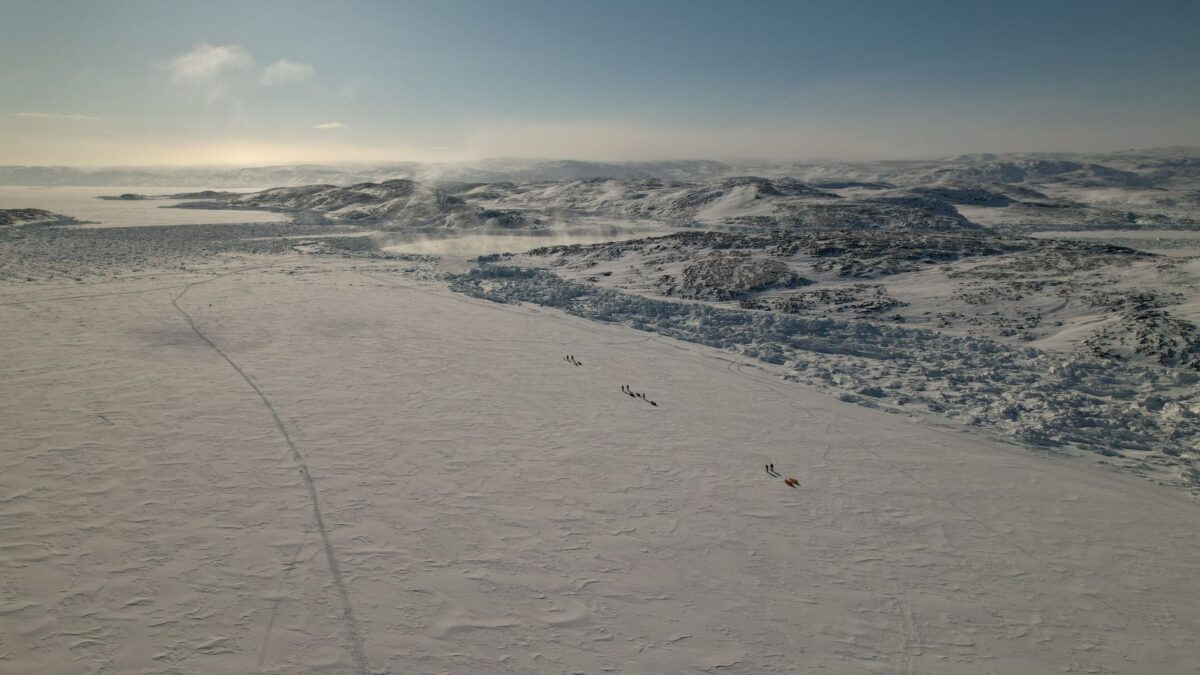
The last remnant of the Laurentide Ice Sheet, the Barnes Ice Cap in Canada’s Arctic, began growing again about 2,000 years ago, according to a study in the journal Science. The researchers argue this was the start of Earth’s next glacial period, commonly called an ice age. By the 1960s, rising summer temperatures had reversed the growth and the ice began to shrink, Columbia Climate School reported.
“It was just getting started, everything was normal, the next glaciation was about to happen, and yet it stopped,” said Nicolás Young, a geochemist at Columbia’s Lamont-Doherty Earth Observatory.
How plants under the ice gave the dates
The Laurentide Ice Sheet covered much of Canada and the northern United States between roughly 95,000 and 20,000 years ago. At its largest it reached south to Illinois, and in places it was more than two miles thick. The Barnes Ice Cap, on central Baffin Island in Nunavut, is what is left of it and covers an area about the size of Delaware.
Reconstructing the smallest and earliest regrowth phases of an ice sheet is hard, because advancing glaciers usually scrape away the evidence. The Barnes cap is frozen to the bedrock and does not slide, so plants it overran stayed in place. Since the cap began retreating in 1960, those plants have been emerging from the melting edge.
The team, led by Young and Joerg Schaefer of Lamont, collected the plant remains and dated them with radiocarbon analysis. Living organisms absorb carbon-14, a weakly radioactive form of carbon, from the air. After death it decays at a predictable rate, so the amount left shows when the plant was buried by ice. Dates from many samples trace the ice margin as it advanced. The team also sampled plants exposed by smaller ice caps in the region that have recently melted.
The results indicate the ice sheet was at its smallest about 3,000 years ago. Around 2,000 years ago it turned cold enough for the remaining ice to expand.
A different definition of when an ice age starts
Earlier research based on climate models generally concluded that the next glaciation was thousands or even tens of thousands of years away. Part of the disagreement is definitional. Young’s team proposes that the first sustained growth of an existing ice sheet should mark the beginning of a glacial period, rather than waiting for ice to cover continents.
Young said the early expansion would not have changed the planet quickly. Cooling would have taken thousands of years to become noticeable, and about 30,000 years for the Laurentide to regain its continental size. He also said the work bears on a 1970s debate, when some researchers suggested another ice age might be coming: “They couldn’t quite prove it, but now we sort of have the evidence.”
Technically, Earth is still in the Late Cenozoic Ice Age, which began about 34 million years ago. Within it, colder glacial periods alternate with warmer interglacial ones. The last glacial period ended about 11,700 years ago.
What the loss of the ice cap could change
Models of the Barnes Ice Cap’s future indicate it could vanish within the next few centuries. In the past, the Laurentide served as a starting point for renewed glaciation when the climate cooled, because existing ice creates conditions that favor more ice. Scientists call such self-reinforcing processes positive feedback.
Without that remnant, a future glacial period might unfold differently. The researchers say they cannot yet determine when another glaciation could begin under air with elevated greenhouse gas levels.
How sure is this?
The work is peer-reviewed and appeared in Science (2026, volume 394, issue 6822, page 455; DOI 10.1126/science.aed3379). The authors come from several institutions, with Lamont-Doherty Earth Observatory at the center of the reporting. The sources do not give the number of samples dated.
The claim that this regrowth marks the start of a glacial period rests on the team’s own definition, which differs from the one implied by earlier model studies. The statement that warming ended the process is the researchers’ interpretation. The future of the Barnes Ice Cap comes from models, not measurements.
Source: ScienceDaily
Site editor: Nikita Sheikin