Euclid Finds Most Distant Quasar Yet, 630 Million Years After Big Bang
Astronomers found the most distant quasar known, a black hole of 200 million to 800 million Suns at redshift 8.13. See how it was found and what it leaves open.
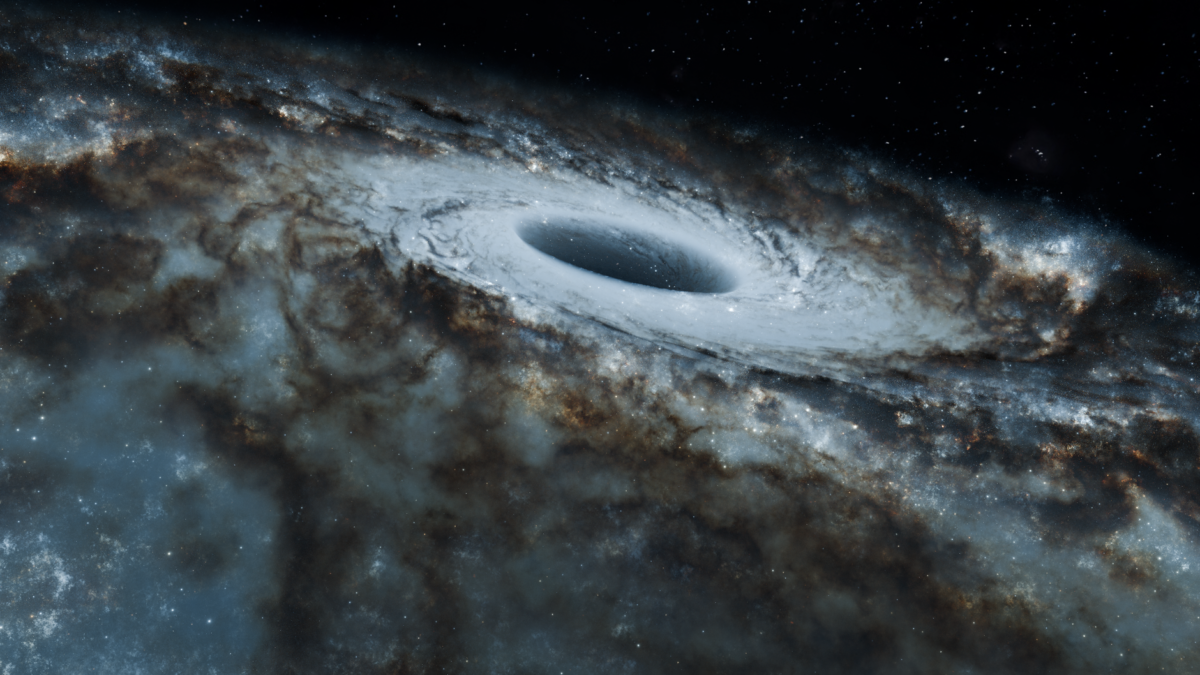
Astronomers have found the most distant quasar known: a supermassive black hole seen as it was 630 million years after the Big Bang, with a mass between 200 million and 800 million times that of the Sun. Sky & Telescope reported the result, which comes from a team led by Julien Wolf of the Max-Planck-Institute for Astronomy in Germany. A quasar is the extremely bright core of a galaxy, powered by gas falling into a central black hole.
The object, formally named J1504+6252, sits at a redshift of 8.13. Redshift measures how much the expansion of the universe has stretched light on its way to us, and a higher number means a more distant, earlier object. That places it about 40 million years further back in time than the previous record-holder. The team also nicknamed it Dún Aonghasa, after a prehistoric stone fort on Inis Mor off Ireland’s west coast.
How the quasar was found and confirmed
The team spotted the quasar candidate in preliminary data from the European Space Agency’s Euclid mission, a space observatory meant to map one-third of the sky and detect billions of galaxies out to 10 billion light-years. This quasar lies even farther out than that range.
Follow-up observations came from the Hubble and Webb space telescopes, the Large Binocular Telescope Observatory in Arizona and the W. M. Keck Observatory in Hawai’i. The images showed luminous blue light, typical of the disks of gas that spiral into the black holes at quasar centers. The object is brighter and bluer than most “Little Red Dots,” compact sources found in Webb data that might represent an earlier phase, when newborn black holes are wrapping themselves in gas.
The spectra, which split light into its component colors, show broad emission lines. These come from gas clouds whipping around the black hole in tight orbits. The team used the lines to place the quasar on the cosmic timeline and to estimate the black hole’s mass.
“High-redshift quasars are extremely rare,” said team member Xiaohui Fan of Steward Observatory. He said finding them takes very wide, deep sky surveys plus large telescopes for spectroscopic confirmation.
A heavy black hole that is not feeding fast
Quasars with several hundred million solar masses have been found at great distances before. This one adds a complication: it is not swallowing gas as fast as astronomers might have expected. That makes it harder to explain how it grew so large in a few hundred million years.
One possibility is that the black hole formed from the collapse of a relatively normal star of about 100 solar masses. Starting that small would require it to feed voraciously early on. A second idea is a heavier seed: huge clouds of pristine gas collapsing directly into black holes, skipping the star stage. Such seeds could begin at 100,000 times the Sun’s mass and then grow at moderate rates. For background on how black holes form, see our explainer on black holes.
How sure is this?
The quasar was confirmed with spectra from several major telescopes, and the redshift and mass figures come from the team’s analysis of those spectra. The source does not say whether the work has been peer-reviewed or name a journal. The Euclid data in which it was found were preliminary.
The origin of the black hole is unresolved. Fan said a direct-collapse seed is likely for this object, but cautioned that it does not mean all quasar black holes formed that way. In his words, there are most likely multiple pathways of black hole formation and growth.
What comes next
Fan said the team’s model predicts that Euclid and NASA’s Nancy Grace Roman Space Telescope can find luminous quasars up to a redshift of about 10, if quasar evolution continues to follow the trend seen so far.
Source: Sky & Telescope
Site editor: Nikita Sheikin