Milky Way’s Norma Arm May Be a Star-Forming Shock Front in the Bar
A Nature Astronomy study finds masers once tied to the Norma arm trace star formation along a shock front in the Milky Way's central bar. Here is how.
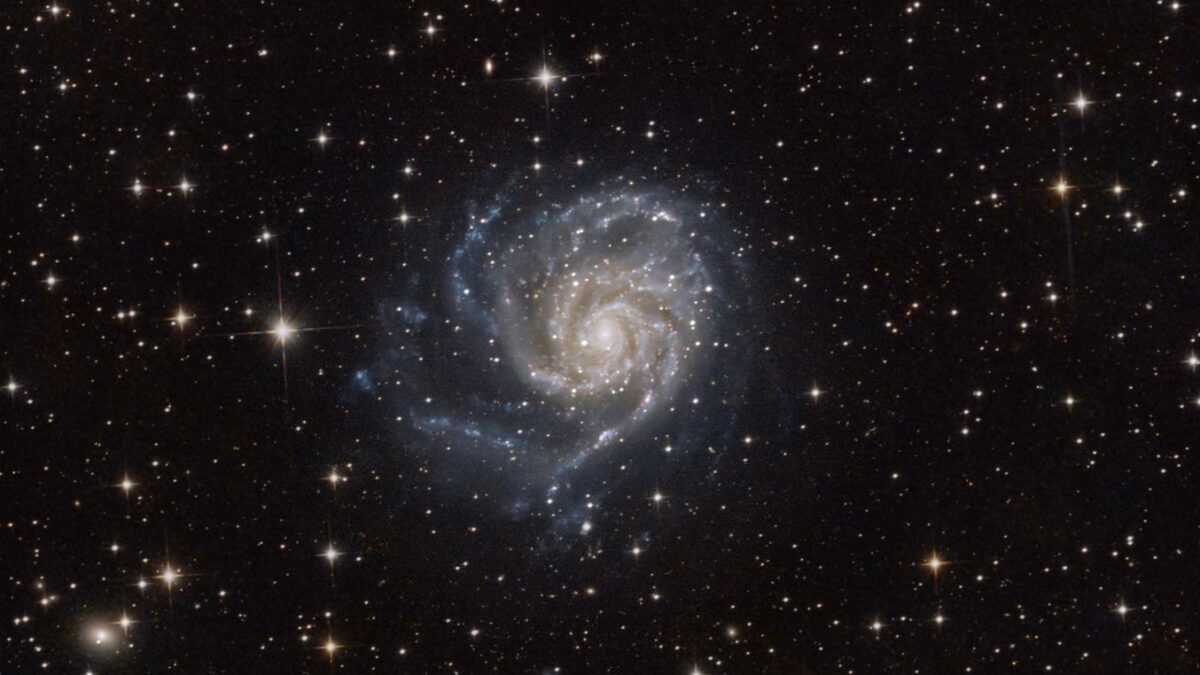
Part of what astronomers have long called the Norma arm of the Milky Way may not be a spiral arm at all. A team led by Dr. Hilary Davis at the University of Sydney reports in Nature Astronomy that young stars once assigned to that arm line up instead with a shock front, a zone of compressed gas, along the leading edge of the galaxy’s central bar. The bar is a long, thick band of stars across the galaxy’s middle.
The finding means stars are forming in a place where theory says they mostly should not. According to the study, the bar’s length from end to end is about 28,000 light years, and one full rotation takes about 154 million years.
How the team matched masers to a simulated shock front
The researchers, from Australia and Sweden, worked from observations of masers. These are coherent microwave emissions from young massive stars. Earlier work used masers to trace part of the Norma arm, which extends from the bar. The new paper, titled “The nature of the Norma arm as a bar-driven star-forming shock front,” reexamines what those masers actually mark.
The team compared the maser positions with large computer simulations of a galaxy evolving over billions of years. The masers closely matched the shock front the simulations predicted in the bar. Davis said the Norma masers trace very young star-forming regions, under 1 million years old, that are still near the gas clouds that formed them. That puts the star formation along the bar’s dust lane, the dense band of gas and dust at the bar’s leading edge.
By tying the masers to the simulated shock front, the authors fitted the bar’s shape and motion. They report a semimajor half-length of about 4.3 kiloparsecs (plus or minus 0.2), a semiminor half-length of about 2.3 kiloparsecs (plus or minus 0.2), an inclination angle of 20 degrees (with a range of +5 and -2), and a pattern speed, how fast the bar’s overall pattern turns, of at most about 40 km/s per kiloparsec. Universe Today, which covered the paper, translated these into a bar roughly 28,000 light years long and 15,000 light years wide, tilted about 20 degrees from our line of sight.
Why a star-forming bar is unusual
In barred spiral galaxies, star formation is usually concentrated in the spiral arms, where density waves compress gas. In bars, shear forces, streaming gas motions and strong shocks make the gas turbulent and tend to suppress star formation. Where bars do form stars, it is mostly at the bar ends.
“In most similar galaxies, star formation very commonly occurs along spiral arms,” Davis said. She called it extraordinary to see it happen in a region where shocks are usually so strong that star formation is often suppressed. The authors conclude that the Galactic bar is “long, slow and star-forming.”
Observing the bar from inside the galaxy is hard. Davis said our position and dust blocking the view make the bar difficult to see, and its properties have been debated for years. Past estimates of the bar’s length range from 3,000 to 16,000 light years and of its width from 8,000 to 16,000 light years. Rotation periods have ranged from 102 to 246 million years. The new values fall inside those ranges.
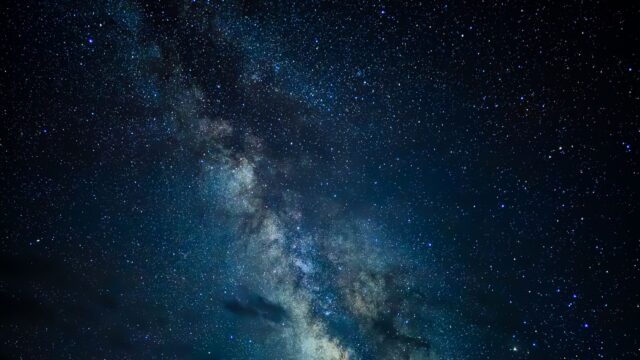
Anyone hoping to trace these structures in the night sky should note that the bar is hidden by dust; a separate guide covers how to see the Milky Way from dark sites.
How sure is this?
The work is published in Nature Astronomy, a peer-reviewed journal, with Davis, J. Bland-Hawthorn, T. Tepper-García and colleagues as authors. The conclusion rests on a match between a limited set of maser observations and computer simulations, so it depends on how well the models represent the real galaxy. The authors say that “at least part” of the Norma arm may not be a spiral arm, which leaves open how much of it is. Whether star formation along bar shock fronts is common in other galaxies is also debated, since observations show that suppression in bars is not universal. Davis said the Milky Way’s spiral structure and bar region need further investigation.
Source: Universe Today
Site editor: Nikita Sheikin