UK-Built X-Ray Telescope Images Crab Nebula on Way to Mercury
The MIXS X-ray telescope on BepiColombo imaged the Crab Nebula, 6,500 light-years away, as a test before mapping Mercury's surface chemistry.
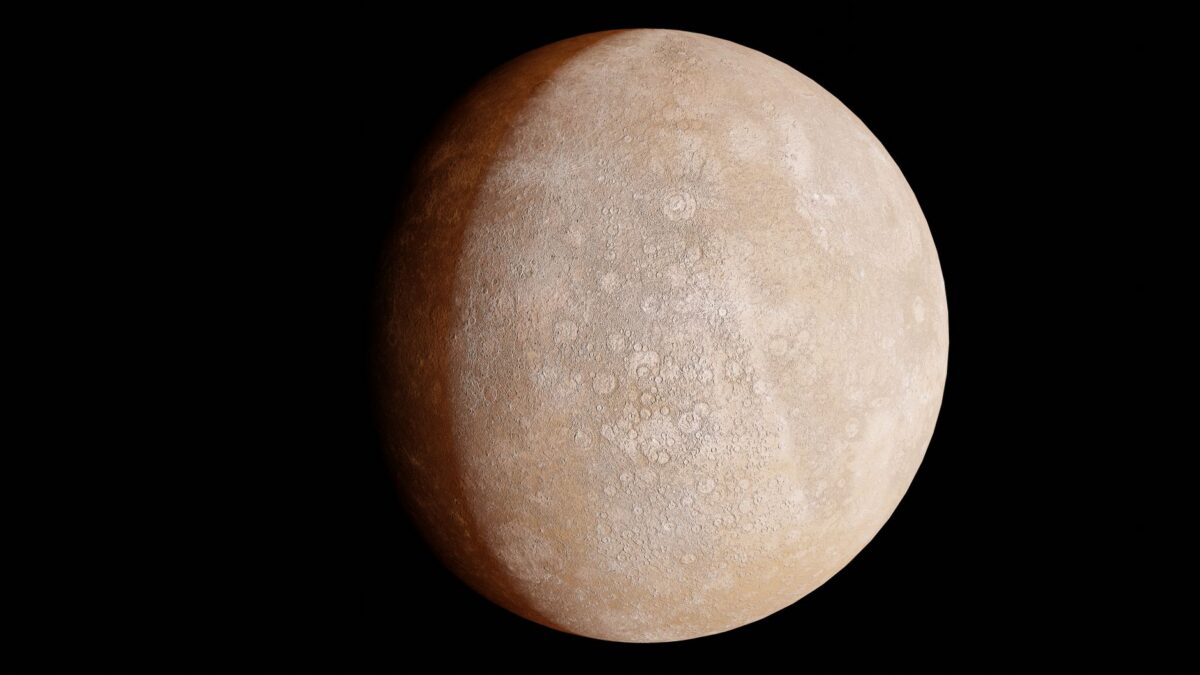
A 1-meter-long X-ray telescope built in the UK has imaged the Crab Nebula, a supernova remnant 6,500 light-years away in Taurus, as a test before it begins studying Mercury. The University of Leicester team released the image from the Mercury Imaging X-ray Spectrometer (MIXS), according to Universe Today. MIXS rides on the Mercury Planetary Orbiter, one half of the ESA/JAXA BepiColombo spacecraft stack, and is the first X-ray instrument on an interplanetary spacecraft.
BepiColombo reached Mercury on Nov. 21, when the planet’s gravity captured the stack into an elliptical orbit after a pass 635 kilometers above the surface.
How the telescope caught the Crab
For the eight-year cruise, a Mercury Transfer Module supplied power and propulsion and also blocked MIXS’s view. The module was jettisoned on Sept. 3. Adam Fox, MIXS Operations Scientist, told Universe Today that only then did the instrument see deep space for the first time. Before that, it was switched on periodically, but only the health of its internal detectors could be checked.
The Crab image combines 55 platform slews (movements of the spacecraft platform) over 39 hours on Sept. 11 and 12. It is overlaid on a visible-light background. The Crab is a bright X-ray source, which made it a good calibration target. Interplanetary missions rarely image deep-sky objects on purpose, though some turn up in star-tracker navigation frames.
Fox explained that X-rays do not reach the ground through Earth’s atmosphere, so X-ray telescopes must fly in space. They can only be focused at very shallow angles, so conventional designs need focal lengths of about 10 meters and nested mirrors that weigh hundreds of kilograms. MIXS instead uses micro-pore optics, plates with millions of pores 20 microns wide. That allows a telescope that weighs 11 kilograms.
What MIXS will measure at Mercury
When high-energy solar X-rays or particles from Mercury’s magnetosphere hit the surface, the rock emits X-rays at energies characteristic of particular elements. Alec McCrea of the University of Leicester told Universe Today that this reveals what the surface is made of, and that a telescope can do it at much higher resolution than earlier missions because of its narrower field of view and imaging ability.
MIXS will work with the Solar Intensity X-ray and particle Spectrometer (SIXS) to build a map of Mercury’s atomic makeup. It will also record the X-ray environment and the magnetosphere’s interaction on the planet’s night side.
How sure is this?
The Crab image is a proof-of-concept calibration test, and Universe Today does not report a peer-reviewed paper. MIXS has produced no Mercury science yet.
The orbit insertion was not smooth. Estrack controllers noted that the spacecraft briefly entered safe mode and that the planned thruster burn ended early. It still delivered 77% of the expected velocity change, enough to enter orbit. BepiColombo is now in a 75-hour orbit rather than the planned 58-hour one. Arrival had also slipped from December 2025 because of a thruster problem on the transfer module.
What comes next
JAXA’s Mio orbiter (the Mercury Magnetosphere Orbiter) is due to separate on Dec. 9 to 10, followed by sun-shield ejection on Dec. 16. The Mercury Planetary Orbiter is scheduled to reach its 480 by 1500 kilometer orbit on March 10, and science operations are planned to start on April 6. The nominal mission runs to April 2028, with a possible extension to December 2029.
Fox said MIXS-like instruments could suit many airless bodies in the solar system. Micro-pore optic telescopes already fly on other missions, including SMILE, Einstein Probe and SVOM.
Source: Universe Today
Site editor: Nikita Sheikin