Scientists Simulate a Lifeless Earth to Spot Alien Life on Exoplanets
A new model runs Earth from 4.5 billion years ago with no life at all. Here is how it could help telescopes tell living exoplanets from barren ones.
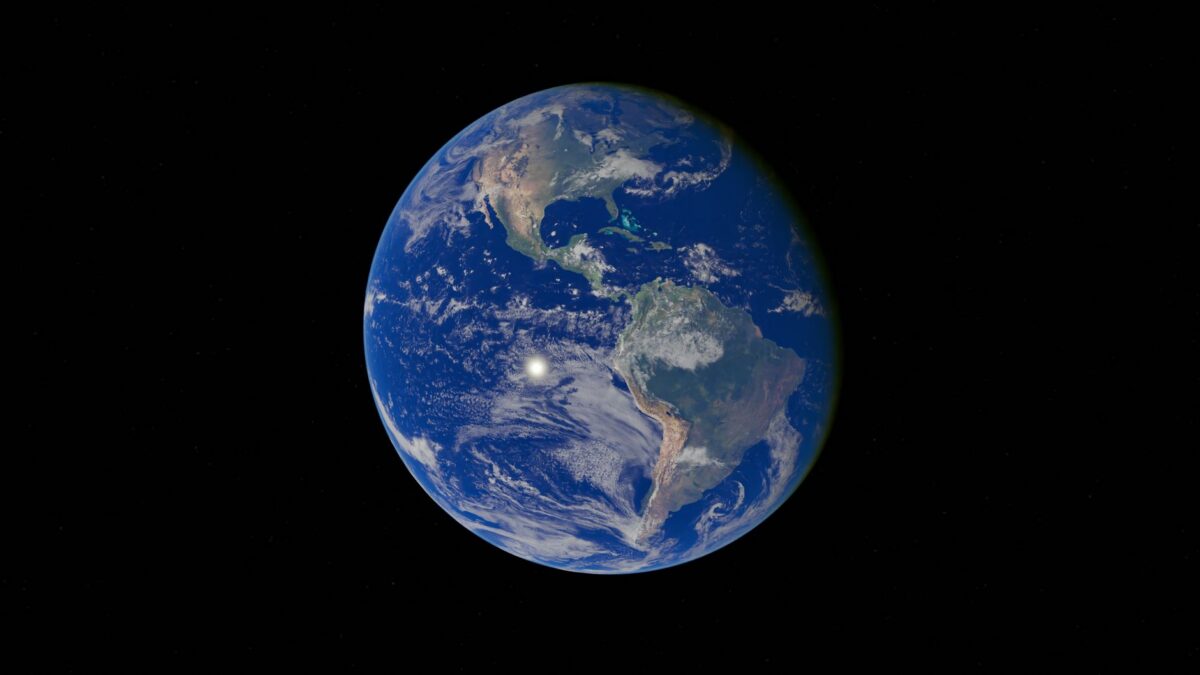
A planetary scientist has built a computer model of how Earth would have developed if life had never appeared, a baseline meant to help astronomers judge whether gases in a distant planet’s air point to living things. The simulated Earth ended up lifeless but still had oceans and an atmosphere, according to Space.com. The model is described in a paper in The Planetary Science Journal.
The work was led by Samantha Gilbert-Janizek, now at the University of California, Riverside, who did the research as a PhD student at the University of Washington.
The problem with reading alien air
Living things release a mix of gases into a planet’s atmosphere. Some of those gases are clear signs of biology, but others can also come from geology. That overlap makes it hard to tell a world with life from one without, using only the gases a telescope can detect. Astronomers need to know which atmospheres a planet can produce with no life at all.
Gilbert-Janizek said in a statement that the model shows how habitable but lifeless planets “might mimic living planets.”
What the model simulates
The new tool extends an earlier model by Rory Barnes at the University of Washington, which covered a planet’s core, mantle and crust. Gilbert-Janizek added the surface and the atmosphere.
In total the model tracks 19 properties of a rocky planet that have nothing to do with life. They include how much heat the planet gets from its star, how heat and chemicals move from the core up to the surface, and how certain gases escape from underground.
To test it, she ran Earth from its formation 4.5 billion years ago to 500 million years in the future, with life left out entirely. Barnes said the model is the first to reproduce Earth’s core, mantle, surface and atmosphere at the same time, after more than a decade of work by many scientists, and that this calibration gives the team confidence in future exoplanet runs.
What it means for the search for life
Researchers can feed in the basic properties of any rocky planet they are studying and let the simulation run. If the lifeless result matches the atmosphere measured by the James Webb Space Telescope, future ground telescopes with mirrors of 30 meters or more, or NASA’s planned Habitable Worlds Observatory, the planet probably has no life as we know it.
If the real atmosphere does not match the lifeless version, something else may be changing it, and life becomes one possibility. Space.com notes that a mismatch would not prove a planet is inhabited. It would flag worlds worth closer study by the next generation of telescopes.
Gilbert-Janizek said the tool will help estimate the probability that an observed atmosphere indicates life on the surface.
Source: Space.com