Roman Concrete Durability: Why It Has Lasted 2,000 Years
Roman concrete lasted 2,000 years thanks to volcanic ash, lime and seawater chemistry that keeps strengthening it. Here is how it worked.
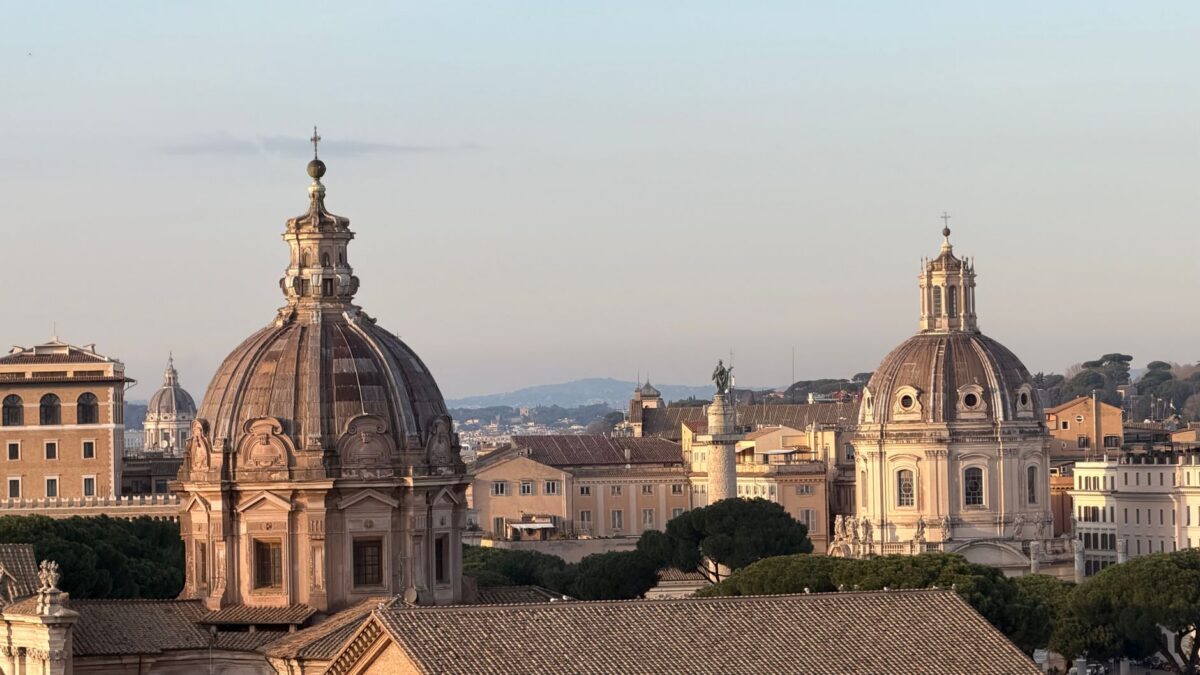
Roman concrete has lasted about 2,000 years because it was made from lime and volcanic ash, a mix that keeps forming new minerals long after it hardens. It also contained no steel reinforcement to rust, and the Romans often used it in thick, compressed structures such as domes, arches and harbor walls. The Pantheon in Rome, whose dome is unreinforced concrete, has stood since the second century AD.
What was Roman concrete made of?
Roman concrete was a mixture of lime, volcanic ash, water and chunks of rock or broken brick called aggregate. The Romans mixed the binder (lime plus ash) with water to form a paste, packed it with aggregate and let it cure.
The volcanic ash, known as pozzolana, came from deposits around the Bay of Naples and other volcanic regions of Italy. A pozzolan is any fine material rich in silica and alumina that reacts with lime and water at ordinary temperatures to form a hard, stone-like binder. Modern Portland cement, by contrast, is made by heating limestone and clay at very high temperatures in a kiln and grinding the result into powder.
Why did the volcanic ash matter?
Volcanic ash made the concrete chemically different from simple lime mortar. Plain lime mortar hardens slowly by absorbing carbon dioxide from the air and turning back into limestone. Ash adds reactive silica and alumina, which combine with lime and water to form dense, stable compounds that bind the aggregate together even in damp conditions.
This is why Roman builders could pour concrete in places where ordinary mortar would stay soft, including foundations, aqueducts and underwater harbor works.
How did it survive in seawater?
Roman harbor concrete survived because seawater reacted with the volcanic ash and lime to grow new minerals inside the concrete. Researchers who have studied Roman harbor structures found minerals such as aluminous tobermorite and phillipsite forming in the material. These crystals fill small cracks and pores and add strength over time.
Modern marine concrete faces the opposite problem. Seawater and the chloride salts in it attack Portland cement and corrode the steel bars inside, which is a major reason many modern coastal structures need repair after decades.
Can Roman concrete heal its own cracks?
Roman concrete shows signs of healing small cracks, and the likely cause is the white lumps of lime found throughout it, known as lime clasts. When water seeps into a crack and reaches a lime clast, the lime can dissolve and recrystallize, sealing the gap. Recent research has suggested that the Romans may have mixed quicklime directly into the concrete while hot, which would have left these reactive lime lumps behind. Scientists are still studying how common this method was across Roman building sites, so it is best treated as a leading explanation and not a settled answer.
Why does modern concrete wear out sooner?
Most modern concrete wears out sooner because it is reinforced with steel. Concrete is strong when squeezed but weak when stretched, so engineers embed steel bars (rebar) to carry tension. Water and salts eventually reach the steel and rust it. Rust takes up more space than the original metal, which cracks the concrete from inside and lets in more water.
Roman concrete had no steel, so this failure could not happen. Roman builders instead relied on shapes that keep the material under compression, such as arches, vaults and domes. The Pantheon’s dome gets lighter toward the top because the builders used lighter aggregate, such as pumice, in the upper sections.
Was all Roman concrete equally durable?
No. The structures that survive are the best built and best preserved ones, and survival bias plays a large part. Roman builders also made mistakes, and many weaker buildings have collapsed or been demolished over the centuries. Quality depended on the local materials, the proportions and the care taken during mixing and curing.
Dating ancient materials is its own science. Archaeologists often use radiocarbon dating and its roughly 50,000-year limit for organic remains, while the age of a concrete structure usually comes from historical records, inscriptions and building styles. Studies of ancient materials also keep turning up unexpected chemistry, as in the discovery of a new mineral in a 5,000-year-old meteorite.
For basic information about how the US government tracks the Earth’s volcanic materials, the U.S. Geological Survey publishes explanations of volcanic ash and its properties.
Quick answers
Could we make Roman concrete today?
Engineers can make pozzolan-lime concrete, and modern cement already often includes volcanic ash or similar materials such as fly ash. A direct copy would be slow to gain strength and would not work with steel reinforcement, so it suits only certain kinds of structures.
Why did the Romans stop using it?
The knowledge of building with concrete faded in Europe after the Western Roman Empire declined, and large-scale concrete construction only returned much later. Portland cement was patented in 1824 by Joseph Aspdin.
Is the Pantheon really made of concrete?
Yes. Its dome is a single concrete shell, and it is often described as the largest unreinforced concrete dome in the world.