How to Watch NASA Missions Live and Track Spacecraft in Real Time
NASA's live coverage is free and spread across a few official channels. Here is where to find the stream, the schedule, the mission timeline and a live view of where a spacecraft is.

The simplest way to watch a NASA mission live is NASA+, the agency’s free streaming service at plus.nasa.gov, which also runs inside the official NASA app. NASA streams launches, spacewalks, dockings and landings there and on its YouTube channel. For crewed Moon flights, NASA’s online tracker shows where the spacecraft is in near real time.
All of it is free from NASA. Some third-party platforms that carry the coverage may need their own subscription or equipment.
Where can you watch NASA coverage live?
You can watch NASA live coverage on NASA+ in a web browser, in the NASA app for iPhone and Android, and on NASA’s YouTube and X accounts. NASA’s own events listings also name Discovery+ and Amazon Prime among the outlets for some broadcasts as of November 2026.
| Where | What you get | Cost |
|---|---|---|
| NASA+ (plus.nasa.gov) | Live events plus on-demand shows and documentaries | Free |
| NASA app (iOS, Android) | NASA+ video, live events, news and mission tools | Free |
| NASA on YouTube | Live streams of launches, spacewalks and briefings, plus replays | Free |
| NASA on X | Live streams for many events and short updates | Free to view |
| Third-party services | Some events are carried by other streaming platforms | May need a subscription |
NASA also runs a live video feed from the International Space Station, published as a YouTube playlist. When the station is on the night side of Earth or the link drops, the feed may go dark or show a placeholder.
How do you find out when coverage starts?
NASA posts a schedule of upcoming live events, with start times in Eastern Time, on the NASA+ site and in the NASA app. It also issues media advisories a few days before major events listing each broadcast, from prelaunch briefings to the launch itself.
- Open the “Live and Upcoming Events” list on NASA+ or in the app and find the mission.
- Check the start time and convert from Eastern Time if you live elsewhere.
- Note that launch coverage usually begins well before liftoff, often an hour or more for crewed launches.
- Recheck on the day. If a launch slips, NASA updates the coverage time, and some events are canceled and rescheduled.
NASA usually streams only launches that carry its own crews or payloads. Commercial launches stream on the company’s own channels. Our guide to finding a reliable launch schedule covers the others.
Where do you find a mission timeline and updates?
Mission timelines and running updates are on NASA’s mission pages and blogs. Before a major mission, NASA publishes a press kit with the planned sequence of events, the crew, the spacecraft and the objectives.
- Mission pages on nasa.gov give the background, the crew or spacecraft and links to imagery.
- Mission blogs post short updates during an active mission, such as a launch, a docking or a landing. Each update has a time stamp, so you can scroll back through the day.
- Press kits list planned events by mission day and are the best place to see what is coming next.
Planned times in a press kit are targets. Spaceflight timelines shift, and the blog is where NASA confirms what actually happened.
How do you track Orion and other spacecraft in real time?
For Artemis flights, NASA’s Artemis Real-time Orbit Website (AROW) shows where Orion is during the mission. During Artemis II, AROW was available at nasa.gov/trackartemis and in the NASA app.
AROW shows Orion’s position relative to Earth and the Moon, its distance from both, the time since launch and major milestones. The data comes from Orion’s sensors through Mission Control in Houston, from about a minute after liftoff until reentry. The NASA app version also has an augmented reality mode that points your phone toward Orion’s position in the sky, available a few hours after launch once Orion separates from the upper stage.
NASA also publishes trajectory data, called ephemeris files, for Artemis flights. Developers and amateur astronomers use these to build their own trackers or point telescopes.
For robotic missions, NASA’s Eyes apps at eyes.nasa.gov show 3D views of spacecraft positions across the solar system, including Mars missions and deep space probes. NASA’s Deep Space Network page shows which spacecraft the big antennas in California, Spain and Australia are talking to at any moment.
Our explainer on the Artemis program covers the next crewed flights and where they are going.
How can you follow the space station day to day?
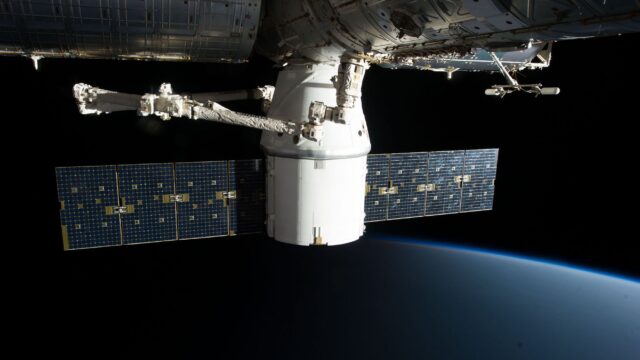
You can follow the International Space Station through NASA’s station blog, its live video feed and the Spot the Station app. The blog posts daily summaries of crew work and research. NASA broadcasts spacewalks, cargo arrivals and crew handovers live on NASA+.
The station can also be seen with your own eyes on many evenings and mornings. Our guide on how to see the ISS explains how to find the next pass over your town.
Bottom line
NASA streams its missions free on NASA+ at plus.nasa.gov, in the NASA app and on YouTube, with times listed in Eastern Time on the upcoming events page. Press kits and mission blogs give the timeline and updates. For Artemis flights, AROW shows Orion’s position live, and NASA’s Eyes apps cover robotic spacecraft across the solar system.
FAQ
Is NASA+ free?
Yes. NASA+ is free to watch at plus.nasa.gov and in the NASA app. Some third-party platforms that carry NASA events may need their own subscription.
Where can I watch a NASA launch on TV?
Most smart TVs can show NASA coverage through a streaming app such as YouTube. NASA also lists other platforms for some events on its live coverage page, so check that page for the mission you want.
Can I see where Orion is right now?
During an Artemis mission, yes. NASA’s AROW tracker shows Orion’s position, speed and distance from Earth and the Moon on the web and in the NASA app. Between missions there is no live Orion to track.
What time zone does NASA use for coverage?
NASA lists its live coverage in Eastern Time on its schedules and in most announcements. Launches from Florida also use Eastern Time, while NASA often gives mission events in UTC as well.