Bavarian Dig Turns Up a 3,000-Year-Old Sword Mould and Bronze Hoard
Archaeologists in Bavaria found a rare sandstone sword mould and a hoard with 52 bronze rings. Officials also explained how new finder rules work.
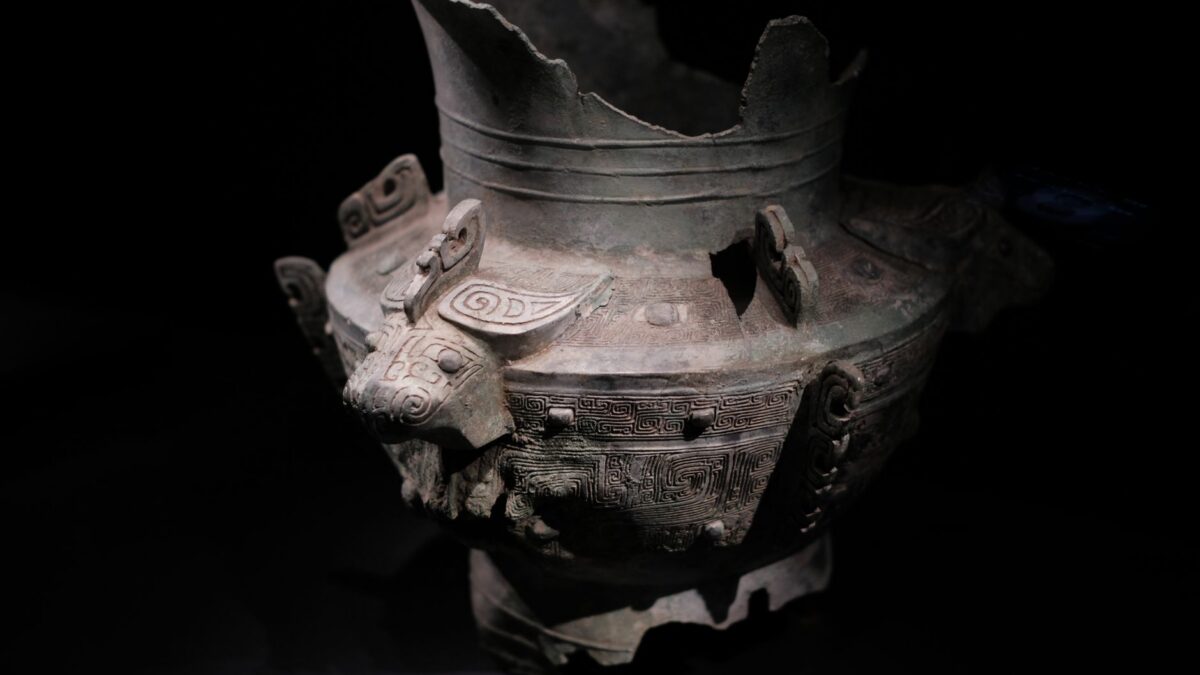
Archaeologists in Bavaria have recovered a sandstone half-mould for casting a bronze sword, a type of object the Bavarian State Office for Monument Protection (BLfD) calls unique in the state. The same announcement covered a Late Bronze Age hoard near Grabenstätt that includes 52 heavy bronze arm and ankle rings, according to HeritageDaily’s report on the BLfD presentation.
The BLfD and the Bavarian State Archaeological Collection (ASM) presented both discoveries in Munich on Nov. 11, 2026.
A mould for a tang-hilted sword
The mould came out of the ground at Großeibstadt in Lower Franconia in the summer of 2025. Excavators were working on a lowland settlement of the Urnfield culture, which dates to 1300 to 800 BC. The object is a fully preserved half-mould for casting a bronze sword with a tang, the narrow strip of metal that runs into the handle.
A second stone mould from the settlement was used for a decorative pendant. Together with evidence of a bronze worker at the site about 3000 years ago, the moulds give direct physical proof that weapons and ornaments were made there in the Late Bronze Age. Metal objects usually turn up as finished goods, so a casting tool shows where and how they were produced. The ASM assessed the two moulds and put their value at a four-figure sum.
What the Grabenstätt hoard contains
A metal detectorist first noticed bronze objects in a field in the Chiemgau region of Upper Bavaria in October 2024 and reported them to the BLfD. Archaeologists placed the objects in the late Urnfield period, around 880 to 800 BC.
The original deposit seems to have been disturbed by farming or earthmoving, which scattered the pieces over a wide area. The finder, working with the BLfD, surveyed the site systematically through 2025 and 2026 and recovered dozens more objects.
In all, the team documented:
- 52 substantial bronze arm and ankle rings
- two bronze axes
- fragments of a sheet-bronze bracelet
- parts of at least one bronze cup
- a plate-sized mass of cast bronze
The BLfD describes it as one of the most extensive hoards of this composition and period known from southern Bavaria. Researchers can use it to study how bronze objects were made, passed around and finally buried in the last centuries of the Bronze Age.
Why it matters: Bavaria’s finder rules
Officials used the finds to show how the state’s treasure law, the Schatzregal, works. It came from changes to the Bavarian Monument Protection Act in July 2023. Before that, discoveries were generally split equally between finder and landowner. Now qualifying finds belong to the Free State of Bavaria.
Local authorities can apply to have an important find transferred to them so it stays in its region and may go on display. Finders and landowners can receive a reward or compensation when a find is valued above €1,000 and was recovered according to heritage law.
Dr. Stefanie Berg, head of archaeological monument conservation at the BLfD, said the law is working and keeps heritage in the regions. According to the BLfD, 24 regional institutions already meet the requirements to receive finds, and towns and municipalities have submitted another 25 applications.
Professor Rupert Gebhard, director of the ASM, said the law is also raising the visibility of archaeology in the regions. About 9,000 objects from the collection are on show at 130 locations in Bavaria, through branch museums and partnerships with municipal institutions.
The BLfD said the Großeibstadt moulds and the Grabenstätt hoard show why finds should be recorded in their original setting. Related background on how scientists study the distant past appears in our piece on why organisms age.
Source: HeritageDaily