Amazon Plot Denied Half Its Rain for 25 Years Finds a New Balance
A Brazilian rainforest plot starved of half its rain lost nearly 50% of its biomass, then stabilized. Here is what the 25-year drought experiment found.
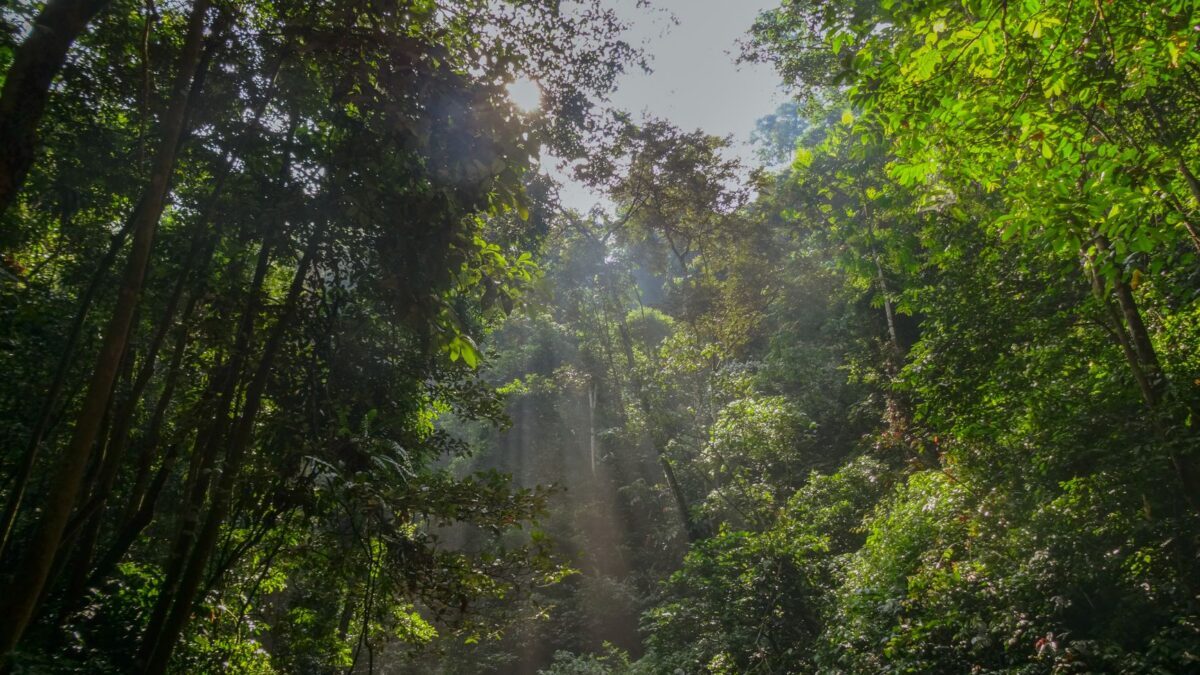
A patch of Amazon rainforest in Pará, Brazil, that has had about half its rainfall diverted for 25 years lost nearly 50% of its biomass, mostly through the death of its largest trees. It then settled into a new, stable state, according to researchers behind the Esecaflor project, as reported by Mongabay.
The smaller trees that survived began growing again once mortality leveled off. The project’s scientists say the plot is still tropical forest, only a degraded one, and they reject the idea that a drying Amazon would turn into savanna.
How the experiment works
The artificial drought began in 2001 on a one-hectare (2.5-acre) plot inside Caxiuanã National Forest, which covers roughly 318,000 hectares (786,000 acres). Researchers installed 6,000 transparent plastic panels beneath the canopy, between 1 and 4 meters (3.3 and 13 feet) above the ground. Gutters and channels carry about 50% of the rain away. An undisturbed plot of the same size serves as the comparison.
In both plots the team tracks soil moisture, air temperature, tree growth, sap flow and root development. Two 40-meter (131-foot) towers fitted with NASA radar send data to the agency’s Jet Propulsion Laboratory in California. Mongabay describes Esecaflor as the longest-running and most extensive study of its kind in a tropical forest.
British ecologist Patrick Meir of the University of Edinburgh says computer models had already pointed to widespread tree die-offs under climate change, but forecasts of how the Amazon would respond to prolonged drought remained uncertain. The experiment was built to test the forest at the scale of whole ecosystems as well as leaves, branches and single trees.
What happened to the trees
Antonio Lôla da Costa, the project’s national coordinator at the Federal University of Pará, describes a slow start. For the first three years nothing changed, because the soil held moisture reserves. After five years, trees began to die, especially large ones with trunks wider than 50 centimeters (20 inches), which need more water. After eight years the plot had lost 40% of its total biomass.
Biomass loss peaked in the 15th year. By 2024, with the large trees gone, the plot had lost nearly 50% of its biomass. The remaining small trees shared out the scarce water, deaths slowed and then reversed, and growth resumed. Lôla da Costa called that result a huge surprise.
The plot is now shorter and less dense, with less biomass in leaves, branches, trunks and roots, and it stores less carbon dioxide. The group’s latest paper, by British and Brazilian authors, appeared in May 2025 in Nature Ecology & Evolution (DOI 10.1038/s41559-025-02702-x).
Why the big trees died
Lucy Rowland of the University of Exeter, one of the project’s lead researchers, says the team first suspected that large trees have water-carrying vessels more prone to embolism, meaning blockages. She now thinks the more likely explanation is that their tall crowns stick out of the canopy and face hotter, drier air. This remains an open question. Natural droughts dry both soil and atmosphere, while the experiment only dries the soil.
Why it matters: a degraded forest, not a savanna
Rowland says a stressed rainforest would become a novel and heavily degraded ecosystem with no natural reference, rather than a savanna. She cautions against using “savanna” as a negative label, because Brazil’s Cerrado savannas are species-rich ecosystems and are not the result of forest degradation. In her view, treating savanna as a wasteland has contributed to the mass destruction of that biome.
The findings come from one plot and one kind of drought. Lôla da Costa stresses that the experiment is very different from the fires and widespread deforestation people cause. Meir says the forest looks stable for now, but its lower biomass and stature and more open structure may leave it more vulnerable to future climate extremes.
What happens next
In November 2024, after 23 years, the team removed the panels, and rainfall on the plot has returned to normal, matching the control plot. The researchers now want to learn whether large species such as kapok, andiroba and angelim vermelho can grow back. Rowland says recovery will be slow and some of these trees may take decades or even centuries, during which natural droughts are expected to keep hitting these forests.
Source: Mongabay