Comets Hit Too Fast to Have Seeded Earth’s Life Chemistry
Cambridge simulations suggest comets almost certainly did not deliver life's organic molecules to Earth. Asteroids or Earth itself are now the leading suspects.
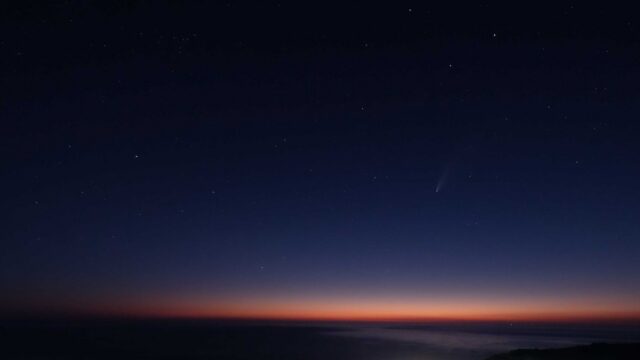
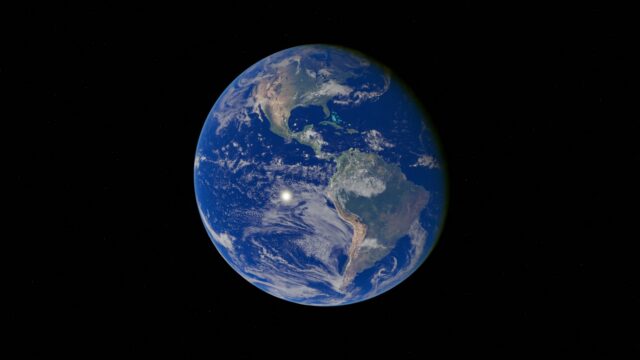
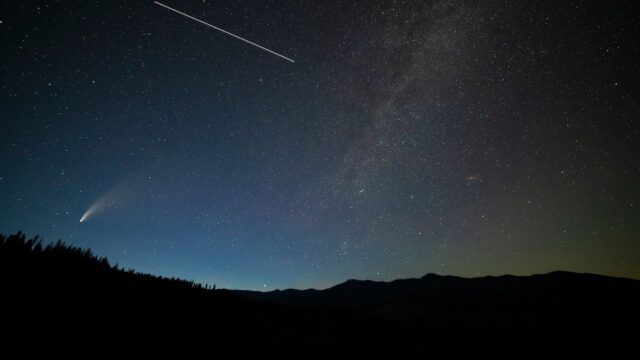
Comet impacts almost certainly did not bring the complex organic molecules that life depends on to early Earth, according to a computer modeling study led by Richard Anslow of the Institute for Astronomy at the University of Cambridge. Most comets hit too fast for these molecules to survive, so the idea that icy visitors seeded the planet looks very unlikely. The work was published on Oct. 28 in the journal Scientific Reports, and Space.com reported on it.
The finding shifts attention to two other candidates: asteroids, and chemistry that happened on Earth itself.
Why comets were suspects for so long
Life as we know it is built on carbon chemistry. Complex organic molecules are the raw material for nucleobases, amino acids and sugars, the compounds that act as the machinery of biochemistry. Scientists have long asked whether those molecules formed on Earth or arrived from space.
Comet impacts were a prime suspect for more than a century. Comets carry carbon and nitrogen-bearing molecules, and they struck Earth far more often in the first half-billion years of the solar system, when plenty of debris from planet formation was still around. Anslow described the old view as a sort of “get-out-of-jail-free card” that delivered everything a planet needed to start life.
How the team tested the idea
The researchers did not examine rocks or samples. They used the latest simulations of how comets form and how their orbits change, how they behave as they enter Earth’s atmosphere, and what happens in hypervelocity impacts.
As a stand-in for complex organic molecules, the team tracked hydrogen cyanide. Comets frequently contain it, and it was detected even in the interstellar comet 3I/ATLAS. For such molecules to survive an impact, the collision speed would have to be below 33,500 miles per hour (15 kilometers per second).
The simulations showed that comets generally travel faster than that and hit the atmosphere at too steep an angle. Most of the organic material is vaporized on impact. In the rare cases where some survives, it is usually not abundant enough to drive meaningful prebiotic chemistry, meaning the chemistry that comes before life.
What is still unclear
This is a modeling result, not a direct measurement, and Anslow did not claim certainty. “We can’t rule out for certain that it happened that way,” he said, adding that it would have to be a one-in-a-million event, requiring the right speed and angle and then the right conditions afterward. He called it at best a one-off fluke.
It is not yet known whether life’s origin on Earth was a fluke or whether life is common in the universe, so even a rare event could have started it here.
What this means for the search for life’s origins
Researchers are now leaning toward two alternatives: the chemistry took place on Earth without help from space, or asteroids brought the molecules. Asteroids look promising because they are rich in such molecules. Material returned by the OSIRIS-REx mission from the near-Earth asteroid Bennu contained all the building blocks of RNA.
Other worlds fare differently. In the simulations, complex organic molecules in comets had a slightly better chance of surviving impacts on Mars, which has a thinner atmosphere and lower gravity. Anslow said that does not mean it happened there. If it was unlikely on Earth and did not happen on Mars either, he said, the more likely alternative is that it did not happen on either planet.
Planets around red dwarf stars may be more interesting. In multi-planet systems such as TRAPPIST-1, the worlds are packed close together. In a 2023 paper, Anslow described how comets could bounce gravitationally from one planet to the next, losing speed each time, so that a final impact is gentler and complex organic molecules have a chance to survive.
For readers curious about the objects themselves, our guide on how to see a comet covers where to look and why forecasts often miss.
Source: Space.com