Romans Dismantled a Giant Emperor Statue in Scotland, Leaving a Foot
A gold-covered bronze foot found in a Scottish bog in 1820 came from a statue of Antoninus Pius, and it was taken apart with care. Here is what that shows.
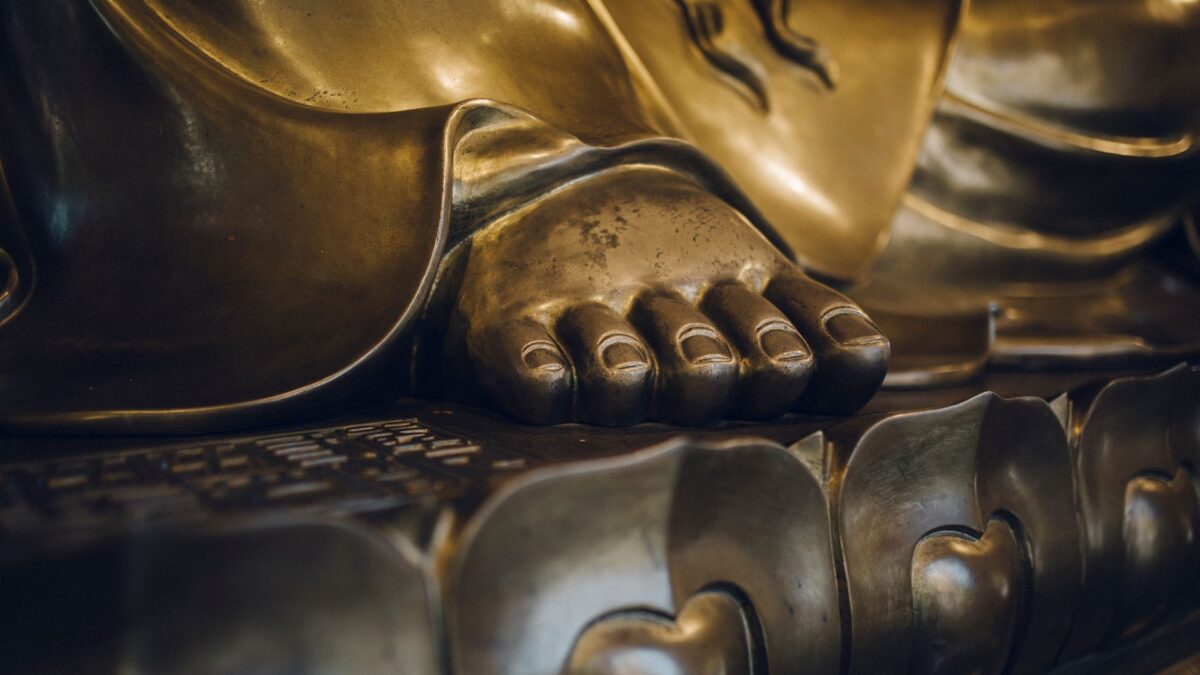
A gold-covered bronze foot and calf pulled from a Scottish bog in 1820 is all that survives of a larger-than-life statue of the Roman emperor Antoninus Pius, according to a Nov. 12 statement from National Museums Scotland. The piece, known as the Milsington leg, was probably made around A.D. 140. Curators say the statue was taken apart with care when the Romans pulled out of Scotland about 1,800 years ago.
It is the only monumental statue of a Roman emperor ever found in Scotland, and the museum reports that it changes how researchers read Rome’s second attempt to conquer the region.
From a looted York statue to a frontier monument
For a long time, experts assumed the leg had been looted from York, England. The Romans founded that city in A.D. 71 as Eboracum. As studies of the Roman frontier moved forward, researchers noticed that equestrian statues, which show a rider on horseback, were often set up in forts along the empire’s border.
Experts now believe the lower leg belonged to an equestrian statue of Antoninus Pius, similar to the well-known statue of Marcus Aurelius in Rome. With a Scottish origin firmly established, curators could connect the object to the emperor’s push north.
An emperor’s second wall
Antoninus Pius ruled from A.D. 138 to 161 and followed Hadrian, who had built an enormous wall to mark the northern limit of the empire. Antoninus Pius wanted more territory. He directed the imperial governor of Roman Britain to advance north, invade southern Scotland and build a second barrier, the Antonine Wall.
After the emperor died, that wall was left undefended and the Romans retreated from Scotland.
How researchers know it was removed carefully
Before a new exhibition, the leg was examined closely. The bronze shows no cut marks. The museum takes this as a sign that the statue was removed gently and not hacked off with force.
National Museums Scotland compares this with other known fates of statues. Some were deliberately smashed after a battle, some were destroyed when an emperor’s memory was condemned, and others were cut up for scrap. The Milsington leg shows none of that. During the retreat, the Romans may have taken down any valuable statues they had put up, according to the statement.
The conclusion rests on a physical examination of one object and on what is known about Roman frontier practice. The museum says the reason for the careful dismantling is still uncertain.
Why it matters
Fraser Hunter, principal curator of prehistoric art and Roman archaeology at National Museums Scotland, said in the statement that the find “really turns on its head” the understanding of Rome’s second attempt at conquering Scotland. He said it was a big deal for the emperor and something worth celebrating.
A monumental statue of the emperor in a Scottish fort suggests the invasion was marked with a prominent public monument, and not treated as a passing campaign. That is the reading the museum draws from the object.
The find also leaves a gap. The leg is the only piece known, and Hunter raised an obvious question: where is the rest of the statue? No other parts have been reported.
On display from Nov. 14
The Milsington leg goes on view on Nov. 14 in the exhibit “Roman Scotland: Life on the Edge of Empire” at the National Museum of Scotland. It is shown alongside the Inveresk Mithras altars and other Roman-period finds.
Source: Live Science