French Cemetery Holds Warrior Graves and Two Buried Warhorses
Archaeologists in northeastern France excavated a cemetery from about A.D. 450 to 500 with weapons, jewelry and two horses buried with their harnesses.
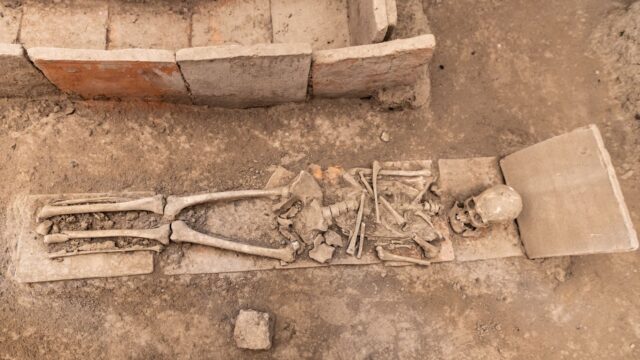
Archaeologists have excavated a fifth-century cemetery in northeastern France that holds the graves of 11 adults, three children and two horses buried with their harnesses. Archaeology Magazine, citing Live Science, reported the find on Nov. 10. The excavation was done by archaeologists from the French National Institute of Preventive Archaeological Research (INRAP).
The cemetery was used between about A.D. 450 and 500, around the time the Roman Empire collapsed. The magazine’s dateline is Colmar, France.
What was buried with the dead
The graves of the women held silver brooches shaped like birds, glass bead necklaces and a bone comb. Men’s graves held a sword, a wooden scabbard (a sheath for a blade), a shield and a javelin.
One man was buried with a scramasax, a Germanic short sword. This one carried a decorative fitting made of gold and garnet. According to the report, weapons of this type have turned up in the graves of Germanic chieftains or mercenaries. That is the basis for the magazine’s headline calling the burials possible chieftains’ graves.
Two men who died violently
Two of the men had stab wounds with no signs of healing. In bone, healing leaves visible traces, so a wound without them suggests the person died soon after being hurt. Archaeology Magazine said this points to quick, violent deaths for both men.
The two horses were buried with their harnesses, and the headline of the magazine’s report calls them warhorses. The harness is the gear fitted to a horse for riding or driving.
What this means for the period
The find dates to the years around the collapse of the Roman Empire. The weapons, the jewelry and the horse burials show how the people buried here were laid to rest, with swords and shields for the men and brooches, beads and a comb for the women.
The word “possible” matters here. A scramasax in a grave is a sign of a chieftain or a mercenary, according to the report, but the burials alone do not settle their rank. The magazine did not name the men or give a rank for any of them.
Horses in other digs
Archaeology Magazine pointed readers to an earlier story about more than 30 horse skeletons dating from between 100 B.C. and A.D. 100 that archaeologists unearthed in central France. Those animals are far older than the two horses from the Colmar cemetery, which date to about A.D. 450 to 500.
Source: Archaeology Magazine