How GPS Works: Satellites, Atomic Clocks and Relativity
Your phone never sends anything to a GPS satellite. It just listens to a few dozen very precise clocks in orbit and does some fast arithmetic.
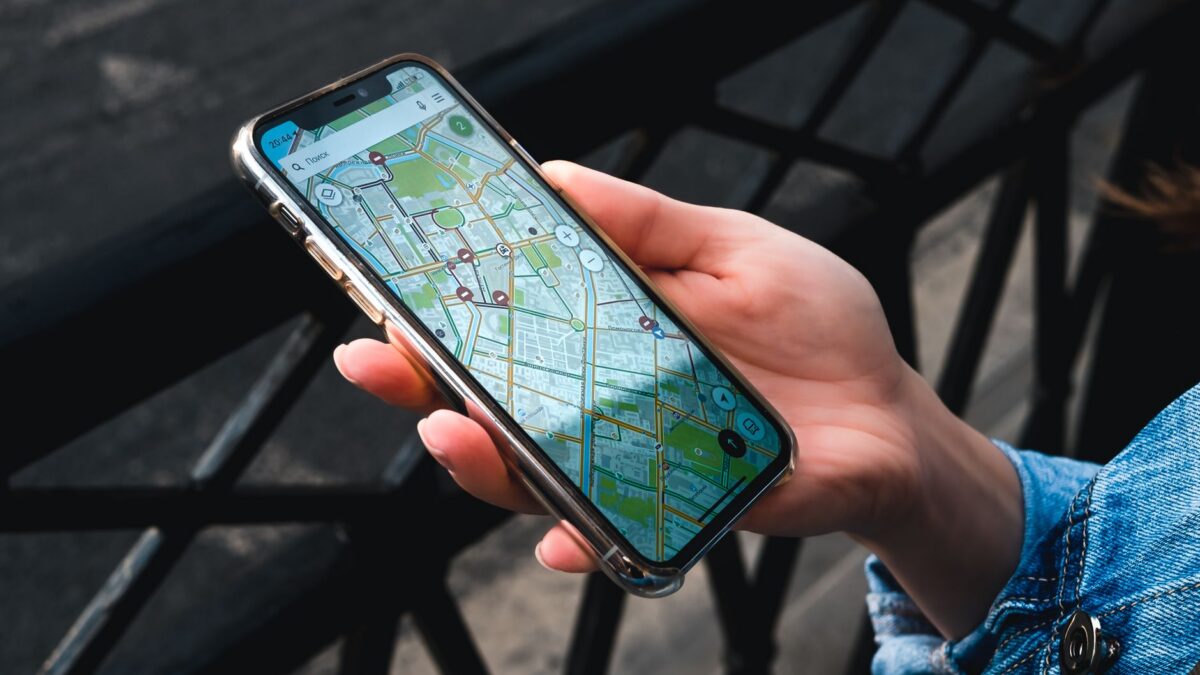
GPS works by timing radio signals from satellites about 20,200 km (12,550 miles) above Earth. Each satellite broadcasts its position and the exact time from an onboard atomic clock; a receiver in your phone measures how long each signal took to arrive, turns those delays into distances and works out where it is. It needs at least four satellites, and under open sky a smartphone is typically accurate to within 4.9 meters (16 feet), according to GPS.gov.
The system only works because the clocks are corrected for Einstein’s relativity. Without that fix, positions would drift by roughly 10 km a day.
What is GPS made of?
GPS has three parts: satellites in space, a control network on the ground and the receivers people use. The US Space Force operates the satellites and the control stations.
According to the GPS.gov space segment page, the system is designed around a 24-slot constellation, expanded in 2011 so that it effectively works as 27 slots, and as of July 2023 it had 31 operational satellites. They fly in medium Earth orbit at about 20,200 km, circle Earth twice a day and are spread across six orbital planes, so that at least four are in view from virtually anywhere on the planet. Our guide to LEO, MEO and GEO orbits explains why that middle altitude is used.
Your phone does not transmit anything to GPS satellites. It only listens, which is why GPS can serve any number of users at once.
How does a receiver work out its position?
A receiver finds its position by measuring its distance to several satellites at once, a method called trilateration. Each satellite’s signal carries two key facts: where the satellite was and the exact time the signal left. The receiver notes when the signal arrives. Radio waves travel at the speed of light, about 300,000 km per second, so the delay gives the distance.
- One satellite tells the receiver it is somewhere on a huge sphere centered on that satellite.
- A second satellite narrows that to the circle where two spheres meet.
- A third narrows it to two points, one of which is usually far out in space and can be ruled out.
- A fourth satellite is needed because the phone’s own clock is cheap and not precise. The receiver treats its clock error as one more unknown and solves for it along with latitude, longitude and height.
Timing is everything here. Light travels about 30 cm (1 foot) in a billionth of a second, so a timing error of just one microsecond would put you about 300 meters off.
Why do GPS satellites need atomic clocks?
GPS satellites carry atomic clocks because positions are only as good as the timing. Atomic clocks keep time by counting the steady vibrations of atoms, and they drift far less than ordinary quartz clocks.
According to an Ohio State University astronomy course page, the satellite clocks must be known to within 20 to 30 nanoseconds for GPS to reach its accuracy. Ground stations monitor every satellite, compare their clocks and orbits with reference standards and upload corrections, which the satellites then broadcast to receivers.
Why does GPS have to correct for relativity?
GPS clocks need a relativity correction because time runs at slightly different rates in orbit than on the ground. Two effects pull in opposite directions:
| Effect | Cause | Change in satellite clock per day |
|---|---|---|
| Special relativity | Satellites move fast, so their clocks run slower | About 7 microseconds behind |
| General relativity | Weaker gravity high above Earth makes clocks run faster | About 45 microseconds ahead |
| Net effect | The gravity effect wins | About 38 microseconds ahead |
Thirty-eight microseconds sounds tiny, but at the speed of light it adds up quickly. The Ohio State page estimates that without correction, errors would build up at about 10 km a day. Engineers handle the gravity part before launch by setting the satellite clocks to tick at a slightly slower rate than identical clocks on the ground, and receivers handle the rest using orbit data from the satellites. Gravity’s effect on time is the same physics that becomes extreme near black holes.
What makes GPS less accurate, and how do phones fill the gaps?
The biggest problems for everyday users are blocked and reflected signals. GPS.gov’s accuracy page lists buildings, bridges and trees that block signals, and “multipath,” where signals bounce off walls before reaching the receiver, as common causes of error. Indoor and underground use, radio interference and major solar storms can also degrade it. The government’s commitment covers the accuracy of the signal broadcast from space, not what a given phone achieves.
Phones use several tricks to do better:
- Assisted GPS: the cell network sends the phone current satellite orbit data and a rough location, so it can lock on in seconds instead of downloading everything from the satellites.
- Wi-Fi and cell towers: the phone compares nearby networks with databases of their known locations, which helps indoors and in cities.
- Other satellite systems: many phones also use Europe’s Galileo, Russia’s GLONASS and China’s BeiDou alongside GPS, so more satellites are in view.
- Augmentation: correction services such as ground reference stations can push accuracy well beyond basic GPS. GPS.gov notes that high-end users with dual-frequency receivers and augmentation can reach centimeter-level accuracy in real time.
Bottom line
GPS satellites orbit at about 20,200 km and broadcast their position and atomic-clock time. A receiver times signals from at least four of them, turns the delays into distances and solves for its location and its own clock error. Relativity makes satellite clocks gain about 38 microseconds a day, which would cause errors of about 10 km a day if uncorrected. Under open sky a phone is typically accurate to within 4.9 meters.
FAQ
Does GPS need an internet connection?
No. GPS signals come straight from the satellites and work without internet or phone service. A data connection helps a phone get a fix faster and load maps, but the position itself comes from the satellites.
How many GPS satellites are there?
The system is built around 24 slots, and GPS.gov reported 31 operational satellites as of July 2023. The exact count changes as new satellites launch and old ones retire.
Why is my phone’s location wrong in a city?
Tall buildings block satellites and bounce signals, so the receiver measures distances that are too long. Phones partly make up for this with Wi-Fi and cell tower positioning.
Who pays for GPS?
The US government owns and operates GPS and provides the civilian signal free of direct charge to users worldwide. It is funded through the federal budget.