Where Does Space Begin? The Karman Line vs the US 50-Mile Line
There is no sharp edge where the air stops. Two lines are in common use, and which one a flight crosses decides whether its passengers count as having reached space.

Space has no single official starting point, but two lines are in common use. The Karman line at 100 km (about 62 miles) is the boundary most international bodies use, while the United States uses 50 miles (about 80 km), the altitude the FAA uses to recognize commercial space travelers and the US military and NASA have used for astronaut wings.
The two lines are about 12 miles apart. Most of the time that gap makes no difference, but it decides whether some suborbital tourist flights count as reaching space.
What is the Karman line?
The Karman line is a boundary set at 100 km (62 miles) above sea level, named after the Hungarian-American engineer Theodore von Karman. It is used by the Federation Aeronautique Internationale, the body that keeps aviation and spaceflight records, and by many space agencies and scientists outside the US.
The idea behind it is practical. As air thins with height, an aircraft has to fly faster and faster to get enough lift from its wings. At some height, it would have to fly so fast that it is effectively in orbit, held up by speed rather than by the air. Von Karman’s work put that crossover near this height, and 100 km became the round number.
Why does the US use 50 miles?
The US 50-mile line dates back to the 1950s and 1960s, when the US Air Force awarded astronaut wings to pilots who flew above 50 miles in rocket planes such as the X-15. NASA has also used 50 miles to recognize its pilots who crossed it.
The FAA uses the same height today. Under its commercial human spaceflight recognition program, any crew member or passenger on an FAA-licensed or permitted launch or reentry who reaches 50 statute miles above Earth’s surface is listed on the FAA website.
| Altitude | What it marks |
|---|---|
| About 7 miles (11 km) | Typical airliner cruising height |
| 50 miles (80 km) | US line for astronaut recognition (FAA, US Air Force, NASA) |
| 62 miles (100 km) | Karman line, used by the FAI and most international bodies |
| About 250 miles (400 km) | International Space Station orbit |
| 22,236 miles (35,786 km) | Geostationary orbit |
Why is there no exact edge of space?
There is no exact edge because Earth’s atmosphere does not stop; it thins out gradually over hundreds of miles. Air at 50 miles is already far too thin to breathe or to support a normal aircraft, yet traces of gas reach well above the space station’s orbit.
Those traces matter. The space station, about 250 miles up, still feels slight drag from the thin upper atmosphere, which slowly lowers its orbit and requires periodic engine burns to raise it. Our article on what happens when the ISS retires explains how that drag will eventually be used to bring it down.
Some scientists have argued that the boundary should sit lower than 100 km, closer to the US figure, based on where satellites can complete orbits. No international agreement has settled the question, and international space law does not define a legal altitude where airspace ends and outer space begins.
What do the lines mean for space tourism flights?
The lines decide whether passengers on a suborbital flight have reached space under each definition. A suborbital flight goes up and comes straight back down without reaching orbital speed, giving a few minutes of weightlessness near the top.
- Flights that pass 100 km count as reaching space under both definitions. Blue Origin says its New Shepard capsule crosses the Karman line.
- Flights between 50 miles and 100 km count under the US standard but not the Karman line. Virgin Galactic’s SpaceShipTwo flights have peaked in this band.
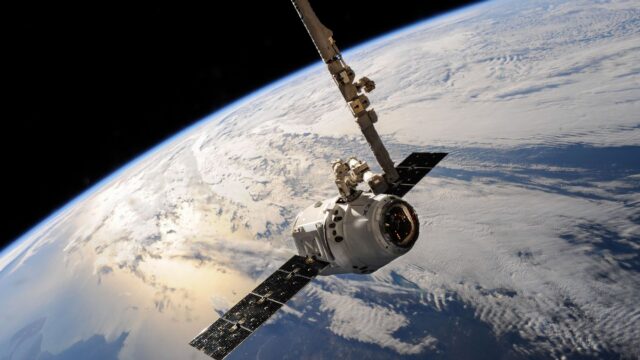
- Orbital flights, such as SpaceX Dragon missions, fly far above both lines, so there is no debate.
The FAA no longer hands out commercial astronaut wings. It ended the Commercial Space Astronaut Wings program after 2021, awarding wings to those who had qualified by then, and the 30 people who received wings are marked on its list. Since then, the FAA lists names on its Commercial Human Space Flight Recognition page and says it no longer designates anyone as an astronaut. For what these trips cost, see our guide to space tourism prices.
Does the FAA regulate everything above 50 miles?
No. The 50-mile line is for recognizing people, not for drawing the edge of FAA authority. The FAA licenses commercial launches and reentries by US companies, or from US territory, whatever height they reach, and its job in commercial space is mainly public safety on the ground and in the air.
Our explainer on what an FAA launch license means covers what the agency approves before a flight and why it can ground a rocket after a mishap.
How high do satellites and spacecraft really fly?
Satellites that stay in orbit for long periods fly well above both lines, because the air below about 100 miles creates enough drag to bring them down quickly. Low Earth orbit typically starts at a few hundred miles, where broadband constellations and the space station operate.
So the boundary debate is mostly about suborbital flights and record keeping. For anything in orbit, the question of where space begins is settled long before the spacecraft gets there. For how orbits work at different heights, see our guide to LEO, MEO and GEO.
Bottom line
Space begins at 100 km (62 miles) under the Karman line and at 50 miles (80 km) under the US standard. The FAA uses 50 miles to list commercial space travelers, while the FAI and most international bodies use 100 km. The atmosphere fades gradually, so both lines are conventions, and the difference matters mainly for suborbital tourist flights.
FAQ
How many miles up is space?
By the US definition, space starts 50 miles up. By the Karman line used internationally, it starts about 62 miles (100 km) up.
Is the Karman line a law?
No. It is a convention used for records and by many agencies. No international treaty sets a legal altitude for where space begins.
Did Virgin Galactic passengers go to space?
Under the US 50-mile standard used by the FAA, yes. Their flights peaked below 100 km, so they did not cross the Karman line.
Does the FAA still give astronaut wings?
No. The FAA ended its commercial astronaut wings program and now lists people who reach 50 statute miles on an FAA-licensed or permitted flight on its recognition web page.