Astronomers Find Oldest Quasar Pair, 900 Million Years After Big Bang
The oldest compact quasar pair ever seen sits 900 million years after the Big Bang. Gemini North and Webb data show how it was found and what is unknown.
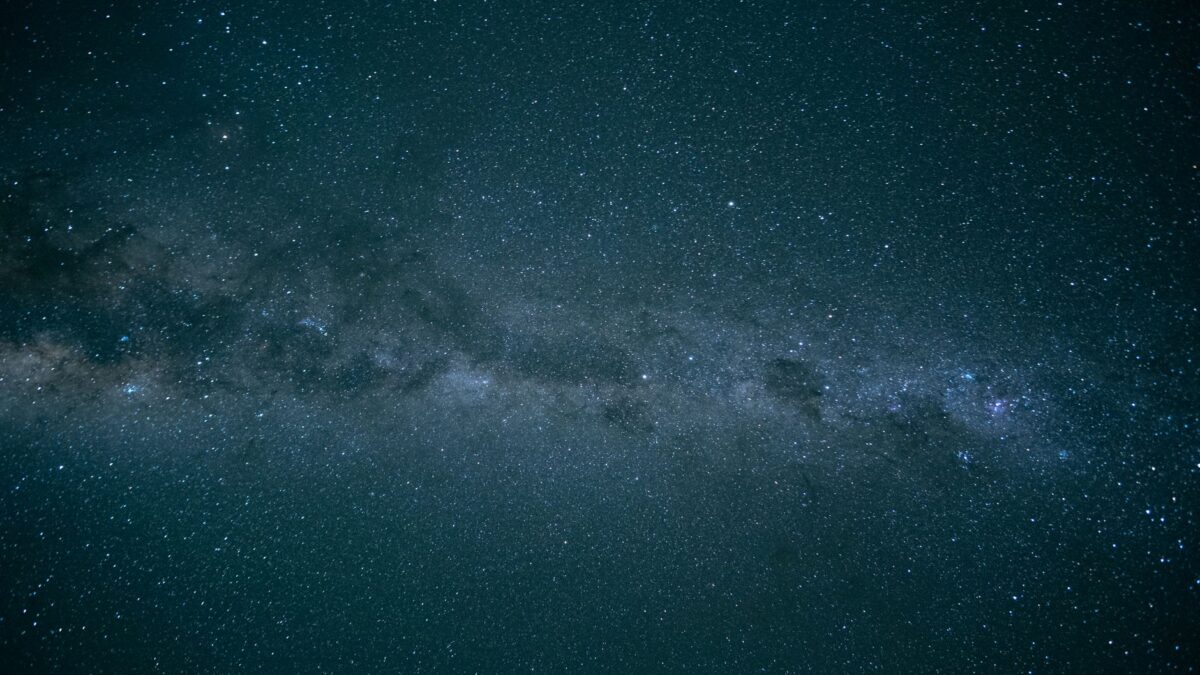
Astronomers have found the oldest compact pair of quasars ever observed, two actively feeding supermassive black holes seen only 900 million years after the Big Bang, according to NSF NOIRLab. The pair, cataloged as J1602+4228AB, carries the Hawaiian nickname Nāpōwawāʻenakaulua.
The black holes have masses of 1.5 billion and 400 million times that of the Sun. The team says no definitive theory explains how one such quasar, let alone two, could exist this early.
How the pair was found
A quasar is a supermassive black hole that is swallowing so much gas and stars that it outshines all the stars in its host galaxy. These objects are expected to come in pairs when galaxies collide, but they are hard to catch. The quasar phase is short, the objects are faint at great distances, and two sources this close together are difficult to separate.
The discovery began in data from the Aether survey, a James Webb Space Telescope (JWST) program led by Emanuele Paolo Farina of NSF NOIRLab and Gemini. The survey used JWST’s Near-Infrared Spectrograph Integral Field Unit to collect a sample of 200 quasars, which NOIRLab says is 43% of all known quasars at this stage of cosmic history. While inspecting the data by eye, the team noticed that quasar J1602+4228A had a companion.
Follow-up observations with the Gemini Near-Infrared Spectrograph on the Gemini North telescope, on Maunakea in Hawaiʻi, separated the two quasars into individual objects. The companion, J1602+4228B, is faint enough that seeing it from the ground should have been nearly impossible. Study lead Silvia Onorato, a postdoctoral research associate at NSF NOIRLab, said the sky was clean and sharp enough that the team gathered the data in two nights.
Size and distance
The two quasars are about 18,100 light-years apart, roughly one-fifth the diameter of the Milky Way. That makes them the most compact quasar pair found in cosmic dawn, the early era when the first stars, galaxies and black holes were forming. NOIRLab says this is the third known quasar pair from that era.
Onorato said the black holes are as massive as those seen in the present-day Universe, even though the Universe was only a thirteenth of its current age when this light was emitted.
What is still unclear
The origin of the pair remains a mystery. The team proposes that it may mark an extreme peak in the density of matter in the early Universe, where galaxy interactions fed both star formation and fast black hole growth.
The researchers also checked whether the second quasar might be an illusion. A gravitational lens, a massive object in the foreground that bends light, can make one source look like two. Observations with the Gemini Multi-Object Spectrograph showed differences in the shape of each quasar’s spectrum, which led the team to favor a real physical pair. A lens model is still needed to rule out lensing definitively.
Why it matters
If the pair is real, it challenges current understanding of how large structures formed in the early Universe. Onorato described the system as a laboratory for studying how the first massive galaxies and their central black holes assembled through direct galaxy interactions.
The results appear in The Astrophysical Journal Letters, in a paper titled “Nāpōwawāʻenakaulua: a close quasar pair at cosmic dawn in the Aether survey” (DOI: 10.3847/2041-8213/aeb11f). The name was created through the A Hua He Inoa program, with Larry Kimura of the University of Hawaiʻi’s Hawaiian Language College, and NOIRLab translates it as “Two celestial bodies of fathomless powerful darkness in the brilliance of heat reincarnating energy into the Universe.”
Source: NOIRLab