Chandra Finds Neutron Star or Black Hole Behind Repeating Outbursts
AT 2016blu flares about every 113 days and survives, so it is no supernova. Chandra X-ray data point to a compact companion in a binary system.
A star that keeps flaring like a supernova every 113 days is being fed by a nearby neutron star or black hole, according to new X-ray observations from NASA’s Chandra X-ray Observatory. The star, AT 2016blu, survives each outburst, which no true supernova can do.
Astronomers call such objects supernova impostors. The new work, published in The Astrophysical Journal and led by Mojgan Aghakhanloo of the University of Virginia, reports the first X-ray detection of this one, as reported by Universe Today.
A luminous blue variable that behaves like clockwork
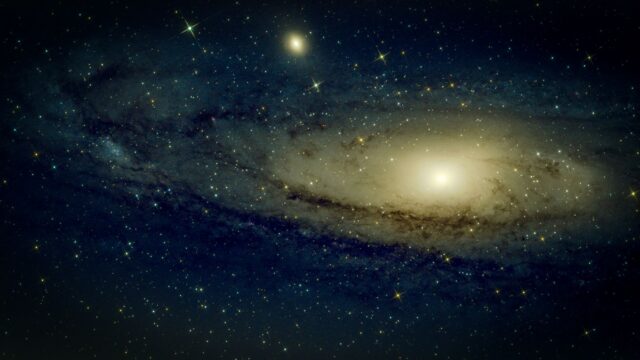
AT 2016blu is about 33 solar masses and sits in the spiral galaxy NGC 4559, around 30 million light years away. It is a luminous blue variable, a rare type of massive star whose brightness and spectrum change strongly. Those changes are usually unpredictable. Here they repeat. An automated supernova search first found the star in 2012, and astronomers have recorded 27 outbursts between 2012 and 2026.
The “AT” in the name stands for astronomical transient. Impostors are first picked up in supernova surveys, but their outbursts are less energetic and less luminous than a true supernova, and the star is expected to live on.
How Chandra caught an outburst in the act
The team first tracked the star in visible light and predicted when the next outburst would come. They then triggered a Chandra Target of Opportunity program in 2026 March and obtained observations on five closely spaced occasions across 4 days.
Chandra was needed because a much brighter X-ray source, the ultraluminous X-ray source NGC 4559 X7, lies nearby. Chandra is the only X-ray telescope sharp enough to separate the two. The European Space Agency’s XMM-Newton cannot resolve them. The researchers also checked archival images and found no background quasar that could mimic the signal.
The 2026 data show the star is 100 times brighter in X-rays than in Chandra observations from 2001 to 2002, made before its first documented outburst. Those older observations were aimed at the brighter neighbor.
What this means for how the system works
The authors say the outbursts are most likely triggered when the two objects pass closest to each other in an eccentric orbit. The companion is almost certainly a neutron star or a black hole. Material thrown off by the luminous blue variable falls toward the companion and forms a fast-moving ring. That ring heats up and emits X-rays, and the surrounding dense gas glows in visible light.
From the X-ray brightness, the researchers estimate that about 2.7% of Earth’s mass moves to the companion during each outburst.
“For 15 years, astronomers have been watching this star get really bright and then dim again on a regular basis,” Aghakhanloo said. Until Chandra data arrived at the right time, the cause was unclear.
What is still unknown
The authors describe AT 2016blu as the first known luminous blue variable system with a compact companion. They say finding more such systems is necessary to understand how supernova impostors, luminous blue variables and interacting supernovae are connected.
Source: Universe Today