Isotopes Trace Pueblo Blue Pigment to Utah and New Mexico Mines
Isotope tests on 12 azurite specimens from the Four Corners point mostly to Lisbon Valley, with two from the Zuni Mountains.
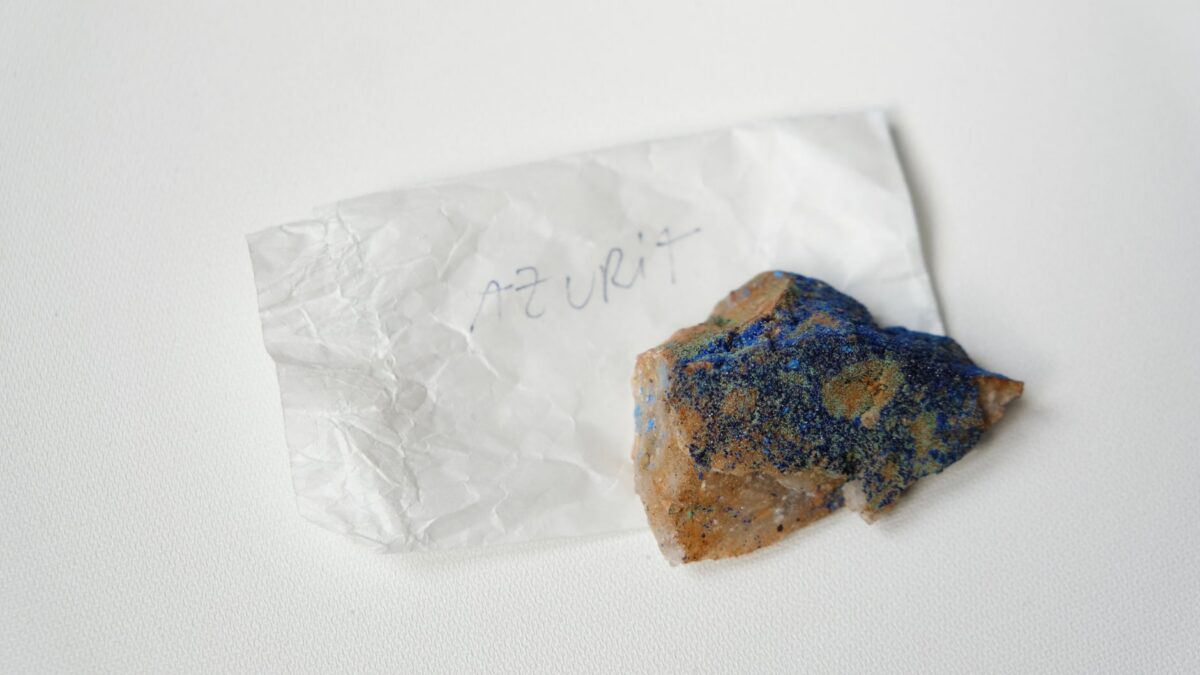
Most of the 12 azurite specimens found in the Four Corners region came from the Lisbon Valley, and two came from the Zuni Mountains in New Mexico. That is the result of isotope tests by a team led by Kari Schleher of the University of New Mexico, which the university described in a statement. The work places Ancestral Pueblo sources of this blue mineral roughly 1,400 years ago.
Azurite is a copper mineral with a vivid blue color, and people ground it for use as a pigment or paint. Archaeology Magazine reported the findings on Nov. 10.
How the team matched blue stone to a mine
The researchers first analyzed two azurite samples taken from sources in New Mexico and Utah that Ancestral Pueblo people are known to have mined. Those samples served as a reference. The team then measured the isotopes of lead, strontium and copper in 12 azurite specimens recovered in the Four Corners region. Isotopes are forms of the same element that differ slightly in weight, and the mix of them can vary from one mineral deposit to another.
Comparing the 12 specimens with the reference samples let the scientists assign most of them to the Lisbon Valley. Two pointed instead to the Zuni Mountains. This is a laboratory analysis of mineral specimens, and the study does not involve people or animals.
What the results say about travel
Schleher said the findings show that Pueblo people traveled from what is now New Mexico to what is now central Utah 1,400 years ago. The pattern in the specimens, with most traced to one valley and a smaller number to a second source, indicates that more than one source supplied the blue pigment.
The research was published in the Journal of Archaeological Science: Reports. The sources for this story do not give a DOI.
Why it matters
Pigments rarely get the attention that pottery or buildings do, yet a blue mineral found in one place and mined in another records a journey. By tying specimens to named mining areas, the study gives archaeologists a way to follow the movement of people and materials across the Four Corners region. The result rests on 12 specimens, so it describes the sampled material and does not map every blue pigment used in the Ancient Southwest.
What comes next
Schleher said future work will add more azurite held at the New Mexico Mining Museum. The team also plans to consult local oral histories about how the mines were used and about traditional territories. Those accounts could add context that isotope numbers cannot supply, such as who used a mine and under what circumstances.
Readers curious about azurite in another ancient culture can find Archaeology Magazine’s separate article on its use as a pigment in the Roman world, titled “Painting by Roman Numerals.”
Source: Archaeology Magazine