Kazakhstan’s First Gold Bear Figurine Turns Up in a Looted Saka Mound
Archaeologists in Almaty found a cast-gold bear from a Saka headdress, a first for Kazakhstan, in a mound that may hold four adults and three children.
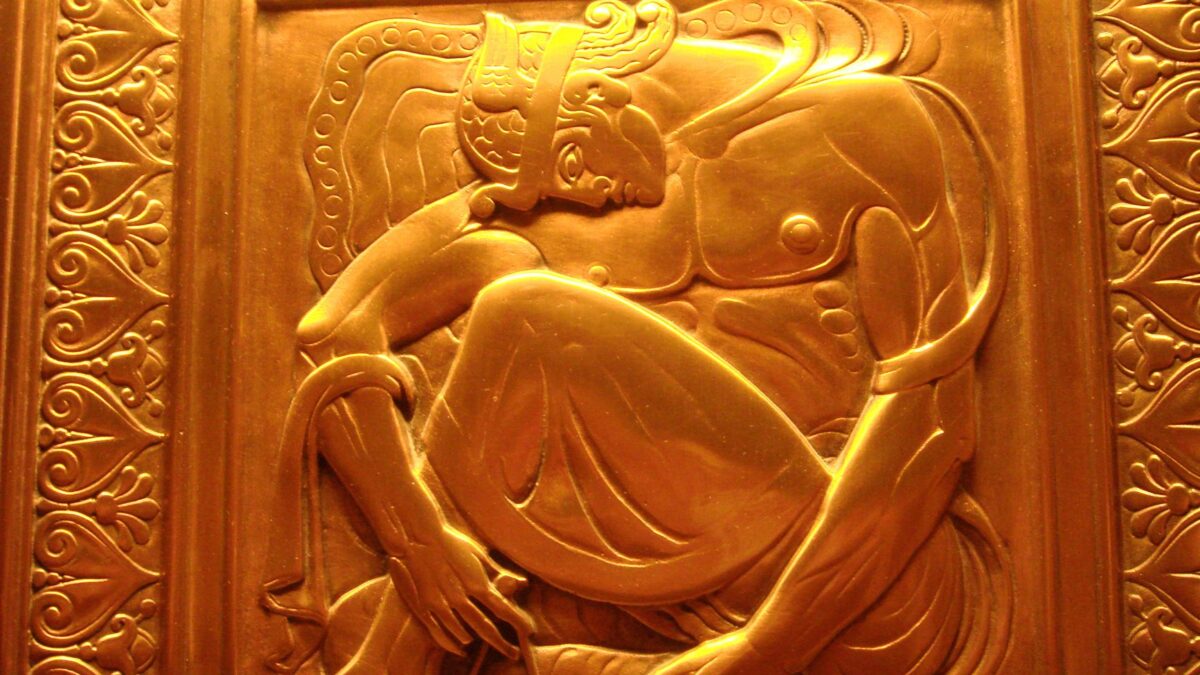
Archaeologists in Almaty, Kazakhstan, have recovered a small cast-gold figurine of a bear from an Early Iron Age burial mound, and the head of the team says nothing like it has been found in the country before. Tiny holes in the piece suggest it was sewn onto fabric, so the researchers think it once decorated a ceremonial headdress.
The bear came from the Karagaily burial mound in Almaty’s Nauryzbay district, where archaeologists from the Almaty Museum Association carried out emergency excavations, HeritageDaily reported, citing the Kazakh news agency KazinForm. The same mound may hold the remains of four adults and three children, an unusually large group for a single grave of this size.
What the dig at Karagaily turned up
Preliminary dating places the mound in the 4th to 3rd centuries BC, the time of the Saka cultures of Central Asia. The earthen mound is about 25 to 26 meters across and stands roughly 2.5 meters high.
Robbers got into the burial in ancient times. The team identified a looters’ pit that reaches about three meters into the mound, and found human remains, broken Saka-period pottery and other material spread throughout the site. The gold bear was among the objects the looters missed.
Lyazzat Sagyndykova, director of the Almaty Museum Association, described the sculpted bear as “unique to Kazakhstan” and said no similar finds had been made there before.
How the bear fits Saka animal art
Animals were a favorite subject in Saka-period craft, and they show up often on jewelry, clothing and ceremonial objects. Other animal-shaped headdress ornaments are already known from Kazakhstan. A gold ibex belongs to the famous “Golden Man” find, and a small leopard figurine, also interpreted as a headdress piece, was excavated at the Kok-Kainar burial ground in 2014.
Sagyndykova said the bear could also be evidence of cultural ties that stretched across Eurasia, from the Black Sea region to the Altai Mountains. For now that is the excavators’ interpretation of a single object.
Why it matters for the study of the Saka
The figurine adds a bear to the small set of animal headdress ornaments known from Saka sites in Kazakhstan, next to the ibex and the leopard.
The possible group burial may turn out to be just as interesting. Marat Nurpeisov, a senior researcher at the association, said the large number of human remains in one mound stood out. In his account, collective burials are uncommon in Kazakhstan, and mounds of comparable size were usually built for one or two people.
What scientists still need to confirm
Several points are provisional. The count of four adults and three children is a working estimate, and anthropologists still have to examine the bones to establish how many individuals were buried. The age of the mound comes from preliminary dating, and the bones and objects were found scattered by the ancient looting.
The findings were announced by the museum association and reported in the press. They have not been described in a scientific journal.
What happens next at the site
Excavations at Karagaily are continuing. Further anthropological and scientific analysis is expected to clarify how many people were buried in the mound and the circumstances of their burial. After conservation and study, the most important artifacts, including the gold bear, are expected to enter the permanent collection of the Almaty Museum and eventually go on public display.
Source: HeritageDaily