Maya Site Minanbé Was Probably Called Sakil, Carvings Show
Hieroglyphs on a stela suggest a newly found Maya site in Mexico was called Sakil, ruled by Suutz', and clashed with Ocomtún. Here is how researchers know.
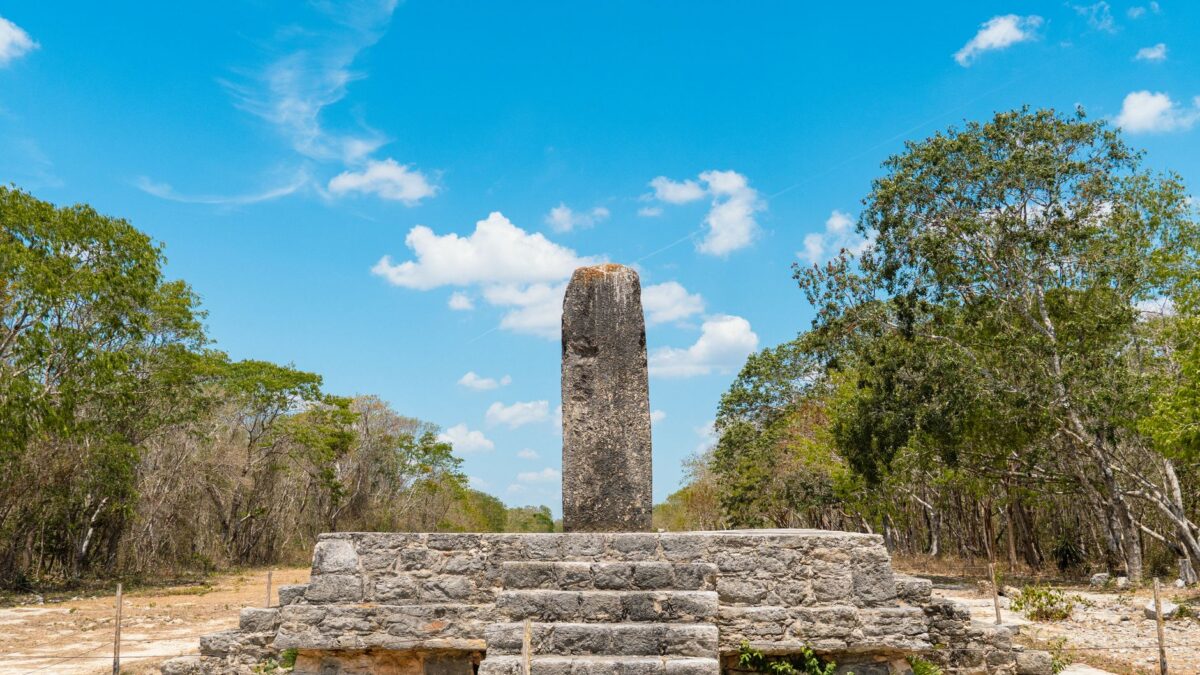
A Maya settlement found in Mexico in May 2026 was probably called Sakil, according to a reading of its carved inscriptions reported by HeritageDaily, citing INAH. The same texts name a ruler, Suutz’, and point to hostility with a larger neighboring city during the Late Classic period, roughly AD 600 to 900.
The site lies north of the Calakmul Biosphere Reserve in Campeche. The archaeological team called it Minanbé, which means “there is no road,” because reaching it was so hard. Sakil, a Maya word associated with whiteness, appears to be the name its own people used.
How the name was worked out
Epigrapher Octavio Esparza Olguín of the Centre for Maya Studies at the National Autonomous University of Mexico (UNAM) presented the findings. He works on the project “Expanding the archaeological panorama of the Central Maya Lowlands,” led by Ivan Šprajc of the Research Centre of the Slovenian Academy of Sciences and Arts.
The key step was a comparison. Stela 7 at Minanbé shows Suutz’, whose name means “Bat,” in elaborate regalia: a pectoral, headdress, kilt and sandals. Hieroglyphic blocks beside him give his name and a place-linked title built from the signs sak and ajaw.
Esparza recognized the same construction on Monument 1 at Ocomtún, a larger Maya center about 40 kilometers to the north-west. There, the text mentions a person associated with Sakil. “When we made the connection of this toponym, I said: Eureka!” Esparza said.
Evidence of conflict with Ocomtún
Ocomtún was found by the same project in 2023, and its own ancient name appears to have been Maatz’. Monument 1 seems to have started as part of an entrance lintel. Later it was removed and reused as a step in a building called Complex B6.
The carving shows an animated mountain beside a captive lying face down with bound wrists. The hieroglyphs say the captive came from Sakil. Researchers read this as evidence that the two communities were hostile to each other for at least part of the Late Classic period.
Esparza also noted that Minanbé must have had ties to other nearby centers, possibly Chactún, Tamchén and Lagunita. The nature of those relationships remains uncertain.
Reading damaged stone
Nearly 20 monuments have been identified at Minanbé, but inscriptions or imagery have been recognized on at least five. Much of the original information is gone. Some monuments were deliberately broken or altered by the Maya themselves, and more than 1,000 years of abandonment wore down the carved surfaces.
Stela 7 itself was broken into three sections, and researchers believe its upper portion was taken elsewhere. To study faint carving, the team used photogrammetric models. These are detailed three-dimensional representations that let specialists change the virtual lighting and bring out features too shallow to see in ordinary light.
Why it matters: a small site with a big title
Altar 6 at Minanbé names Suutz’ again, followed by the title kalo’mte’. For much of the Classic Maya period, that title was tied to powerful rulers whose authority reached beyond a single city. Near the end of the period it began to show up at smaller centers.
Its use here is notable because Minanbé covers only about 15 hectares. A ruler of such a small place claiming the title adds a data point to how political power was shifting late in the Classic period.
Before this work, researchers knew only where the site was. They now have a probable ancient name, Sakil, the identity of one ruler, and evidence of conflict with Maatz’. The name is described as probable, and the sources do not say the reading has been independently reviewed. Further study of the surviving monuments could show what role this small settlement played among the cities of the Central Maya Lowlands more than a thousand years ago.
Source: HeritageDaily