Perseverance Spacesuit Swatches Show Little Wear After 1,645 Sols
Spacesuit swatches on NASA's Perseverance rover showed little wear after 1,645 sols, but Martian dust carries perchlorates and ultrafine particles.
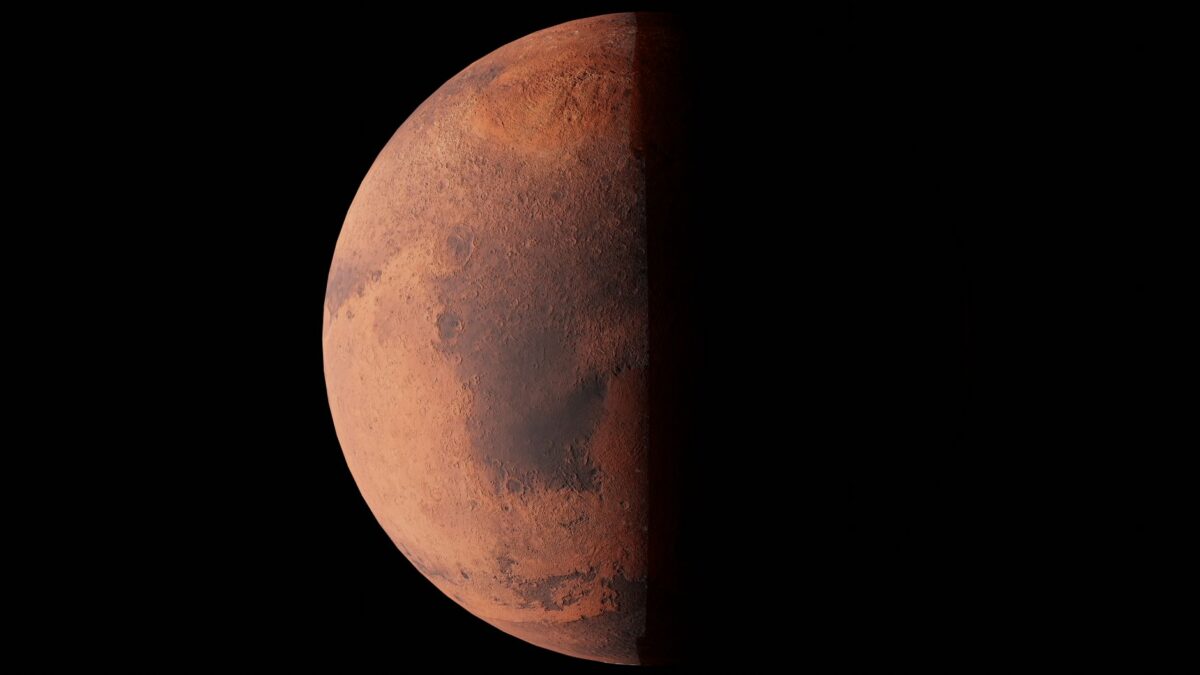
Small spacesuit swatches mounted on NASA’s Perseverance rover showed little visible wear after 1,645 Martian days, or sols, of exposure, according to a study led by Washington University in St. Louis (WashU). The dust that coated them is smoother than lunar dust, but it contains perchlorates and other toxins, and some of its particles are extremely small.
The findings, reported by Universe Today, suggest Martian dust may be less abrasive to equipment than dust on the Moon. The team says its toxicity and the ease with which it sticks to surfaces remain a concern for future crews.
How the team studied the dust
Perseverance carries small swatches of spacesuit material that stay exposed to the Martian atmosphere. The researchers used data from the rover’s Planetary Instrument for X-ray Lithochemistry, known as PIXL, to look at the swatches for signs of wear.
They also applied a method developed by Scott VanBommel, an assistant professor at WashU who led the work, to estimate the size of individual particles in the PIXL data. According to the report, this gave the first direct characterization of fine particles (about 2.5 micrometers or smaller) and ultrafine particles (about 0.1 micrometers or smaller) on Mars. Abigail Knight, a staff scientist at WashU, worked on the analysis. The team included researchers from the U.S., Canada, Australia and Europe, along with groups such as NASA’s Jet Propulsion Laboratory, the MIT Haystack Observatory and CSIRO.
What the dust is made of
The PIXL data let the team analyze the chemistry of the particles caking the swatches. They confirmed perchlorates and other toxins, along with high levels of sulfur, iron and silica. Some ultrafine particles measured as little as 100 nanometers across.
On Earth, ultrafine particles typically come from smoke and air pollution. Universe Today notes that they can sink deep into the lungs and enter the bloodstream, and that the toxins in Martian dust magnify the health risk.
The swatches held up because the grains were rounded. The particles have been blown around for potentially billions of years, so they resemble river pebbles, unlike the jagged grains found on the Moon.
Why it matters for future crews
Apollo astronauts found that lunar dust followed them into their landing modules, wore down mechanical joints and seals, and caused respiratory problems. Martian dust is also electrostatically charged. “The electrostatic properties of Martian dust are likely causing it to preferentially adhere to some surfaces,” Knight said.
Because astronauts will move in and out of vehicles and habitats, small amounts of dust will probably be carried inside, where they will not wear a suit. The report says that unchecked, this could become a growing health hazard, and that the level of risk depends largely on dose and duration. With mitigation strategies, both could be limited, according to the report.
Mars also has frequent dust storms, from daily whirlwinds to global storms about once every 3 Martian years (roughly 5.5 Earth years). Because the atmosphere is thin, the storms exert little physical force. The concern is dust getting into instruments, machine parts and living spaces.
What is still unclear
The sources do not name the journal that published the study or give a DOI, so the details here rely on the Universe Today summary and the WashU-led team’s statements. The swatch results come from one rover at one location, and the report does not describe tests of how long suit materials would last under human use.
Source: Universe Today