Six Immune Cell Types in Fat Tissue Differ by Sex in Obese Mice
University of California, Riverside researchers found six eosinophil populations in mouse fat, with sex-specific patterns that may shape obesity inflammation.
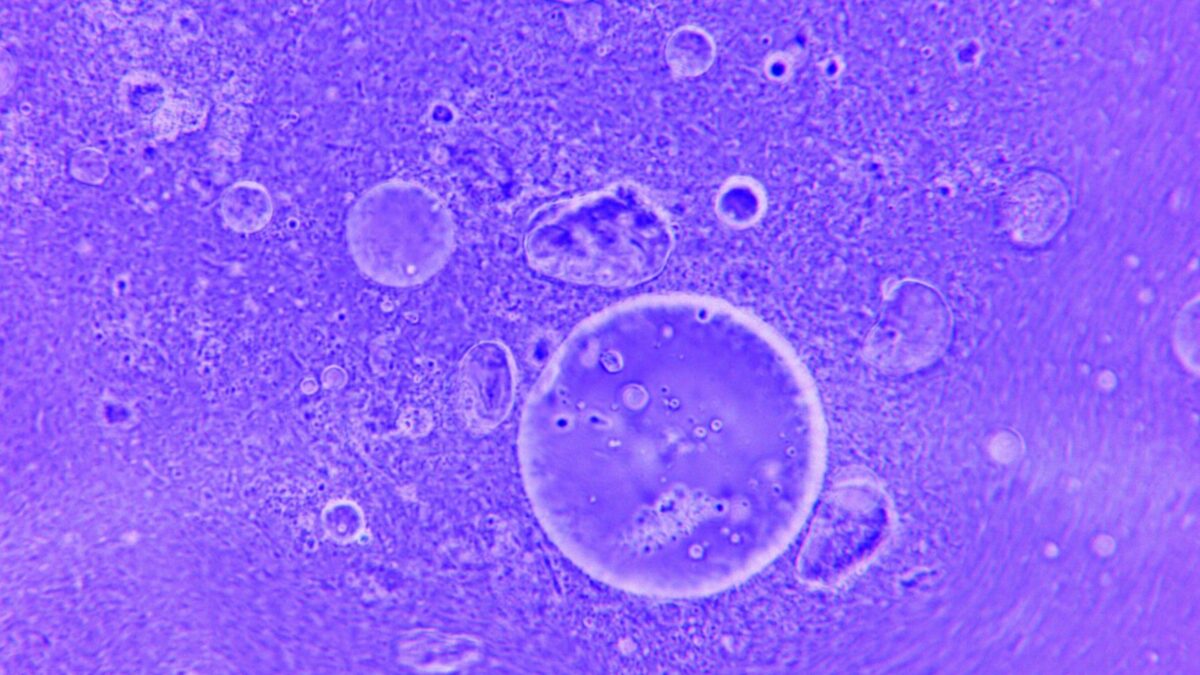
A team at the University of California, Riverside has found six separate groups of eosinophils living in mouse fat. Eosinophils are white blood cells that most people know from allergies and asthma. SciTechDaily, which covered the work, reports that some of them seem to shield female mice from inflammation tied to obesity, whereas male mice on a high-fat diet carried more of the inflammation-promoting types.
Every result so far comes from mice. Nobody has yet shown that people follow the same pattern.
How the six groups were identified
The researchers relied on single-cell sequencing. This technique reads the active genes in each cell one at a time, so it avoids blurring everything together the way a bulk tissue sample does. Applied to adipose (fat) tissue, it sorted the eosinophils into six populations, each with its own gene activity profile. Such differences point to cells with specialized tasks instead of one interchangeable crowd. That finding runs against the older view that eosinophils do a fairly limited set of jobs.
The paper appeared in PNAS Nexus on Oct. 24, 2026 (DOI: 10.1093/pnasnexus/pgag365). Meera Nair, a professor of biomedical sciences at the UCR School of Medicine, led it together with biomedical scientist Adam Godzik. Funding came from the National Institutes of Health, the UCR School of Medicine and the California Institute for Regenerative Medicine.
Where females and males diverged
Female mice had a protective eosinophil group that exchanged signals more effectively with macrophages, which are other immune cells found in fat. A protein made by macrophages, RELM alpha, appeared to support that partnership and may help keep the protective activity going. Earlier experiments that gave RELM alpha to mice produced protective effects, which adds weight to its proposed role.
Males reacted to the high-fat diet in another way. Their fat held more of the eosinophil groups linked with inflammation, and the gene activity in those cells suggested a weaker ability to protect.
Rebecca E. Ruggiero-Ruff, a postdoctoral researcher in Nair’s lab and a co-first author, said the number of eosinophils is only part of the picture. What the cells do and how they communicate with other immune cells also count, she said.
What is still unclear
Eosinophils have turned up in the fat of people with obesity, yet it remains untested whether they act protectively or inflammatory there as they do in the mice. The sources name no outside experts, so independent opinion on the results is not available here.
If similar cell groups exist in humans, the authors say, scientists could study treatments aimed at particular immune pathways rather than altering immune activity across the board. Nair said finding and switching on the pathways behind the protective cells might open new routes to better metabolic health. No treatment has been tried.
Why it matters for obesity research
The study gives researchers a concrete reason to examine males and females separately. Co-first author Xinru Qiu, a postdoctoral researcher in Godzik’s lab, said a medicine aimed at the immune system might not trigger the same pathways or effects in both sexes. For background on the cells and signals involved, see this explainer on how the immune system works.
What comes next
The group is growing three-dimensional adipose organoids, which are lab-made structures that copy some traits of human fat tissue. With them, the researchers want to watch how eosinophils interact with fat cells and macrophages. Godzik said the goal is to learn whether changing that cell-to-cell communication can lead to healthier tissue responses.
Source: SciTechDaily