How Nuclear Fusion Works, From the Sun’s Core to Lasers on Earth
Every second the Sun fuses hundreds of millions of tonnes of hydrogen. Here is how fusion works, why copying it on Earth is so hard, what the National Ignition Facility's ignition shots achieved, and where ITER stands as of November 2026.
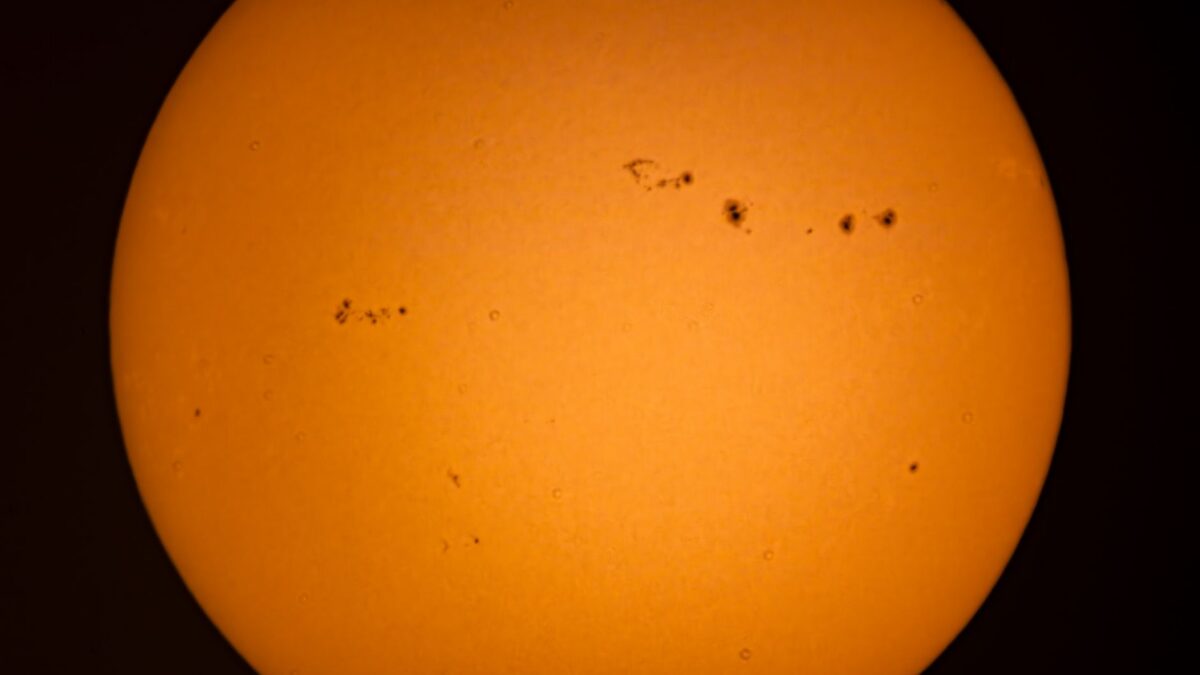
Nuclear fusion is the process of joining two light atomic nuclei into a heavier one, which releases a large amount of energy. It powers the Sun: ITER says our star turns about 600 million tonnes of hydrogen into helium every second. On Earth, the easiest fusion reaction needs fuel heated to about 150 million °C, and as of November 2026 no experiment has yet produced more energy than the whole facility uses to run.
That does not mean progress has stalled. A laser facility in California has reached “ignition” repeatedly since 2022, and the international ITER project in France is building the largest magnetic fusion machine yet.
How does fusion work?
Fusion works by forcing two nuclei so close together that the strong nuclear force binds them, even though both carry positive charges that push them apart. The new nucleus weighs slightly less than the two that formed it, and that lost mass turns into energy, following Einstein’s E = mc². Because c² is a huge number, a tiny bit of mass becomes a great deal of energy.
Getting nuclei that close takes extreme heat. The US Department of Energy explains that at high enough temperatures, nuclei move fast enough to overcome their electrical repulsion. At those temperatures, matter becomes plasma: a gas so hot that electrons are stripped from their nuclei.
How does fusion power the Sun?
The Sun fuses hydrogen into helium in its core, where NASA says the temperature is about 15 million °C (27 million °F). In a chain of steps, four hydrogen nuclei end up as one helium nucleus, releasing energy that slowly works its way out and leaves the surface as sunlight.
The Sun manages fusion at a “mere” 15 million degrees because of its enormous gravity. The weight of the Sun’s outer layers squeezes the core to very high density and holds the hot plasma in place for billions of years. No container is needed. Stars much more massive than the Sun burn through their fuel faster and can end their lives as black holes.
Why is fusion so hard to do on Earth?
Fusion is hard on Earth because we cannot copy the Sun’s gravity, so we must make up for it with higher temperatures and clever confinement. ITER says the most practical reaction for power plants, fusing two forms of hydrogen called deuterium and tritium, needs about 150 million °C, roughly ten times hotter than the Sun’s core. The reaction produces helium and a fast neutron.
The challenges stack up:
- The plasma must be held hot and dense for long enough without touching any wall, which would cool it instantly.
- Small instabilities can let the plasma escape in a fraction of a second.
- The fast neutrons damage materials over time, so reactor walls need new materials.
- Tritium is scarce and radioactive, so a power plant would have to make its own.
- A plant must produce much more energy than it consumes, including the power for magnets, lasers and heating.
What is the difference between tokamaks and laser fusion?
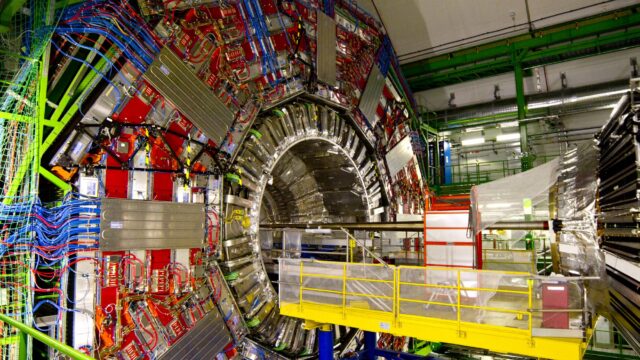
The two main approaches hold the fuel together in opposite ways: tokamaks use magnetic fields to confine plasma for long periods, while laser fusion crushes a tiny fuel pellet for a tiny fraction of a second.
| Approach | How it works | Leading example |
|---|---|---|
| Magnetic confinement (tokamak) | A doughnut-shaped vacuum chamber where strong magnetic coils hold a ring of hot plasma away from the walls | ITER, under construction in France |
| Inertial confinement (lasers) | Powerful laser pulses heat a small capsule so fast that it implodes and fuses before it can fly apart | National Ignition Facility, California |
Other designs exist too, including stellarators, which twist the magnetic field into a more complex shape, and a number of privately funded concepts. None has yet produced net power for the grid.
What did the National Ignition Facility achieve?
On Dec. 5, 2022, the National Ignition Facility (NIF) at Lawrence Livermore National Laboratory became the first experiment to reach fusion ignition: its lasers delivered 2.05 megajoules (MJ) of energy to a fuel capsule, and the fusion reactions released 3.15 MJ. Lawrence Livermore defines ignition as fusion releasing more energy than the target absorbed.
In each shot, up to 192 laser beams fire into a centimeter-sized hollow cylinder called a hohlraum, which holds a tiny capsule of deuterium and tritium. The energy crushes the capsule inward at more than 400 km per second, according to Lawrence Livermore. NIF has repeated ignition many times since. The table shows selected shots from Lawrence Livermore’s ignition timeline.
| Date | Laser energy on target | Fusion energy out | Note |
|---|---|---|---|
| Dec. 5, 2022 | 2.05 MJ | 3.15 MJ | First ignition |
| July 30, 2023 | 2.05 MJ | 3.88 MJ | Second ignition |
| Feb. 23, 2025 | 2.05 MJ | 5.0 MJ | Target gain 2.44 |
| April 7, 2025 | 2.08 MJ | 8.6 MJ | Record yield; target gain 4.13 |
| June 20, 2026 | Not stated | 7.9 MJ | 11th ignition; gain about 3.8 |
These gains count only the laser energy that reaches the target. The lasers themselves draw far more electricity from the grid to fire, so NIF is a physics experiment, not a power plant.
When will ITER start, and when could fusion make electricity?
ITER, in Saint-Paul-lez-Durance in southern France, is a tokamak built by an international partnership of China, the European Union, India, Japan, Korea, Russia and the United States. Under its current baseline, research operation begins in 2034 and deuterium-tritium operation in 2039, according to ITER’s overview page as of November 2026. Those dates are years later than earlier plans.
ITER is designed to produce 500 megawatts of fusion power from 50 megawatts of heating power going into the plasma, a tenfold gain. It will not send electricity to the grid. Its job is to prove that a burning plasma can be controlled at power-plant scale, so that later machines can be built to generate electricity.
Fusion power would not produce greenhouse gases or long-lived radioactive waste, the DOE says, though parts of a reactor would become radioactive from neutrons. It would also not be a quick fix: even optimistic plans put commercial fusion electricity years after ITER’s first deuterium-tritium results, and no date is certain.
Bottom line
Fusion joins light nuclei and turns a little mass into a lot of energy; it powers the Sun at about 15 million °C, but on Earth it needs about 150 million °C. NIF has reached ignition 11 times since Dec. 5, 2022, with a record 8.6 MJ in April 2025, and ITER plans deuterium-tritium operation in 2039. Fusion electricity on the grid is still years away.
FAQ
What is the difference between fusion and fission?
Fusion joins light nuclei such as hydrogen into heavier ones. Fission, used in today’s nuclear power plants, splits heavy nuclei such as uranium. Both turn a small amount of mass into energy.
Can a fusion reactor melt down?
Not in the way a fission reactor can. A fusion plasma holds only a small amount of fuel at a time, and if conditions are disturbed the plasma cools and fusion stops within moments.
Did NIF produce more energy than it used?
It produced more fusion energy than the laser energy that hit the target, which is what ignition means. It did not produce more than the electricity needed to run the whole facility.
Is the Sun a giant fusion reactor?
Yes. The Sun’s core fuses hydrogen into helium, and that energy eventually reaches Earth as sunlight. Our article on why the sky is blue follows what happens to that light in our atmosphere.