Why Rocket Landings Cause Sonic Booms and Who Hears Them
Booster landings near Cape Canaveral and Vandenberg can rattle windows miles away. Here is what makes the noise, how far it carries and how to know when one is coming.
A rocket landing causes a sonic boom because the returning booster falls through the lower atmosphere faster than sound. When a SpaceX Falcon 9 booster lands on a coastal pad in Florida or California, people within about 15 miles usually hear two or three sharp thumps a few seconds apart.
The boom is the noise of the descent, not of the launch. Launch noise is a long roar that builds and fades. A landing boom is short, arrives several minutes after liftoff and often surprises people who were not watching the launch at all.
What causes the sonic boom when a booster lands?
The sonic boom comes from shock waves that form around the booster while it is still moving faster than sound on the way down. Any object traveling faster than about 760 mph at sea level pushes the air into pressure waves that merge into a shock. When that shock passes over you, you hear it as a boom.
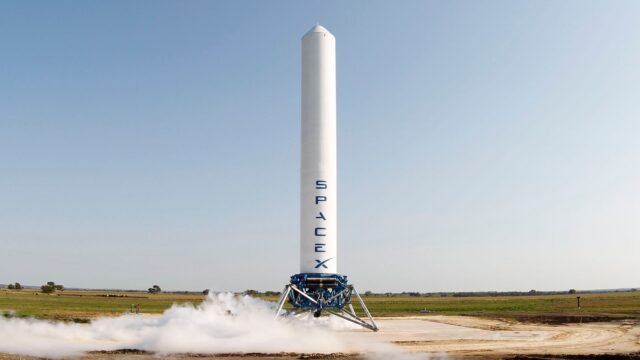
A Falcon 9 first stage separates from the upper stage a few minutes after liftoff, flips around and fires its engines to head back toward land. It then falls through the upper atmosphere faster than sound and slows down only in the last part of the descent, when it fires its engines again for the landing burn.
The shape of the booster explains why people often hear a triple boom. The Space Force’s sonic boom FAQ for Vandenberg Space Force Base says the triple boom comes from the booster’s physical geometry, with separate shocks forming around parts such as the grid fins and landing legs. The engines are not the source.
Which areas hear landing booms in Florida and California?
The areas closest to the landing pad hear the loudest booms, and the sound fades into a rumble with distance. Where it goes on a given night depends on the booster’s path and on the wind and temperature layers in the air.
| Landing site | Where it is | Areas often named in notices |
|---|---|---|
| Landing Zone 40 (Florida) | Next to SpaceX’s SLC-40 pad at Cape Canaveral Space Force Station | Brevard County first; Orange, Osceola, Seminole, Volusia, Indian River and other Central Florida counties on some missions |
| Other Cape Canaveral landing pads (Florida) | Used for some Falcon Heavy side-booster landings; the mission advisory names the pad | Brevard and nearby Central Florida counties |
| Landing Zone 4 (California) | Next to SLC-4E at Vandenberg Space Force Base | Lompoc, Santa Maria and much of Santa Barbara County; sometimes San Luis Obispo and Ventura counties |
| Drone ship at sea | Hundreds of miles offshore | Usually no boom reaches land |
SpaceX moved most of its Florida Falcon 9 landings to Landing Zone 40 in February 2026, starting with the Crew-12 mission. Most Falcon 9 boosters still land on drone ships in the Atlantic or Pacific. Those landings are far enough away that residents do not hear them, which is why a boom only follows some launches.
In Texas, Starship’s Super Heavy booster returns to the launch tower at Starbase. Those returns can also produce booms across the lower Rio Grande Valley. Check notices from SpaceX and Cameron County before each flight; our guide to watching a Starship launch at Starbase covers the closures.
How loud is a landing sonic boom?
A landing boom is loud enough to rattle windows and set off car alarms close to the pad, and it sounds like distant thunder farther away. Engineers measure sonic booms as overpressure in pounds per square foot (psf), the brief jump in air pressure as the shock passes.
- Within about 1.2 miles (2 km) of the landing pad, the Vandenberg FAQ gives a peak of 6 to 10 psf. That is felt strongly as well as heard.
- Farther out, the boom weakens quickly and sounds more like distant thunder or a rumble.
- Cloud cover, temperature layers and wind can make the same landing sound louder in one town and quieter in another.
The boom lasts a fraction of a second per thump. Most people describe it as a set of quick, heavy knocks, like someone hitting a door hard two or three times.
Are rocket landing sonic booms dangerous?
For people and pets, landing booms are a startling noise rather than a health risk. The pressure jump is short and far below levels that injure hearing at the distances where people live.
Older or loose windows, picture frames and items on shelves can rattle. Pets may react to the sudden sound the way they react to thunder or fireworks. If you live close to a landing zone, it helps to know the landing time in advance so you can keep anxious animals indoors and expect the noise.
If you believe a boom damaged your property, contact the public affairs office of the nearby base. Space Launch Delta 45 runs the range at Cape Canaveral and Space Launch Delta 30 runs Vandenberg.
How do residents find out a boom is coming?
SpaceX includes a sonic boom notice in its mission advisory when a booster will land near the coast. Local agencies and news outlets usually repeat it. A notice says a boom is possible and names the counties that may hear it. It cannot promise that every town will.
- Check the mission page on SpaceX’s launch page for the planned landing location. “Landing Zone” or “LZ” means a landing on land; a ship name means a landing at sea.
- Look for the sonic boom line in the mission advisory and note which counties it lists.
- Follow Space Launch Delta 45 (Florida) or Vandenberg Space Force Base (California) on their official channels, since both post launch and boom advisories.
- Expect the boom roughly 7 to 9 minutes after liftoff for a landing on land. If the launch slips, the boom moves with it.
Launch times change often. Our guide on where to find a reliable launch schedule lists the sources that update first, and the explainer on how SpaceX reuses its boosters covers the landing itself.
Bottom line
A sonic boom after a launch means a booster came back to a landing pad on land. In Florida that is usually Landing Zone 40 at Cape Canaveral, and in California it is Landing Zone 4 at Vandenberg. Nearby towns hear two or three sharp thumps a few minutes after liftoff. The noise can rattle windows but is not a danger to people, and SpaceX lists possible boom areas in its mission advisory before each landing on land.
FAQ
Why did I hear three booms instead of one?
A Falcon 9 booster has several large features, including the body, grid fins and landing legs, and each one forms its own shock wave. Those shocks reach the ground a fraction of a second apart, so many people hear a double or triple boom.
Do all SpaceX launches cause a sonic boom?
No. Most Falcon 9 boosters land on drone ships far offshore, and those landings are not heard on land. A boom is likely only when the booster returns to a pad near the coast, which the mission advisory states in advance.
Can a sonic boom break windows?
Close to the landing pad, a boom can rattle windows and loose objects. Broken windows are not expected at the distances where people live, but anyone who sees damage should report it to the nearby Space Force base.
How long after launch does the boom happen?
For a booster landing on land, the boom usually arrives about 7 to 9 minutes after liftoff, shortly before touchdown. A launch delay moves the boom by the same amount.