DNA From 18 Bones Shows ‘Extinct’ Giant Crane Was the Common Crane
Ancient DNA from 18 crane bones shows the extinct giant crane Grus primigenia was the living common crane. How sex and shrinking size fooled scientists.
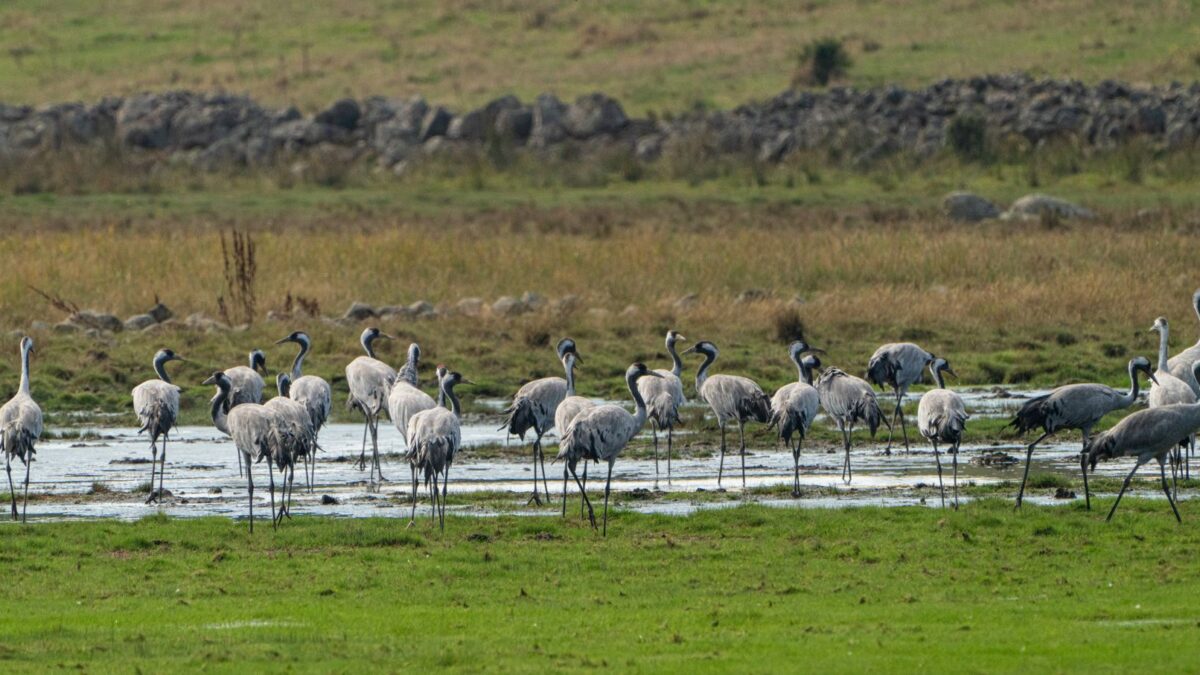
A giant crane that scientists named as an extinct species about 150 years ago was almost certainly the common crane that still lives in Europe, according to an ancient DNA study of 18 crane bones. The researchers, writing about their work in The Conversation, say the case shows that some extinctions recorded from old bones may need a second look.
The bird, called Grus primigenia, has been known from remains dating from possibly 20,000 years ago or more until about 2,000 years ago. The new analysis suggests those large bones came from male common cranes (Grus grus) and from a time when the species was bigger than it is today.
A crane named from cave bones in France
The French biologist Alphonse Milne-Edwards described the “primeval” crane in the 19th century from bone fragments found in caves in southern France. Those first bones were dated to the end of the last ice age, and many other crane remains were later assigned to the same extinct species.
Its identity has been argued over ever since. Some researchers proposed that the bones belonged to the sarus crane, a large living bird of monsoon regions in Asia. Others suggested the Siberian crane, which breeds on the tundra of eastern Siberia. A third view held that they were simply oversized common cranes.
How the DNA test settled the question
The team sampled 18 crane bones of different sizes from England, Wales, France, Germany and the Balearic Islands. Genetic work at the Centre for Palaeogenetics in Stockholm, Sweden, pointed strongly to a single species for all of them, the living common crane, and ruled out the sarus and Siberian cranes.
The researchers then asked why the big bones had been treated as a separate species in the first place. The old reasoning was that Europe seemed to hold two kinds of crane in the past: smaller birds counted as common cranes, and larger ones counted as Grus primigenia.
A survey of modern common cranes had already shown that males are clearly larger than females, a pattern biologists call sexual dimorphism. When ancient bones were lined up against modern birds, very few matched the size of today’s females. Some matched modern males, and some were larger still.
Using a molecular method to determine the sex of each ancient specimen, the team tested whether the largest birds were mostly males and whether the male-sized ones included females. According to the authors, the result was clear: a combination of sexual dimorphism and a drop in body size over time had made one species look like two over the last 20,000 years.
A shrinking bird and a local extinction
The most recent cranes larger than today’s birds came from Flixborough in Lincolnshire, England, an Anglo-Saxon archaeological site where high-status people may have feasted on them. That means the common crane got smaller at some point in the roughly 1,000 years since.
The cause of the shrinking is unclear. The authors note that the crane disappeared from Britain and many parts of Europe during that period. Wetland drainage, hunting and the taking of eggs from nests have been blamed for its loss from Britain about 400 years ago. The researchers consider wetland drainage the most likely driver of the size decrease, since it may reflect poorer habitat across the bird’s range. Cranes came back to the UK on their own in the 1970s.
What this means for counts of extinct species
Birds are thought to have suffered high levels of extinction over the last 120,000 years, much of it driven by people. The authors argue that some of those claimed losses may rest on shaky ground. A bird such as the great auk was known from living individuals, so its extinction is not in doubt. Species named only from the size of old bones are a different matter, and the researchers say molecular tests are probably needed to confirm they were truly separate.
Many extinct animals were named on that kind of size evidence, so the team expects that at least some will turn out to be larger or smaller individuals of species that still exist. That would change the tallies scientists use when they estimate how many species exist and how many have disappeared.
Source: The Conversation