Bronze Age Tombs at Spain’s Cape Trafalgar Held Gold and Ivory
Two megalithic tombs at Cape Trafalgar, used between 1875 and 1600 B.C.E., may be among the last built in Iberia. What PLOS One researchers found.
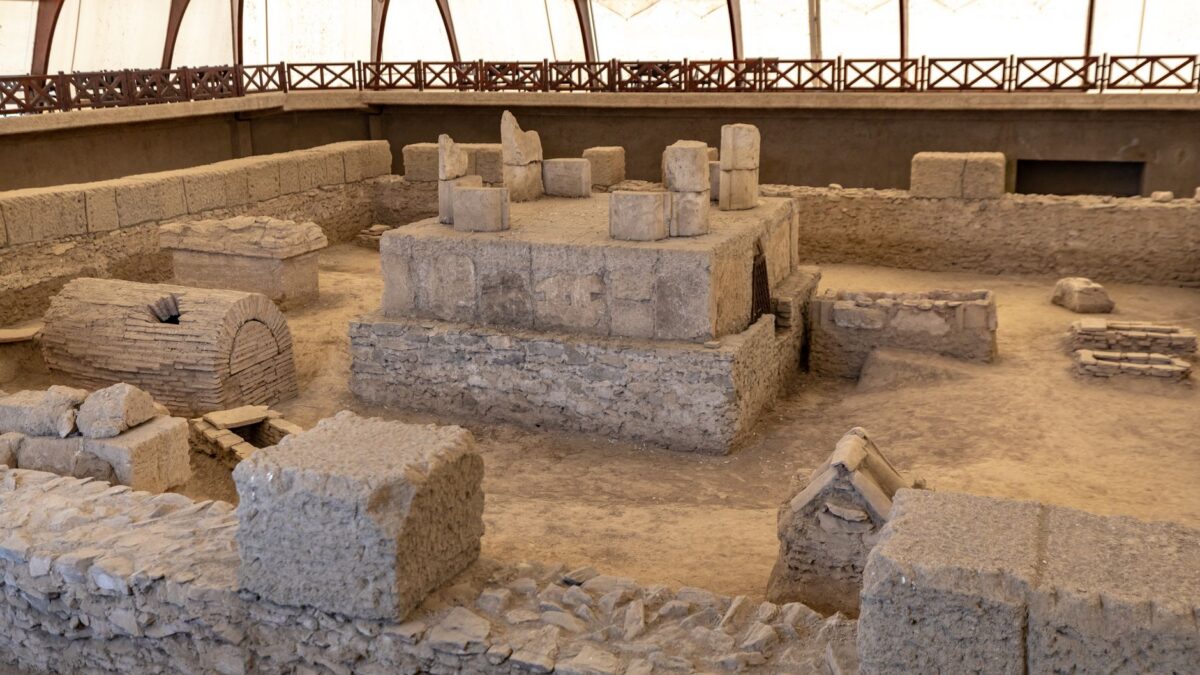
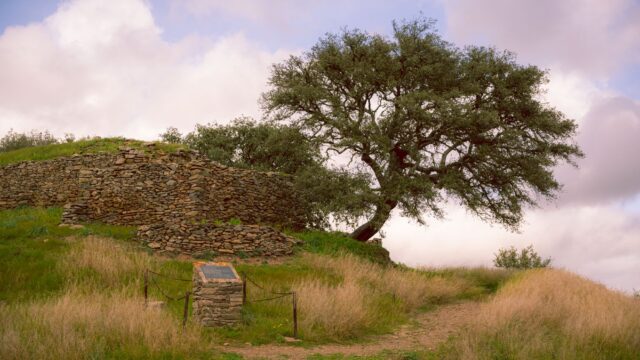
Two megalithic tombs on Cape Trafalgar in southern Spain were used between 1875 and 1600 B.C.E., and they may be among the last monuments of their kind built on the Iberian Peninsula, according to a study in the journal PLOS One. The finding suggests that some communities linked to the El Argar culture kept burying their dead together in large stone tombs well into the second millennium B.C.E., long after most of the region had moved to individual graves.
The research team, which includes archaeologists from the University of Cádiz, describes the site as the necropolis of Trafalgar, near Barbate in Cádiz province, Discover Magazine reported.
A small grave that turned out to be a corridor
When excavation began, the archaeologists expected a cist tomb, a small box-like grave common in Bronze Age Europe. During that period, shared monuments were slowly giving way to individual burials, especially for people of high status.
Instead, they uncovered part of a corridor belonging to a far larger and more complex megalithic tomb. The following year, a second structure turned up 590 feet (180 meters) to the southeast: a tomb with a round chamber and a short entrance corridor. Each tomb held the remains of several people. The researchers think the two may belong to a larger burial ground, but say more work is needed to confirm that.
How the team dated the burials
The dates come from radiocarbon testing of human remains found at the site, which places the burials in the early Bronze Age. People of that era often reused older megalithic tombs, but the authors argue this necropolis was probably built new, because they found few artifacts or materials from any earlier period.
That interpretation has not been confirmed. If it holds, the site would be “one of the latest megalithic necropolises in the Iberian Peninsula,” Eduardo Vijande, associate professor of prehistory at the University of Cádiz, said in an interview published alongside the paper.
Gold earrings and an ivory comb
The tombs also held grave goods that point to wealth and long-distance contacts. One woman was buried with two gold earrings, three silver beads, an ivory comb and green mica beads.
Juan Jesús Cantillo, assistant professor of prehistory at the University of Cádiz, said the objects were made from materials not found locally. He said their exact source cannot be stated with certainty, but the site’s position on the Strait of Gibraltar suggests the ivory likely came from Africa, carried along sea routes. In the paper, the researchers describe the area as a contact hub between Iberian societies and those in North Africa.
Why it matters for understanding El Argar
The El Argar culture, dated from 2200 to 1550 B.C.E., is thought to be the first state-based society in Western Europe. It was marked by extreme inequality, territorial expansion and a strict social hierarchy, and it collapsed suddenly, for reasons still debated, around the middle of the second millennium B.C.E.
The Trafalgar tombs show that the shift away from communal burial across Iberia was uneven, with some groups holding on to the older tradition while others adopted individual graves. Rich objects inside a shared tomb also complicate the picture of how status was displayed in Argaric society.
What comes next
The team is now analyzing the human remains from both tombs. The researchers hope the bones will reveal details about the diet, health and daily lives of the people buried there.
Source: Discover Magazine