Euclid Telescope Logs 900 Million Galaxies in First Data Release
Euclid's first big data release covers more than 900 million galaxies and about 15,000 strong lensing candidates, a step toward a 3D map of the cosmos.
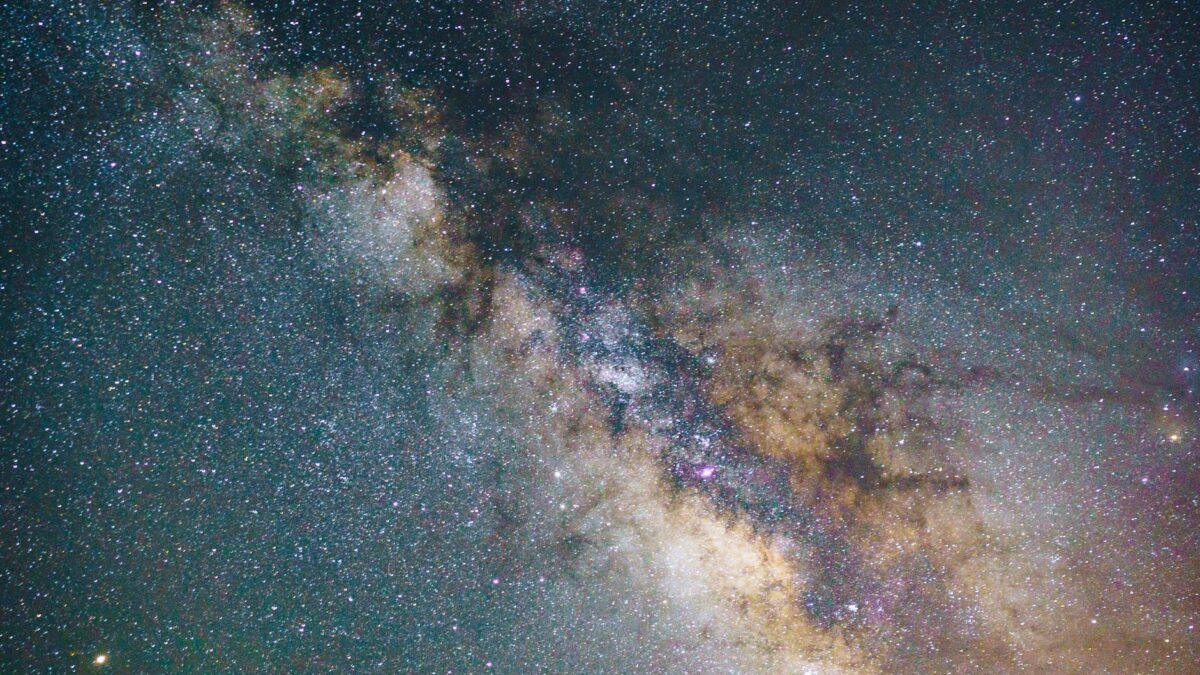
The European Space Agency’s Euclid space telescope has released its first large batch of survey data: 1.7 million gigabytes covering more than 900 million galaxies, according to Smithsonian Magazine. The release, unveiled Nov. 12, follows roughly 13 months of scientific observations and covers a patch of sky about as wide as 9,500 full moons.
The catalog also lists more than 60 million potential quasars, the bright cores of distant galaxies. It adds about 15,000 candidates for strong gravitational lensing, a phenomenon researchers use to study the dark universe.
How Euclid reads the sky
Euclid launched in July 2023 and sits near Lagrange Point 2, a spot nearly one million miles from Earth. The James Webb Space Telescope operates in the same region. NASA’s Nancy Grace Roman Space Telescope is on its way there, where it will look for exoplanets and also study dark matter and dark energy.
Gravitational lensing happens when a galaxy sitting between a faraway galaxy and the telescope bends the distant galaxy’s light. The amount of bending depends on the mass in the foreground galaxy, including the invisible part. Natalie Lines, an astrophysicist at the University of Portsmouth and a Euclid team member, told Reuters that thousands of lenses let researchers study how dark matter is spread through galaxies and how galaxies form and change over cosmic time.
The 15,000 candidates in this release, called Data Release 1-Foundation, form the largest catalog of strong lenses so far. According to an ESA statement, it is bigger than all earlier databases combined.
Euclid also splits a galaxy’s light into its component wavelengths, much as a prism splits white light into a rainbow. Those spectra can show a galaxy’s distance, origin and composition, and distance is what lets scientists build a 3D map of the universe and its web of galaxy clusters. This release includes spectra from more than 160 million sources.
Andy Taylor, an astrophysicist at the University of Edinburgh and a Euclid team member, told the Guardian that other surveys either cover wide areas at lower resolution or zoom in on small regions at high resolution. Euclid keeps the high resolution while mapping huge volumes of sky.
What the telescope is chasing
Euclid is meant to investigate dark matter, which acts as a kind of cosmic glue, and dark energy, which is thought to drive the accelerating expansion of the universe. Scientists suspect the two together make up 95 percent of the universe, but neither can be measured directly. Lensing offers an indirect route.
How sure is this?
The 15,000 lenses are candidates, not confirmed cases, and the quasars are likewise listed as potential. The sources do not name a journal paper or say whether the catalogs have been peer-reviewed. What they describe is a data release, with analysis still ahead.
It is also a small slice of the survey. Data Release 1-Foundation holds only around 14 percent of the sky Euclid will eventually observe.
What comes next
The full Data Release 1 is expected in mid-2027. Valeria Pettorino, ESA’s Euclid project scientist, said in the statement: “So much discovery is yet to come.”
Source: Smithsonian Magazine
Site editor: Nikita Sheikin