Neanderthal Gene Variant Shrinks a Visual Brain Region, Study Finds
A Neanderthal variant carried by about 20 percent of people with European ancestry is tied to a smaller occipital lobe and lower schizophrenia risk.
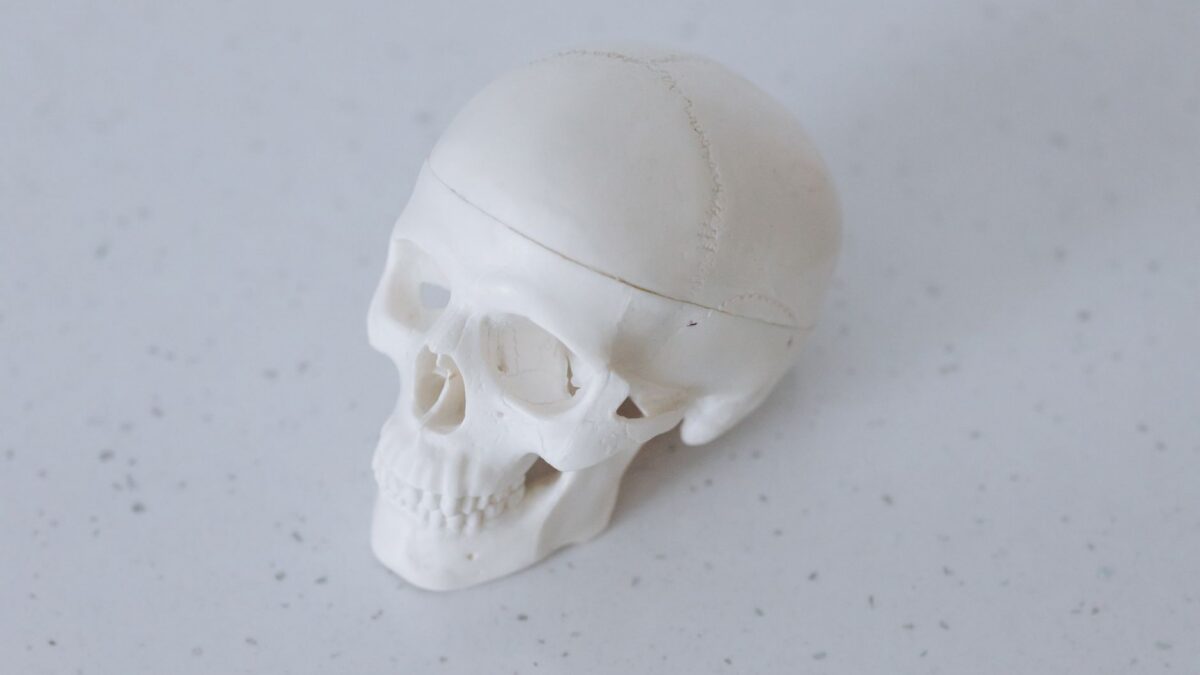
Many people in Europe carry a piece of Neanderthal DNA that goes with a slightly smaller occipital lobe, the brain area that handles vision, and with a reduced chance of schizophrenia. Researchers reported the result in the Proceedings of the National Academy of Sciences on November 16, as covered by Smithsonian Magazine. Roughly 20 percent of people with European ancestry have at least one copy of the variant.
The finding comes from statistical links in large datasets. The authors say they cannot yet explain how the variant lowers risk.
Why the team looked at the occipital lobe
Neanderthal skulls were bigger than ours and stretched further from front to back, which suggests the brain tissue was arranged differently. Hugo Zeberg and Svante Pääbo, evolutionary geneticists at the Max Planck Institute for Evolutionary Anthropology in Germany, guessed that the occipital lobe, located at the rear of the brain, played a part in that shape.
To test the idea, they gathered gene variants already known to change the size of this region among people of European descent, who usually have around 1 to 2 percent Neanderthal ancestry. They then dropped every variant that also showed up in people of sub-Saharan African descent. Those populations have little or no Neanderthal DNA, because their ancestors did not interbreed with the extinct hominins.
One variant remained. It sits upstream of DAAM1, a gene involved in brain development. All five Neanderthal genomes available to the team carry it, while the two Denisovan genomes they tested do not. Denisovans are another extinct group that interbred with modern humans. Science reported the team’s estimate of about 20 percent for carriers of European descent.
What the U.K. Biobank data show
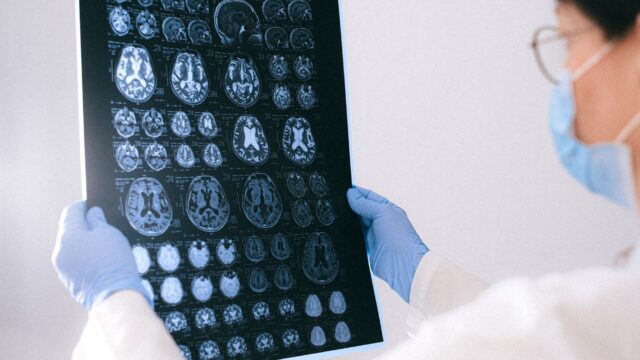
The researchers turned to the U.K. Biobank, a collection with genetic information from about half a million participants. Among those volunteers, a single copy of the variant, passed down by one parent, goes with a 0.85-cubic-centimeter drop in occipital lobe volume. A copy from each parent doubles the loss.
Two copies also went with a reduction of nearly 10 percent in the risk of schizophrenia. Zeberg and Pääbo checked intelligence, bipolar disorder, depression, ADHD and autism spectrum disorder as well and saw no connection to the variant. In their view, how big a brain region is should not be used as a stand-in for cognitive ability.
A smaller region from relatives with larger brains
The result looks odd because Neanderthals are believed to have had larger brains than Homo sapiens. Joshua Akey, a Princeton University geneticist who did not take part in the work, told Nature that hundreds or even thousands of genes shape something like brain size. He said Neanderthals might have had a bigger occipital lobe overall while still holding some variants that make it smaller and others that make it larger, and Homo sapiens could have received one of the shrinking ones.
Davide Marnetto, a computational biologist at the University of Turin in Italy who was not involved, described the effect to Nature as among the strongest he has seen.
What this means for the research
The result agrees with a 2021 report from Karen Berman, a neuroscientist at the National Institute of Mental Health, and colleagues, who found lower schizophrenia rates in people with more Neanderthal ancestry. For background, see how DNA and genes work and who the Neanderthals were.
Zeberg told Science that the exact mechanics are not understood at this point, and that animal studies or brain organoids could add detail later. The two researchers are still going through data on other marks Neanderthals left in modern genomes.
Source: Smithsonian Magazine
Site editor: Nikita Sheikin