Uranus Hits Opposition Nov. 25 at Magnitude 5.5 Near the Pleiades
Uranus reaches opposition on Nov. 25 in Taurus at magnitude 5.5. Here is where to find the planet, its moons and why Uranus lies on its side.
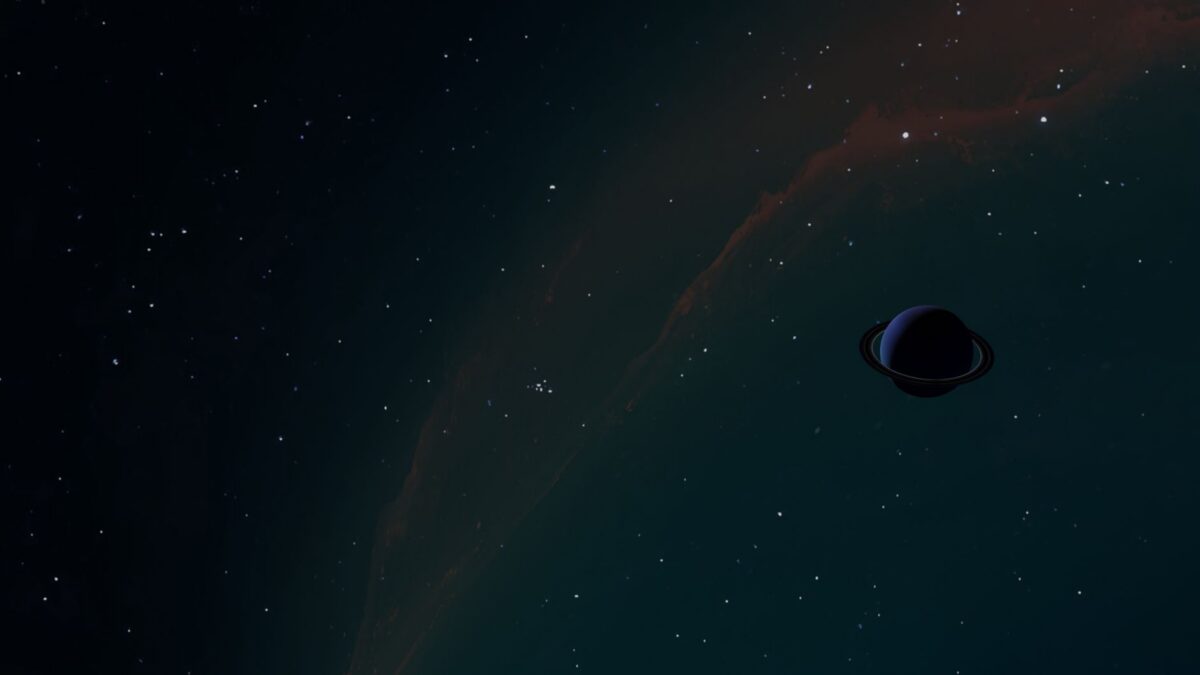
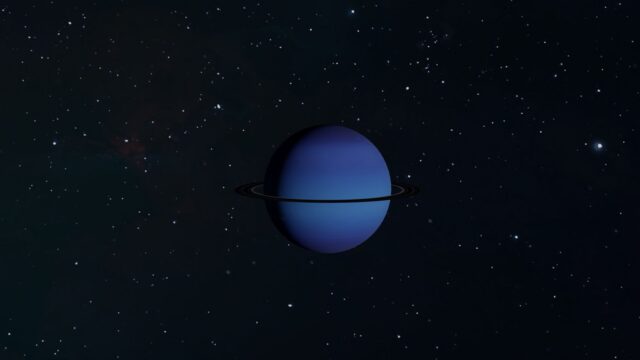
Uranus reaches opposition on Nov. 25, the eve of U.S. Thanksgiving, according to Universe Today. At that point the planet shines at about magnitude 5.5 in the constellation Taurus, between the Hyades and Pleiades star clusters.
Opposition is the moment an outer planet rises as the Sun sets, so it sits opposite the Sun in Earth’s sky. Saturn reached the mark on Oct. 4 and Neptune on Sept. 26. Visibility depends on location and weather.
Where to look and what you will see
Uranus orbits the Sun once every 84 years. Its synodic period, the time between two oppositions, is 370 days, so the date slips forward only about five days each year. The Full Beaver Moon falls on the same date as this opposition, a day after it occults the Pleiades, as seen from the Arctic, on Nov. 24.
The planet tops magnitude 6 near opposition, which puts it at the edge of naked-eye visibility from a good dark site. Sweeping the field at low power with a telescope should turn up a blue-green “star” that refuses to come into sharp focus. At the eyepiece Uranus shows a disk about 4 arcseconds wide, barely resolvable, with little detail to pick out.
Universe Today’s writer says the planet looks like a tiny planetary nebula or a fuzzy comet. That is what William Herschel first took it for when he found it on March 13, 1781, from his garden in Bath, England. After following the object for several nights he realized it was far beyond Saturn.
The moons of Uranus
Uranus has 29 known moons, but only five are within reach of amateur telescopes. The brightest, Titania, shines at magnitude 13.9, circles Uranus every 8.7 days and strays at most 28 arcseconds from the planet. Planetarium programs such as Stellarium and Starry Night show where the moons sit at any given time, which helps tell them apart from background stars.
Their orbits are currently nearly perpendicular to our line of sight. The moons line up edge-on, and can transit the planet as seen from Earth, once every 42 years. The last run was in 2006 to 2009, and the next starts around 2048.
A planet tipped on its side
Uranus is tilted more than 98 degrees, the result of an ancient collision with another large body early in the solar system’s history, according to the report. Earth now looks nearly straight at its rotational pole, and that pole will point almost directly at us in late 2029.
The planet reached its farthest point from the Sun, 20 astronomical units (AU), in 2009 and is heading toward perihelion at 18.3 AU in 2050. In 2033 it passes the spot in Taurus where Herschel found it. It crosses the ecliptic plane northward in 2029, and the Moon will not occult Uranus again until a cycle starting Sept. 29, 2029.
How sure is this?
These are orbital and sky positions of the kind astronomy software calculates, reported in a Universe Today observing guide rather than a peer-reviewed study.
Only one spacecraft has visited Uranus up close: NASA’s Voyager 2, which flew past the planet and its moons in 1986. Orbiter missions in the style of Cassini have been proposed. Such a mission would need a long trip to the ice giant and then a slowdown to enter orbit, and it would be feasible around the 2040s, according to the report.
Source: Universe Today
Site editor: Nikita Sheikin