Leonids Bring Up to 15 Meteors an Hour as Voyager 1 Hits a Light-Day
The Leonids peak Nov. 17-18 with up to 15 meteors an hour, Mars and Jupiter sit 1.2 degrees apart and Voyager 1 reaches one light-day from Earth.
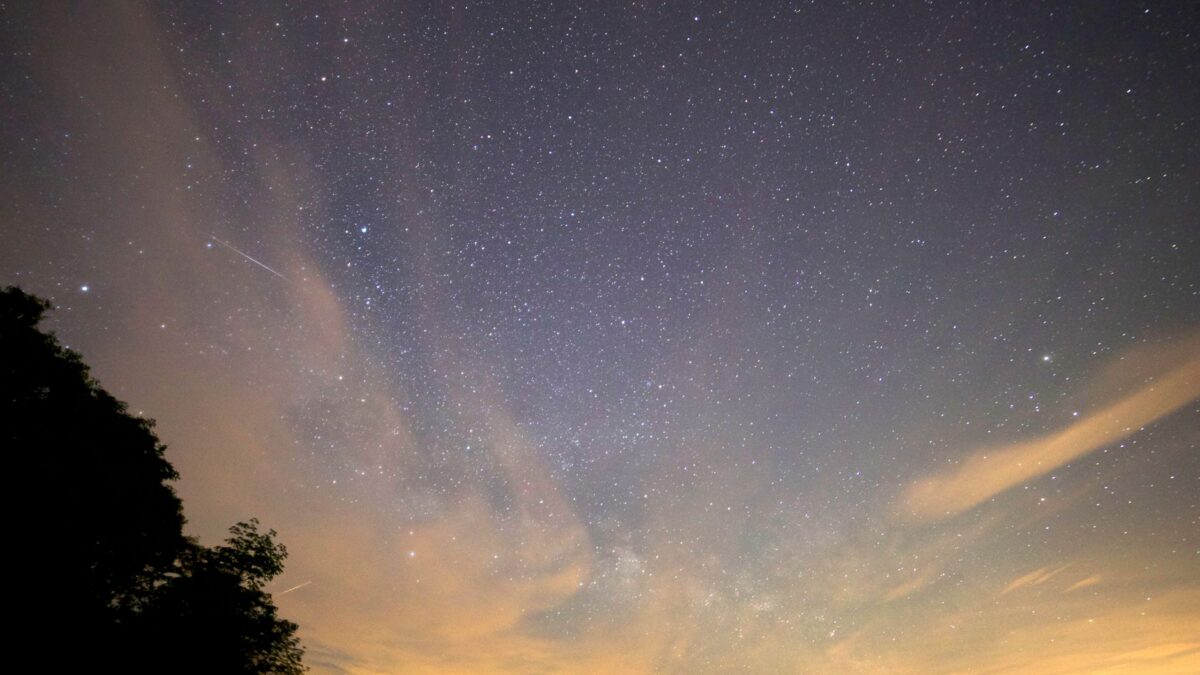
The Leonid meteor shower peaks in the early morning hours of Nov. 17 and 18, with up to about 15 meteors per hour under ideal conditions, according to NASA’s November skywatching guide as reported by SciTechDaily. The same month brings a close meeting of Mars and Jupiter, the Northern Taurids, a full supermoon on Nov. 24, and a distance record for NASA’s Voyager 1 spacecraft.
None of these sights needs a telescope. As with any sky event, what you actually see depends on your location, local light pollution and the weather. The guide gives dates but not exact times for most events.
Taurid fireballs in the first half of the month
Two showers named for the constellation Taurus open the month. The Southern Taurids peaked around Nov. 5, and the Northern Taurids follow around Nov. 12. Their meteors seem to come from two separate spots within Taurus, which is why astronomers count them as different showers.
Neither is busy. Each produces roughly five meteors per hour in good conditions, well below the year’s major showers. The Taurids do have a habit of throwing off fireballs, meteors much brighter than the usual quick streak, so a slow night can still deliver a memorable one.
Leonids best before dawn on Nov. 17 and 18
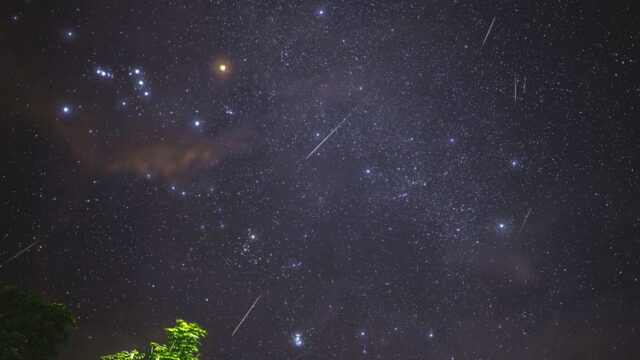
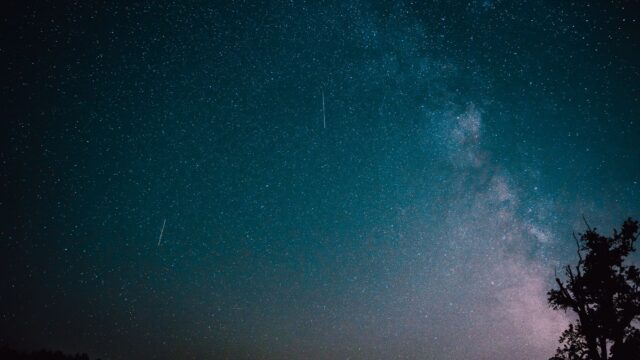
The Leonids are the month’s strongest shower. NASA’s guide points observers to the hours before dawn on Nov. 17 or 18, after the Moon has set, when the sky is darkest. The figure of 15 meteors per hour assumes ideal conditions; real counts are usually lower.
The guide’s suggestions are simple: get away from city lights, give your eyes about 30 minutes to adapt to the dark, and settle somewhere comfortable with a wide view of the sky.
Mars and Jupiter 1.2 degrees apart
Before sunrise on Nov. 15 and 16, Mars and Jupiter appear about 1.2 degrees apart low in the southeastern sky. That gap is a little more than the width of two full Moons placed side by side. Jupiter is the brighter of the pair, and Mars shows its reddish tint nearby.
The planets are nowhere near each other in space. Their closeness is a line-of-sight effect from where Earth sits in its orbit. Watching over several mornings shows them drifting toward each other and then separating again.
What Voyager 1’s light-day milestone means
At some point in November, Voyager 1 becomes the first human-made object to reach one light-day from Earth. At that distance a radio signal, moving at the speed of light, needs 24 hours to reach the spacecraft. A reply takes another 24 hours, so a single exchange of command and answer takes about two days.
Voyager 1 is far too faint to see. It is heading roughly toward Ophiuchus, the Serpent Bearer constellation, as it travels through interstellar space, so finding Ophiuchus shows you its general direction. NASA is marking the milestone with a public event called Shine Bright for Voyager’s Light-Day on Nov. 17.
A supermoon starts a three-month run
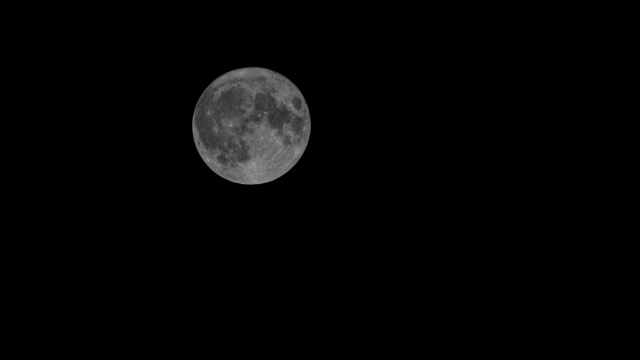
The full Moon of Nov. 24 is a supermoon. The Moon’s orbit is a slightly stretched oval, so its distance from Earth changes through the month. A full Moon that falls near the close end of that orbit is called a supermoon and looks somewhat bigger and brighter than average, though the difference is hard to notice by eye.
This one is the first of three supermoons in a row, with more in December and January. Watching the Moon rise in the east around sunset can make it look huge. That impression comes mostly from the Moon illusion, a trick of perception that works on any full Moon close to the horizon, whatever its real distance.
Why it matters for skywatchers
November packs naked-eye events into a few weeks: two modest meteor showers with a chance of fireballs, one stronger shower, a tight planetary pairing and a bright full Moon. The Voyager 1 milestone cannot be seen, but it gives a sense of scale, since the probe is now so distant that light needs a full day to cover the gap. Viewing conditions vary by place and weather, so check the local forecast before heading out.
Source: SciTechDaily