Central-North Amazon’s Peak Heat Rose 0.75°C a Decade, Study Finds
A Communications Earth & Environment study finds extreme heat and dryness rising fastest in the central-north Amazon. See the method and its limits.
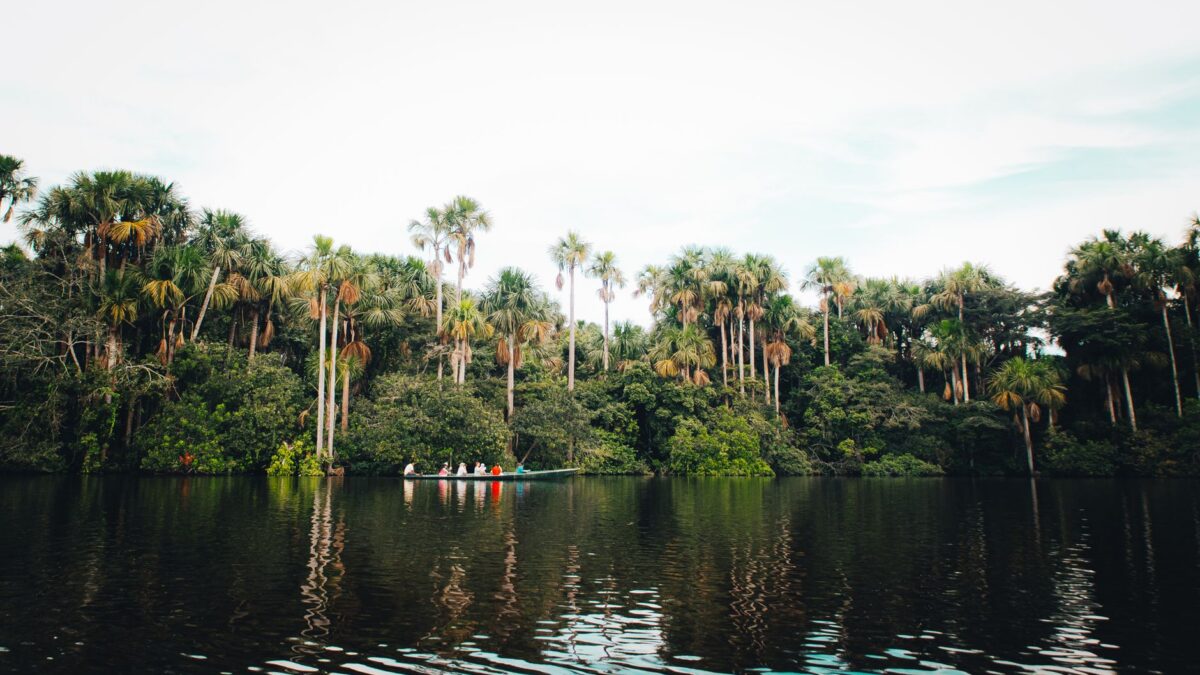
The hottest temperatures in the central-north Amazon rose by 0.75°C (1.35°F) per decade between 1981 and 2023, according to a study in Communications Earth & Environment. Across the 43 years analyzed, that adds up to more than 3.22°C (5.80°F), over three and a half times the average rate of increase across the region, Mongabay reported.
For decades, research has pointed to southern Amazonia as the region’s climate hotspot, where average temperatures are rising faster and deforestation and fires are common. The new analysis, which Mongabay describes as showing an “alarming” increase, found the greatest changes in extreme temperature and water deficit in the north instead, outside the arc of deforestation.
How the team measured extremes
The researchers analyzed satellite, aircraft and weather station data from 1981 to 2023. They found that across all of Amazonia, extreme temperatures rose more than twice as quickly as annual mean temperatures. Extreme dry conditions also worsened faster than the average. Rainfall did not change significantly across Amazonia over the period.
The work split the region into grid cells 11 kilometers (6.8 miles) wide and identified when the dry season falls in each cell. That matters because the months that are typically drier in the south (July to October) are among the wettest in the north, said co-author Jos Barlow, a conservation science professor at Lancaster University. Many earlier studies treated the entire region as having one dry and wet season.
To track extremes, the team used qgam, a statistics package released by the University of Bristol in 2021. Matteo Fasiolo, the Bristol associate professor who wrote it, reviewed the paper.
The fastest-changing area covers about 700,000 square kilometers (270,000 square miles), mostly in Roraima, Brazil’s northernmost state. The study found 10% of the biome seeing extreme temperatures. Barlow said the area has one of the densest covers of protected land in the Amazon, mostly federal or state reserves and Indigenous territories.
Deforestation does not explain it
Historically, deforestation has concentrated in the south-east. About a third of all Amazon forest loss since 1988 happened in Mato Grosso, while Roraima accounts for about 2% of it, according to Brazil’s National Institute for Space Research. Jose Antonio Marengo, a meteorologist at Brazil’s CEMADEN disaster monitoring center who was not involved in the study, said the results show climate change alone is behind the dryness in the central-north. He said that is the opposite of what has happened in the southern and eastern Amazon.
The authors suggest the cause may be a combination of global climate phenomena, including El Niño conditions and cloud cover concentrating around the equator. At least one study modeling a climate-driven collapse of the Atlantic Meridional Overturning Circulation (AMOC) ocean current suggests the northern Amazon could be more affected by drought as a result. Barlow said that would not explain extremes outpacing the general changes.
Barlow said some factors can be ruled out, such as consistently different soils. “It was a big surprise,” said Nathália S. Carvalho of Lancaster University, who led the study’s mapping.
What the team links to the heat
The authors say the findings could help explain bird die-offs, forest fires, severe droughts and more hospital visits for heat and smoke exposure in Manaus. Aretha Guimarães, a biologist at Brazil’s National Institute of Amazonian Research (INPA), found dead sloths throughout a forest census site near Manaus during the October 2023 fire season. She said her team could not explain the deaths, and the study gives one possible explanation.
How sure is this?
The paper is peer reviewed, and its DOI is 10.1038/s43247-026-03975-1. The cause of the regional rise remains unclear, and Barlow said attribution would be difficult. Fasiolo said the exact warming figures carry “a lot of uncertainty,” though the data clearly showed extremes worsening faster than averages. Marengo said the results were not a surprise but were interesting.
What the researchers say should follow
Barlow said that if the extremes are not tied to local deforestation, global emissions cuts come first. Marengo said the findings strengthen the case for vigilance against deforestation and for preparing for extreme events, including a powerful El Niño late this year and early next. He noted that many Brazilian government fire preparations have focused on the south-east of the Amazon. Guimarães said too few people do field work in the affected area.
Source: Mongabay
Site editor: Nikita Sheikin