Celtic Silver Coin Hoard Found Under a Hungarian Substation Site
Archaeologists in western Hungary dug up more than 200 Celtic silver coins in a small clay pot, one of the country's largest hoards in decades.
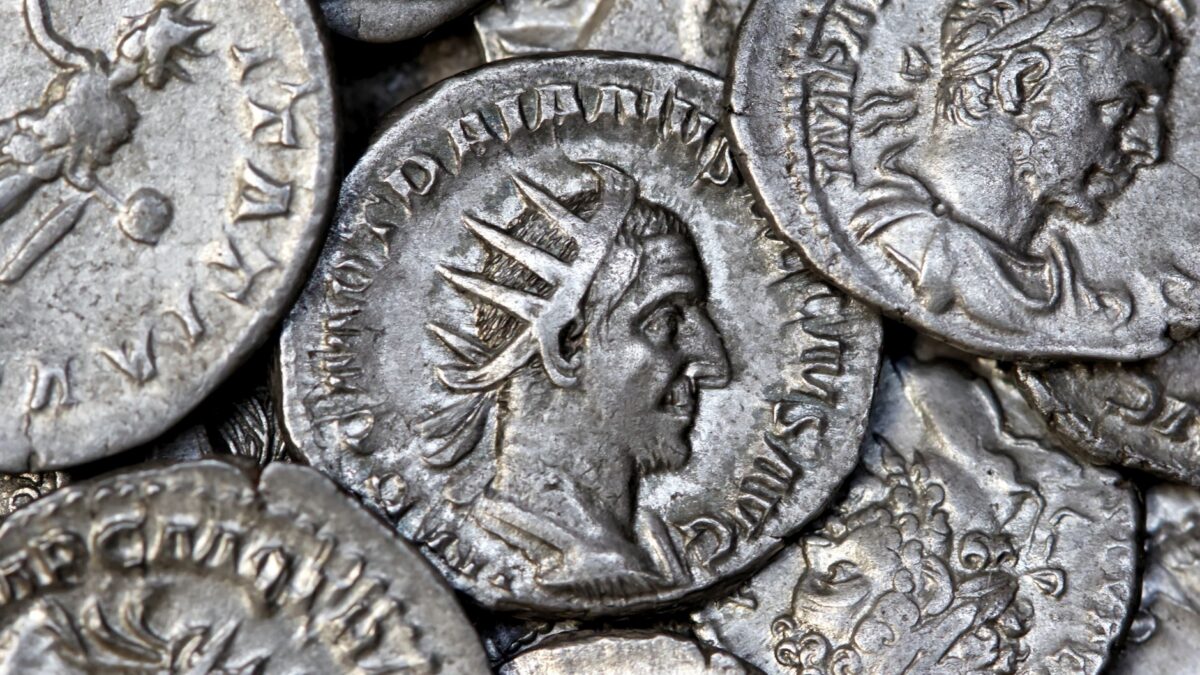
A small clay pot dug up in western Hungary held more than 200 Celtic silver coins, each over 2,000 years old. Live Science says it ranks among the biggest coin finds the country has seen in decades.
Crews came across the coins while surveying land for a new E.ON electrical substation, work that ran between 2023 and 2025, the power company said in a statement. The money was buried sometime from the late second century B.C. to the early first century B.C.
How the hoard turned up
Farmers had worked this ground for years, and their plows occasionally brought loose coins to the surface. When archaeologists picked up a handful more, they brought in metal detectors, and the signal led them to the pot, buried roughly 16 inches (40 centimeters) deep.
Together the coins come to about 4.4 pounds (2 kilograms). Melted down, the silver might fetch more than $2,000, but E.ON’s statement called the find priceless because of how rare it is and what it tells historians.
Eszter Kreiter of Hungary’s National Archaeological Institute spoke about the hoard at a news conference, local outlets reported. “This is a rarity in Europe,” she said, adding that Hungary’s last find on this scale dates to the late 1960s.
Copies of Greek coins
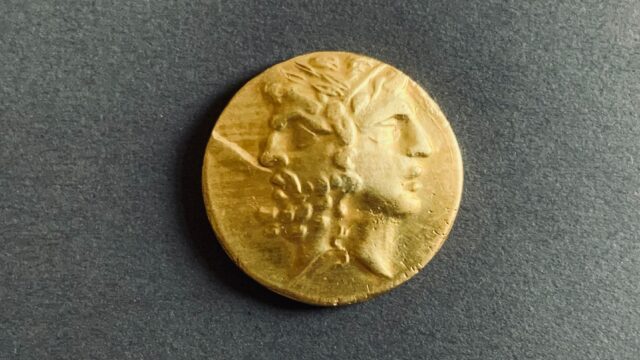
The pieces are Celtic imitations of the Greek tetradrachm, a heavy silver coin the Greeks began striking in the late sixth century B.C. Specialists call this local version the “Velem” type, after Velem-Szent Vid, a walled Celtic hilltop town (an oppidum) some 10 miles (15 kilometers) west of the dig, where coins like these have also been recovered.
One face carries a stylized head, most likely Apollo. The other shows a horse with a rider wearing a helmet.
Christopher Howgego, professor emeritus of Greek and Roman numismatics at Oxford and an honorary curator there, has argued in the Journal of Roman Studies that the idea of minting reached the Carpathian Basin through Celtic mercenaries. They handled Greek money while fighting for Hellenistic rulers in Greece and Macedonia, then went home and started striking silver of their own. In his account, these coins were too valuable for daily shopping; owners stored them as savings or gave them up as offerings.
A site with a long history
Officials said the dig turned up signs that people lived on this spot for over 7,000 years. Among the older objects are a polished stone woodworking chisel close to 7,000 years old and a glass bead decorated with a peacock-eye design, probably from a necklace or similar piece made in the sixth or seventh century B.C.
Much later, Romans put up a villa right over the pot without ever finding it, Kreiter said. Nothing of the building stands today, yet the team traced its layout, heated floors included, and recovered a Roman brick stamped by a passing dog’s paw.
How sure is this?
Everything here comes from E.ON’s statement and comments at the news conference, as reported by Live Science and Hungarian media. No peer-reviewed study of this particular hoard is mentioned. Nor do the sources explain why someone buried the pot: Howgego’s work describes how such coins were generally used, which is background on the coin type rather than a finding about this cache.
What comes next
Objects from the excavation are set to go on show in a museum exhibition.
Source: Live Science
Site editor: Nikita Sheikin