Jaw Fossil Is First Early Cretaceous Hadrosauroid in Erlian Basin
A fragmentary jaw and bones from Inner Mongolia fill a gap in the Early Cretaceous record of hadrosauroids, plant-eating dinosaurs that later spread worldwide.
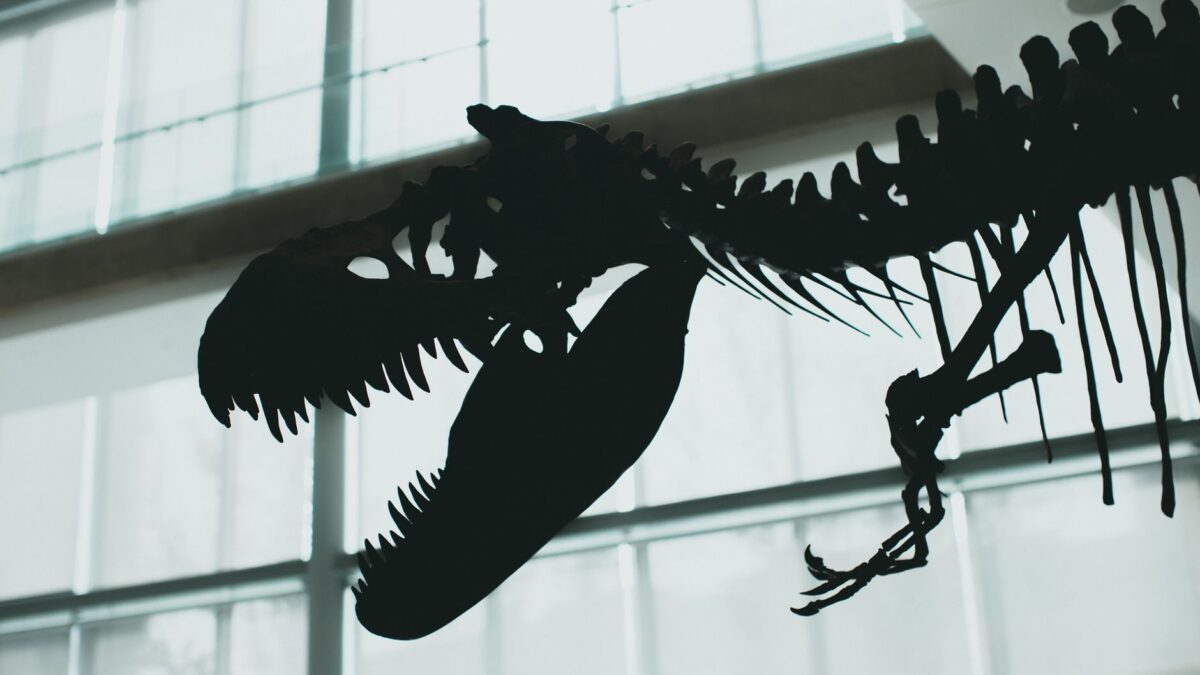
Chinese researchers have identified the first Early Cretaceous hadrosauroid fossil from the Erlian Basin in Inner Mongolia, in North China. Hadrosauroids are a group of plant-eating dinosaurs that was among the most abundant of the Cretaceous Period. The find closes a gap between known fossil sites, according to the Global Times.
The study appeared in the journal Fossil Record under the title “The First Hadrosauroid Dinosaur from the Lower Cretaceous of the Erlian Basin, Inner Mongolia, China.”
What the team dug up
The Inner Mongolia Museum of Natural History led the work, with the Institute of Vertebrate Paleontology and Paleoanthropology of the Chinese Academy of Sciences, Shenyang Normal University and other institutions taking part. The bones came out of the ground in Ejin Horo township, East Ujimqin banner, during a rescue excavation. That dig was part of a project commissioned by the natural resources department of the Inner Mongolia Autonomous Region.
The specimen is now kept at the museum. It consists of a left dentary (the tooth-bearing bone of the lower jaw), teeth, vertebrae, toe bones and several bone fragments. The pieces are broken and scattered, yet they lay in a fairly small area. Preliminary assessments suggest the animal was buried close to where it died.
A missing link between fossil-rich regions
Early Cretaceous hadrosauroids have mostly turned up in East Asia: western Liaoning Province, Mazongshan in Gansu Province, the Alxa-Bayannur region of western Inner Mongolia and the eastern Gobi Desert in Mongolia. Most studies suggest Asia was where the group originated, diversified early and then dispersed. The group reached its greatest variety in the Late Cretaceous and spread around the world.
The Erlian Basin sits between these fossil-rich areas but had produced no reported Early Cretaceous hadrosauroid until now. The new specimen shows the animals already lived there during that period.
Old traits and new ones in one animal
The researchers compared the bones with other hadrosauroids and found a mix of features. The upper jaw teeth keep a primitive trait of early ornithopod dinosaurs: accessory ridges on both sides of the main ridge. At the same time, the animal has features closer to those of hadrosaurids, the more advanced family within the group. These include a long toothless stretch at the front of the dentary, more tooth positions and a main ridge sitting near the center of each tooth.
Such a combination helps researchers reconstruct the order in which hadrosaurid features appeared. It also suggests that hadrosauroids were already quite diverse in the Early Cretaceous.
How sure is this?
The result rests on a single, incomplete specimen. Because of that, the team says the exact place of the animal on the family tree is still open. The distinctive combination of traits suggests it may be a new genus and species of hadrosauroid outside the hadrosaurid family, but the authors treat that as a possibility rather than a settled naming. The Global Times report does not give a sample beyond this one animal or describe outside reviewers’ reactions.
What comes next
The researchers say more systematic field surveys and rescue excavations are needed to recover more complete fossils. Better material would pin down the specimen’s taxonomic position and show how key hadrosauroid features evolved. The Inner Mongolia Museum of Natural History has recently stepped up surveys of regional fossil resources, rescue digs and specimen restoration.
Source: Global Times
Site editor: Nikita Sheikin