What Is Permafrost and Why Is It Thawing? Causes and Effects
Permafrost is ground that stays frozen for at least two years. It is thawing as the Arctic warms, which damages buildings and releases carbon.
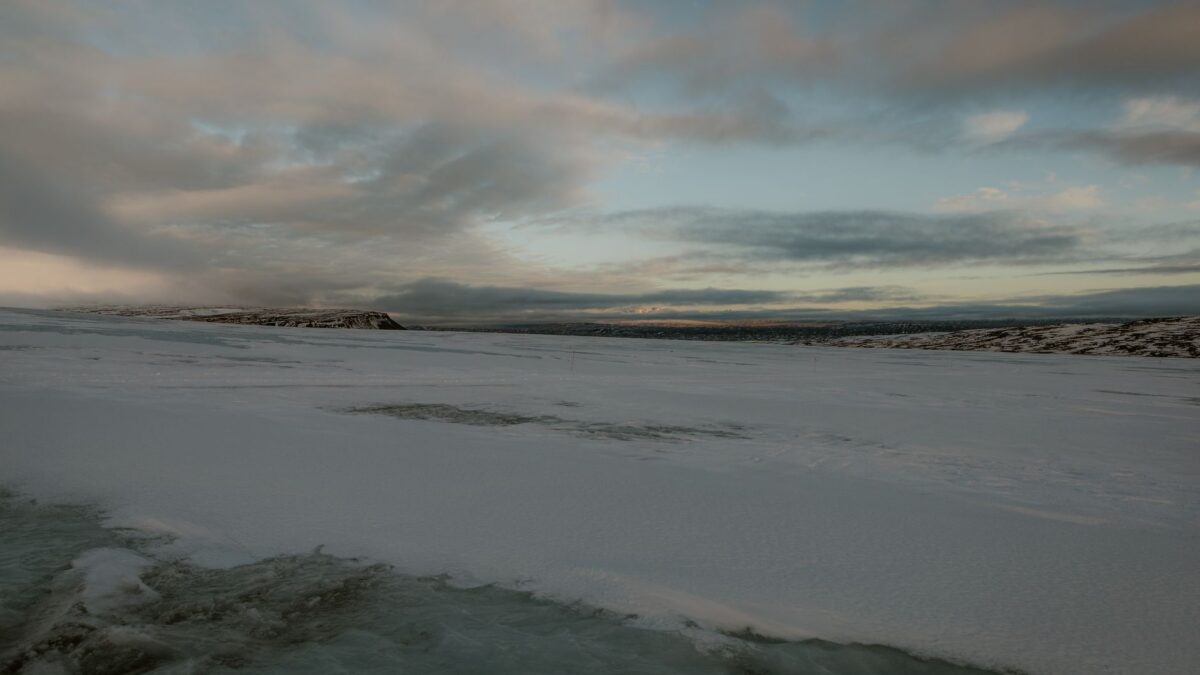
Permafrost is soil, rock or sediment that stays at or below 32°F (0°C) for at least two years in a row. It underlies large parts of Alaska, Canada, Siberia and high mountain ranges. It is thawing because the Arctic is warming faster than the global average, and as it thaws it can sink the ground and release stored carbon as carbon dioxide and methane.
What exactly is permafrost?
The word describes temperature, not material. Any ground that remains frozen for two or more years counts, whether it is gravel, clay, peat or bedrock. Many permafrost areas contain ice mixed into the soil, sometimes as thin crystals and sometimes as large lenses or wedges. Where the ice content is high, the ground is firm only while it stays frozen.
Permafrost is not always buried under snow. It can sit beneath forests, tundra, wetlands and bare mountain slopes. Only the lower layer is permanently frozen.
How is permafrost structured?
Most permafrost has two layers. The top is called the active layer. It thaws in summer and refreezes in winter, and plants root in it. Below it lies the permanently frozen layer, which in some places is hundreds of feet thick. Warming usually shows up first as a deeper active layer, because summer thaw reaches farther down each year.
Permafrost can be continuous, covering nearly all the land in a region, or patchy, where frozen ground is mixed with unfrozen areas. Patchy permafrost sits near its melting point and tends to thaw first.
Why is permafrost thawing?
Air temperatures in the Arctic have been rising faster than the global average, and that heat moves down into the soil. Several other factors speed it up:
- Less snow cover in some areas, or deeper snow in others. Snow insulates the ground, so a thick winter blanket can keep it warmer.
- Wildfires, which strip away the vegetation and moss that shade and insulate the soil.
- Rain on frozen ground, which carries heat down.
- Surface water such as ponds and lakes, which absorbs more heat than land and thaws the ground beneath it.
Thawing is not even. Some ground gives way slowly over decades, while ice-rich ground can collapse within a few seasons.
What happens to the land when permafrost thaws?
When ice melts out of the soil, the ground loses volume and sinks. The result is a bumpy landscape of pits, ponds and slumps, known as thermokarst. Hillsides can slide, and lakes can form in new hollows or drain suddenly if the ground beneath them opens.
The coast is affected too. Where permafrost bluffs meet the sea, thawing ground erodes more easily, and some Arctic shorelines are retreating.
Why does permafrost thaw matter for people?
Many roads, pipelines, runways and buildings in the Arctic sit on frozen ground. When that ground softens, foundations shift, roads buckle and pipes can crack. Communities built on ice-rich permafrost face the greatest risk and may need to repair or relocate structures. Mountain regions also see more rockfalls where ice that held slopes together melts.
Thawing also affects traditional travel, hunting and food storage in northern communities, since ice cellars and winter routes depend on frozen ground.
How does thawing permafrost affect the climate?
Frozen soil holds a great deal of plant and animal matter that died long ago and never fully decayed. Scientists estimate that permafrost holds more carbon than the atmosphere does. When the ground thaws, microbes begin to break that material down. Depending on conditions, they release carbon dioxide where oxygen is present or methane in waterlogged soil. Both are greenhouse gases, so the thaw can add to warming, a process called a feedback.
How large that effect will be is still being studied. It depends on how fast the ground thaws, how wet it is and how much new plant growth takes up carbon in the meantime. Researchers agree the thaw adds emissions. Estimates of the total vary.
The U.S. Geological Survey, at USGS, and the National Park Service, at NPS, publish general information on permafrost and Arctic landscapes, including parks in Alaska where it is monitored.
Common questions
Is permafrost the same as ice?
No. Permafrost is ground defined by temperature. It can be dry rock or soil, or it can hold a lot of ice. Ice-rich permafrost is the kind most likely to sink when it thaws.
Where is permafrost found?
Mostly in the Arctic and subarctic: Alaska, northern Canada, Greenland, Scandinavia and Russia. It also exists on high mountains, including parts of the Alps, the Rockies and the Tibetan Plateau, and under some seafloor near Arctic coasts.
Can thawed permafrost refreeze?
Near the surface, ground refreezes each winter. Deep, ice-rich permafrost that has thawed and collapsed generally does not return to its earlier state on human timescales, because the ice and the original ground structure are gone.
Site editor: Nikita Sheikin