194-Year-Old Tortoise Jonathan Carries 287 Gene Variants Tied to Aging
Jonathan, the oldest known living land animal, has 287 distinctive gene variants and unusually stable gene controls, a Science Advances study reports.
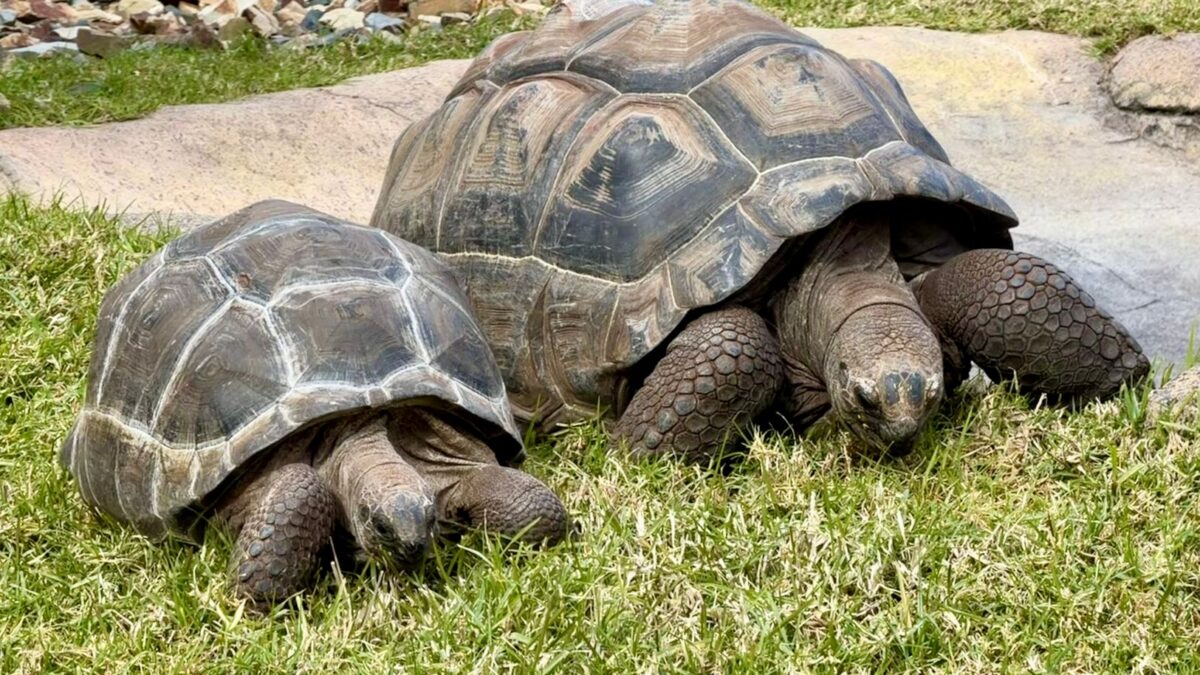
Jonathan, an Aldabra giant tortoise thought to be about 194 years old, carries 287 distinctive genetic variants connected to repairing damaged DNA, limiting inflammation, controlling insulin and suppressing cancer, according to a study published in Science Advances. The researchers also found that the chemical switches that turn some of his genes on and off look much like those of far younger tortoises.
Jonathan is the oldest known living land animal. He is believed to have hatched in 1832, which means he was alive at the same time as Charles Darwin and Queen Victoria.
How the team read a tortoise’s age in his genes
The study looked at two layers of Jonathan’s biology. The first was his genome, the DNA sequence he inherited, where the team picked out the 287 variants associated with protection against the effects of aging.
The second was his epigenome: the set of chemical markers on DNA that controls which genes are active. In most animals these markers drift with age, and that drift can disrupt normal cell work. The researchers compared Jonathan’s epigenome with those of younger giant tortoises of the same species.
The controls linked to DNA repair and metabolism had barely changed. “We found that the gene regulators involved in energy production and DNA repair have remained incredibly stable,” said Justin Gerlach of Peterhouse at the University of Cambridge, who worked on the study and has studied giant tortoise ecology and conservation for decades. According to the University of Cambridge, it is the first study of a giant tortoise’s epigenome.
The project was led by Kallel, a US nonprofit focused on longevity research. Its founder, Stephen Clark, is the study’s senior author. The paper is listed in Science Advances, volume 12, issue 41, under DOI 10.1126/sciadv.adw8887.
What the study cannot yet say
The work centers on one animal. The variants are described as associated with aging-related processes, which is different from showing that any one of them causes Jonathan’s long life. The comparison with younger tortoises shows that his gene controls stayed steady; it does not show why. The researchers’ own summary frames stable gene regulation as one possible factor among several.
Nothing in the study was tested in people. Clark said his group wants to turn the findings into affordable treatments, but the university’s release notes that applying them to humans will require further research.
Why it matters for aging research
Aging is the biggest risk factor for most chronic diseases, Clark said. Animals that stay healthy for a very long time give scientists a natural record of which body systems hold up best. Giant tortoises from the Galápagos and Seychelles islands are among the last survivors of a group of huge reptiles that once dominated many islands, which makes them a rare chance to see how evolution handled the problem of time.
The study also suggests that long life in these animals involves more than good inherited genes: Jonathan’s body appears to have avoided some of the epigenetic changes that usually build up with age. For readers new to the topic, our explainer on how DNA and genes work covers the basics behind these terms.
A long life on St. Helena
Jonathan lives on the grounds of Plantation House, the governor’s official residence on St. Helena, a British Overseas Territory in the South Atlantic. He was brought there from the Seychelles 144 years ago as a gift to the governor and was already fully grown when he arrived, one of the clues to his age.
Gerlach said few animals could teach scientists more about aging than giant tortoises, and that working with Jonathan felt like having a collaborator rather than a study subject.
Source: ScienceDaily
Site editor: Nikita Sheikin