Archaeologist Argues Iron Age Ruler Verica Was a Woman, Not a King
A Bournemouth University archaeologist argues that Verica, the exiled ruler behind Rome's AD 43 invasion of Britain, was a woman. Here is the evidence.

Verica, the Iron Age ruler whose exile helped prompt Rome’s invasion of Britain in AD 43, was a woman, according to archaeologist Dr. Miles Russell of Bournemouth University (BU). Russell, the university’s Director of Archaeological Fieldwork, argues that 19th-century historians assumed Verica was male and that the evidence points the other way.
Verica ruled the Atrebates, a tribe whose lands covered much of what is now Hampshire and West Sussex. Around AD 40, Verica was forced from power and fled to Rome to ask Emperor Claudius for help. The Roman historian Cassius Dio claimed this appeal was the reason Claudius decided to invade.
What the evidence consists of
Russell’s case rests on three points, according to BU. The first is the name. Verica ends in “a,” which he says was common among female names of the period. He cites Cartimandua, who ruled the Brigantes in Yorkshire, and Boudica, leader of the Iceni in Norfolk. All three lived at roughly the same time.
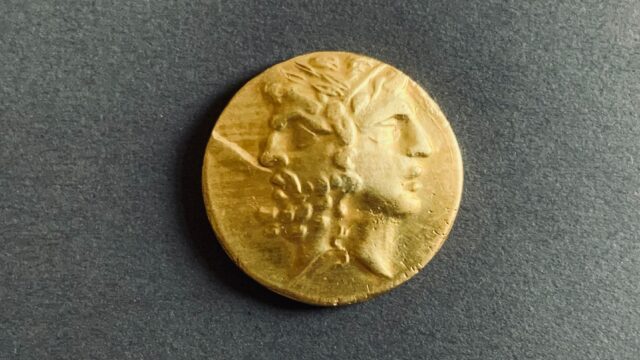
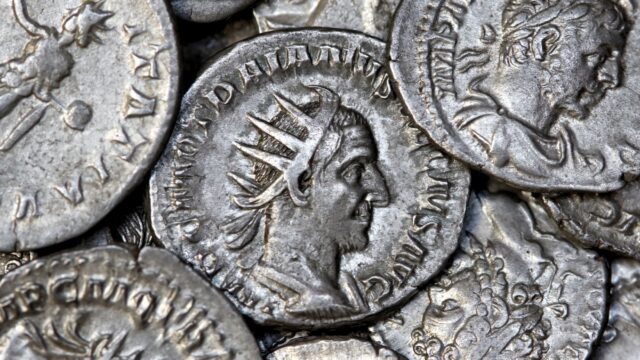
The second is the coins. Those issued under Verica carry the Latin title “rex,” usually translated as “king.” Russell says the word is not specific to gender and that Rome recognized both male and female kings, with Cleopatra of Egypt the best-known example. He also reads the title as a sign that Verica ruled with the emperor’s full authorization.
The third is the imagery. Other coin-producing British Iron Age leaders appear as obvious male warriors. Russell describes Verica’s coins as showing “a slender, feminine, bare-breasted figure riding on horseback.”
A different reading of Rome’s motives
Russell also challenges how Dio told the story. Roman writers often portrayed Claudius as weak and swayed by women and freed slaves. In Russell’s view, Dio’s account fits that stereotype by presenting the invasion as the result of a woman’s whispering. He argues Verica was more central, supplying tactical information and support on the ground, and that her removal gave Claudius a pretext to seek the military success he needed.
Russell goes further and says Rome may never have invaded Britain had Verica not been deposed and fled to Claudius.
How sure is this?
The claim comes from one researcher’s interpretation of names, coin titles and coin images, and the sources describe no new excavation, inscription or biological evidence such as DNA. The BU release does not mention independent archaeologists commenting on the argument. Russell himself says the evidence should be taken “at face value,” but a personal name ending and a coin design are indirect clues, and the reading of Dio’s motives is also his own interpretation. The work is presented in his book Caratacus: Great king of Britain, published by Bloomsbury in January (ISBN 9781350477902), and in the latest edition of Current Archaeology. The sources do not say it has appeared in a peer-reviewed journal.
Related work on women in Iron Age Britain
Last year, a study involving Russell and other BU researchers reported evidence of a matriarchal society in Iron Age Britain. That research indicated husbands moved into their wives’ communities after marriage, which the team took to mean women held a central place in the social structure.
Source: ScienceDaily
Site editor: Nikita Sheikin