Europium Silicide Shows Spiral Magnetism With No Net Magnet
Researchers report evidence of p-wave magnetism in the metal EuSi, which has no net magnetization but strongly shapes its electrons. Nature study details.
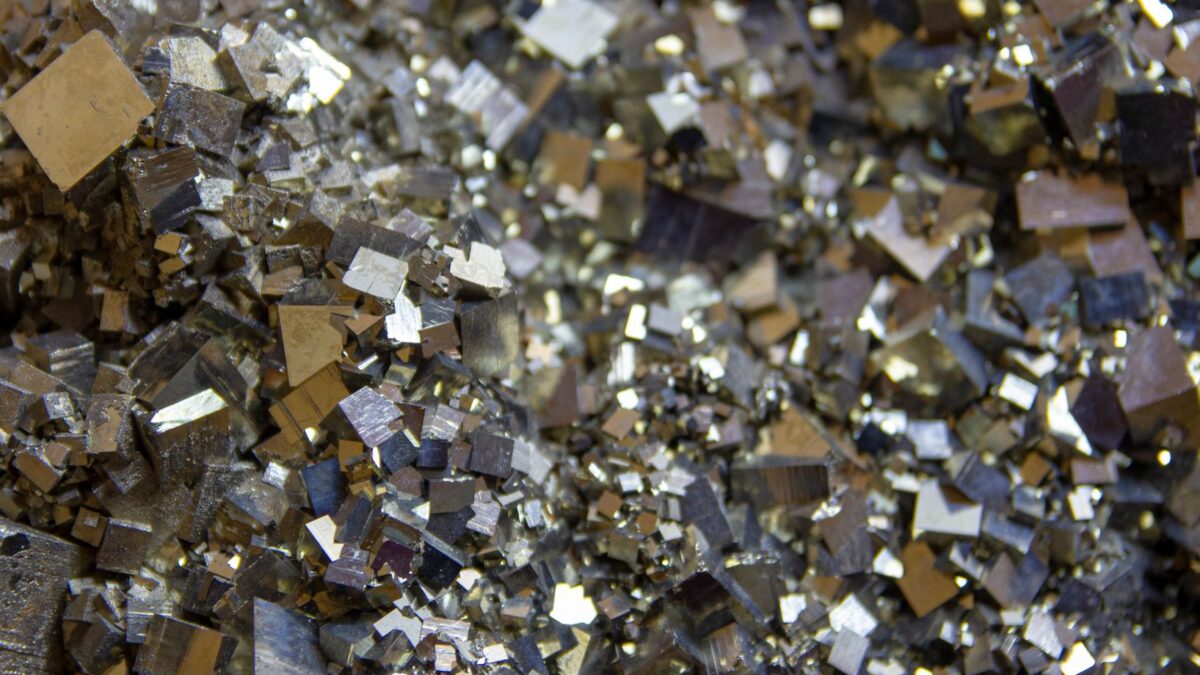
A metal made of europium and silicon, known as EuSi, has no overall magnetization yet changes how its electrons move and how their spins point. Researchers led from the Max Planck Institute for Chemical Physics of Solids (MPI CPfS) in Dresden, Germany, report evidence that it hosts a rare state called p-wave magnetism. The work was published in Nature (DOI: 10.1038/s41586-026-11295-9).
Between roughly 33 and 62 kelvin, about minus 400 to minus 348 degrees Fahrenheit, the magnetic moments of the europium atoms form a repeating spiral. Each atom has a substantial moment, but the orientations balance across the spiral, so the crystal as a whole is not a magnet.
How the team probed the spiral
Erjian Cheng grew high-quality single crystals of EuSi at the institute about three years ago. Early photoemission experiments, which measure the energies of electrons inside a material, showed that the magnetic order had an unusually strong effect on the electronic band structure. That term describes the energy levels electrons can occupy.
The team then combined several methods with theoretical calculations. Neutron diffraction, which reveals how magnetic moments are arranged, confirmed a spiral with the symmetry that p-wave magnetism requires. Angle-resolved photoemission spectroscopy, which maps electron energies and momenta, showed magnetically driven energy separations exceeding 100 millielectronvolts.
Spin-resolved photoemission gave the most decisive result. In a p-wave magnet, electrons moving in opposite directions have opposite spin polarizations. Spin is a quantum property that gives electrons magnetic character, and it does not mean the electron literally rotates. The researchers saw the sign of the spin polarization flip across successive magnetic Brillouin zones, which are regions of momentum space used to describe electrons in a repeating magnetic structure. Polarization also weakened near places where calculations predicted the p-wave pattern should vanish.
In other materials, spin-dependent energy differences come from spin-orbit coupling, a link between an electron’s motion and its spin. In EuSi, the spin structure appears to arise mainly from the magnetic moments and the symmetry of their spiral.
Spirals with a left or right twist
The crystal lattice itself is centrosymmetric, meaning inversion through a central point leaves it unchanged. The magnetic spiral can still twist in either of two opposite directions, a property called chirality, like left and right hands. Using magnetic force microscopy and spatially resolved photoemission, the team found domains of opposite handedness about ten micrometers across. Under circularly polarized light, regions of different handedness gave different electronic responses.
“When we first measured the electronic structure of EuSi, we were surprised by the exceptionally large effect of magnetism on the electrons,” Cheng said.
How sure is this?
The result is published in Nature, so it has passed peer review. The authors describe their data as compelling evidence consistent with the predicted p-wave state, not as a final proof. The work involved 38 scientists from 19 institutions, including ShanghaiTech University, the Hong Kong University of Science and Technology, the Max Planck Institute for the Physics of Complex Systems and Oak Ridge National Laboratory.
The magnetic state exists only in the narrow temperature window given above. Theory suggests metallic p-wave magnets could let electrons with particular spins carry current without an external magnetic field, and could change spin polarization strongly when current is applied. Those effects have not been demonstrated in EuSi. The material is also a candidate platform for studying unconventional superconductivity, where current flows without resistance in states unlike those of conventional superconductors.
Earlier candidates for p-wave magnetism included insulators and metals that order magnetically only at extremely low temperatures or have complicated symmetries. EuSi is a stoichiometric metal, meaning its elements occur in a fixed ratio, and it forms good single crystals.
“EuSi now gives us an experimental platform to investigate how magnetic symmetry and chirality can be used to control electronic properties,” said Claudia Felser, director at MPI CPfS. She named spintronics, which uses electron spin to process and store information, as a potential application area.
Source: ScienceDaily
Site editor: Nikita Sheikin