Brown Engineers Keep a Chip Material Magnetic at a Few Angstroms Thick
Brown University engineers made bismuth ferrite films a few angstroms thick that stay ferroelectric and magnetic, and found altermagnetism along the way.
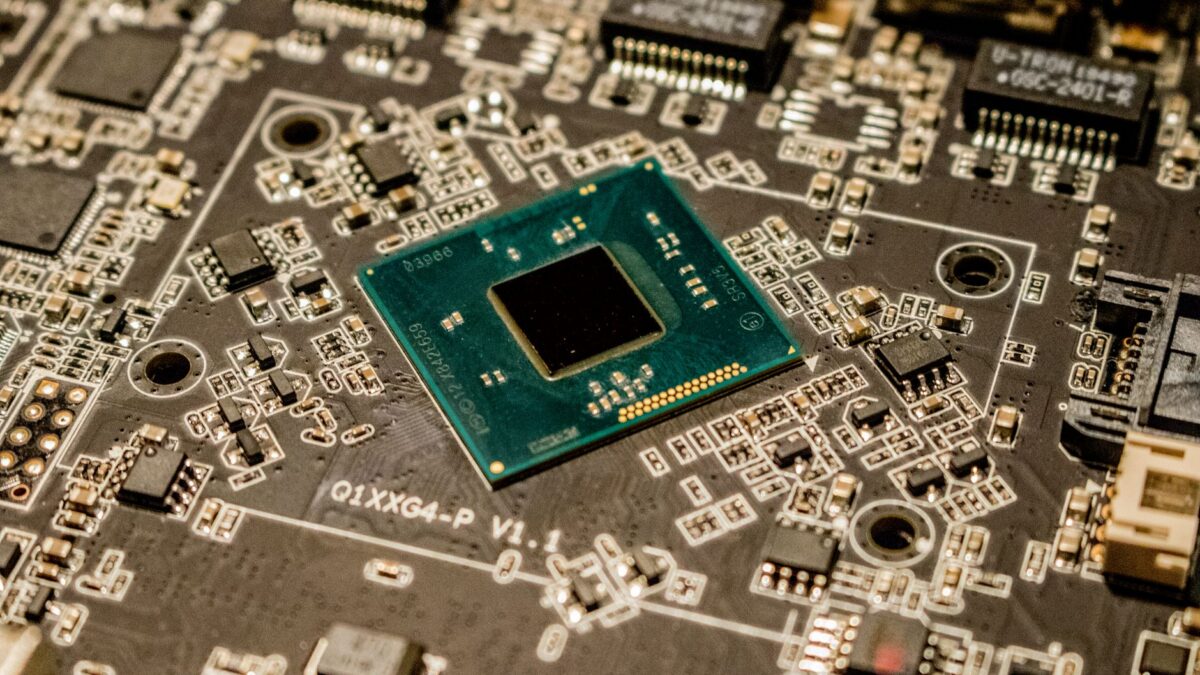
Engineers at Brown University have made films of bismuth ferrite only a few angstroms thick that keep both their electrical and magnetic properties, removing a problem that has long kept this kind of material out of computer chips. The work was published in the journal Nature Materials (DOI: 10.1038/s41563-026-02786-1).
The ultrathin films also showed altermagnetism, an unusual magnetic state that the team says could suit fast, densely packed and low-power memory and logic devices.
What multiferroics are and why chip designers want them
Bismuth ferrite belongs to a family of materials called multiferroics, in which electrical and magnetic behavior are coupled and can be controlled together with very small voltages. In their crystal structure, positive and negative charges sit on opposite sides of each repeating unit. That arrangement is called electrical polarization.
A small voltage can flip the polarization, swapping where the charges sit. Each of the two states can stand for a one or a zero, so the material could store data using very little electricity. Because the magnetism is coupled to the polarization, the stored bit could then be read magnetically.
The “dead layer” problem
Chips need extremely thin layers, and multiferroics usually stop working when they are made that thin. Researchers call this the dead layer effect. According to Brown University, two things cause it. The atomic structure distorts, which upsets the chemical environment the properties depend on. Internal electric fields also push against the polarization until it collapses. Both ferroelectric and magnetic behavior are lost.
How the Brown team got around it
The group, led by Lucas Caretta, an assistant professor of engineering at Brown, grew the bismuth ferrite on a base of dysprosium scandate, a compound made from rare earth elements. Its crystal spacing is slightly smaller than that of bismuth ferrite, so the film is squeezed as it grows. That compression keeps the atomic structure the properties need.
The team added a second, metallic layer to cancel the unwanted electric fields that would otherwise wipe out the polarization. With both fixes in place, the films stayed multiferroic down to a few angstroms., which the team describes as nearly atomic thickness.
“We’ve established that we can get rid of the dead layer,” Caretta said in the university’s release.
An unexpected kind of magnetism
The engineered layers did more than preserve the original behavior. The bismuth ferrite became altermagnetic, an unusual state that combines features of the two familiar types of magnetism.
Caretta explained the trade-off. Ferromagnets give strong signals that are easy to read, but they switch relatively slowly and their stray fields make it hard to pack devices close together on a chip. Antiferromagnets switch faster and have no stray fields, but their signals are hard to detect. Altermagnets, he said, can be fast and densely packed while still giving a strong electrical signal for readout.
Why it matters
Computing, and AI in particular, uses a growing amount of electricity, and memory and logic parts that switch with tiny voltages could cut that demand. The study shows that the dead layer can be removed in at least one well-studied multiferroic, and that tuning a material’s atomic surroundings can add useful behavior the bulk material does not show.
What is still unclear
This is a materials result from lab-grown films, not a working chip. Brown University says the technology needs more development before it could go into commercial chips, and the release does not give figures for how much energy such devices would save. The work was funded by the U.S. Army Research Office, the National Science Foundation and the U.S. Department of Energy.
Source: ScienceDaily