Electron Pairs Hold Together at Room Temperature, Utrecht Team Finds
Electrons in a cuprate superconductor stay paired at room temperature, a Science study finds, pointing to phase coherence as the likely bottleneck.

Electrons in a high-temperature superconductor can stay bound in pairs at room temperature, according to researchers from Utrecht, Leiden and Munich. The study appeared in the journal Science. The pairing is one of two conditions a material needs to carry current with zero resistance, so the result narrows down what may be keeping room-temperature superconductors out of reach.
Superconductivity was first observed in 1911. Most superconducting materials work only when cooled to extremely low temperatures, which makes them costly to use. Many must be chilled to approximately -260°C with liquid helium. In the mid-1980s, researchers found a class of materials that become superconducting at around -173°C. That is still extremely cold, but far warmer than before.
These newer materials came with a puzzle. The established theory that describes conventional, low-temperature superconductors cannot explain how they work. “We don’t understand superconductivity at these higher temperatures at all,” said Ingmar Swart, one of the research leaders. Without that understanding, he said, scientists cannot systematically search for materials that would work at room temperature.
Two steps, not one
Superconductivity depends on two processes. First, electrons join into pairs called Cooper pairs. Second, those pairs have to move in a coordinated way and share one quantum state, which lets current flow without resistance. The second property is called phase coherence.
The researchers compare it to a dance floor with ten couples. Each couple dancing together is the first step. The whole group moving as one is the second.
In conventional superconductors, pairing and coordination appear at the same temperature. The new work shows that high-temperature superconductors behave differently: their electrons form pairs at temperatures well above the point where superconductivity itself sets in. The team found that the pairs survive even at room temperature. Swart said the “glue” holding the pairs together is strong enough for that, and concluded that phase coherence is the bottleneck.
How the team measured it
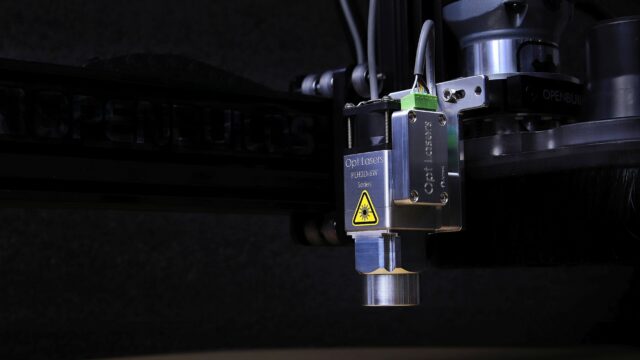
The group designed and built its own measurement equipment. Conventional approaches cannot separate the two kinds of current in the material, but these instruments could tell current carried by individual electrons apart from current carried by paired electrons. That let the researchers see when pairs formed and how they behaved inside the material.
The paper is titled “Equivalence of pseudogap and pairing energy in a cuprate high-temperature superconductor” (Science, 2026; 394 (6824): 682, DOI: 10.1126/science.adt3444). Its authors include Jiasen Niu, Maialen Ortego Larrazabal, Ingmar Swart and Milan P. Allan, among others. The material studied is a cuprate, the family of copper-based compounds to which the 1980s discoveries belong.
How sure is this?
The work has been through peer review and was published in Science. It does not show that room-temperature superconductivity has been achieved. What the team showed is that one of the two required ingredients can exist at everyday temperatures. Swart said that if pairing were impossible there, room-temperature superconductivity would be out of reach altogether.
What remains unknown is why the pairs do not act together at those temperatures. Swart suggested that understanding phase coherence may point toward superconductivity at higher temperatures. The results were reported by Utrecht University and ScienceDaily.
What comes next
Swart intends to study phase coherence in future research, with the goal of understanding how superconductivity might be sustained at increasingly warmer temperatures.
Source: ScienceDaily
Site editor: Nikita Sheikin