Pollen in Pine Tar Reveals Repairs on a 2,200-Year-Old Roman Ship
Analysis of 10 coating samples from a Roman wreck off Croatia found two waterproofing recipes, one with beeswax, and pollen that hints at where repairs were made.
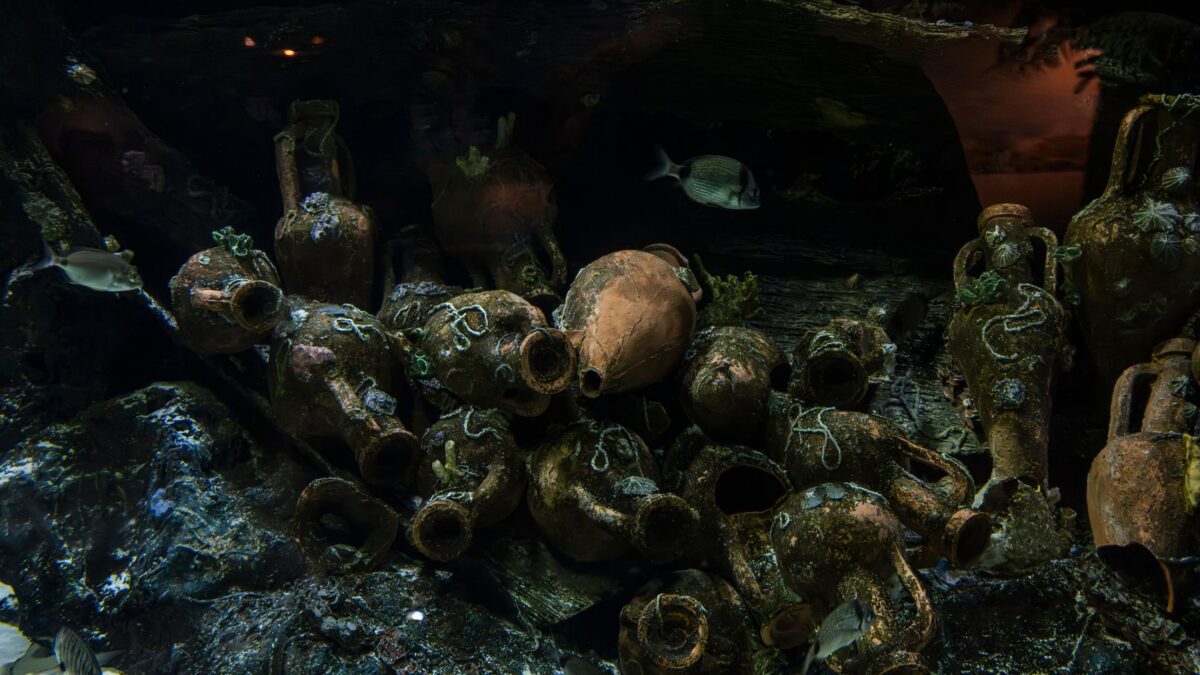
A Roman Republic ship that sank about 2,200 years ago off the coast of Croatia was sealed with two different waterproofing recipes, according to a study in Frontiers in Materials. Most of the coating was pine tar, also called pitch. One sample was a mixture of pine tar and beeswax.
Pollen grains trapped in the sticky layers suggest the vessel, named Ilovik-Paržine 1, was coated and repaired in more than one place. The researchers, from France and Croatia, found evidence of four or five separate batches of coating.
How the team read the coatings
The team analyzed 10 samples of the ship’s protective coating. They examined the physical structure, the molecular makeup and the pollen content of each. One of the main tools was mass spectrometry, which identifies substances and measures how much of each is present by weighing their molecular or atomic fragments.
Chemical signatures typical of pine appeared throughout the samples. That showed the main material was pitch made from heated conifer resin or tar. Heating makes pitch easier to spread over surfaces and into gaps between planks.
One sample held a different recipe, with beeswax blended into the pine tar. The authors note that Greek shipbuilders called this mixture zopissa. According to the study, the wax made the coating more flexible and easier to apply while hot, a useful trait for timbers that shift in waves.
What the pollen says about where the ship went
Pitch is sticky enough to catch airborne pollen and keep it for millennia. Because each plant produces pollen of a distinct shape, the grains can show which vegetation grew near the place where the pitch was made or applied.
The pollen pointed to several landscapes. Some came from Mediterranean and Adriatic coastal areas and valleys, including forests of holly oak and pine. Others came from matorral, a Mediterranean shrubland that can include olive and hazel trees. Alder and ash pollen suggested vegetation near rivers or coasts. Smaller amounts of fir and beech pointed to mountains, a pattern the authors say fits the northeastern Adriatic coast, where the mountains of Istria and Dalmatia rise close to the shore.
The stern and the central section of the ship shared the same coating. At the bow, the researchers found three batches that differed from one another. The authors read this as a sign of repairs using materials from different places around the Mediterranean.
Earlier work on the ship’s ballast, the heavy material carried to keep a vessel stable, identified the ancient port of Brundisium, today’s Brindisi in southeastern Italy, as the likely place of construction. The pollen suggests some coatings were applied near Brundisium, while other layers may have been added along the northeastern Adriatic coast, close to where the ship sank. For more on Roman materials science, see our piece on why Roman concrete has lasted 2,000 years.
“Pollen has been very useful in identifying different coatings where the molecular profiles were identical,” said first author Armelle Charrié of the Laboratory of Mass Spectrometry of Interactions and Systems in Strasbourg.
How sure is this?
The study was published in a peer-reviewed journal, Frontiers in Materials (2026, volume 13, DOI 10.3389/fmats.2026.1758862). Its authors are Armelle Charrie-Duhaut, Quentin Couillebault, Igor Miholjek and Giulia Boetto. The work involved the Department for Underwater Archaeology of the Croatian Conservation Institute and the ADRIBOATS program of the Centre Camille Jullian at Aix-Marseille University.
The sample is small: 10 coating samples from one ship, and only one of them contained beeswax. The wreck was found in 2016, and the authors describe this as the first study to combine molecular analysis with pollen examination on it. The locations are inferences from which plants grew where, so the pollen narrows the possible places rather than fixing them. The researchers say the ship likely received four or five batches and may have been repaired with materials from different Mediterranean locations.
Source: ScienceDaily
Site editor: Nikita Sheikin