Team Rebuilds Parthenon’s 39-Figure Pediment Using Roman Sarcophagi
German archaeologists propose a 39-figure Parthenon pediment, drawing on nine Roman sarcophagi and 3D scans. A Frankfurt show runs to July 25, 2027.
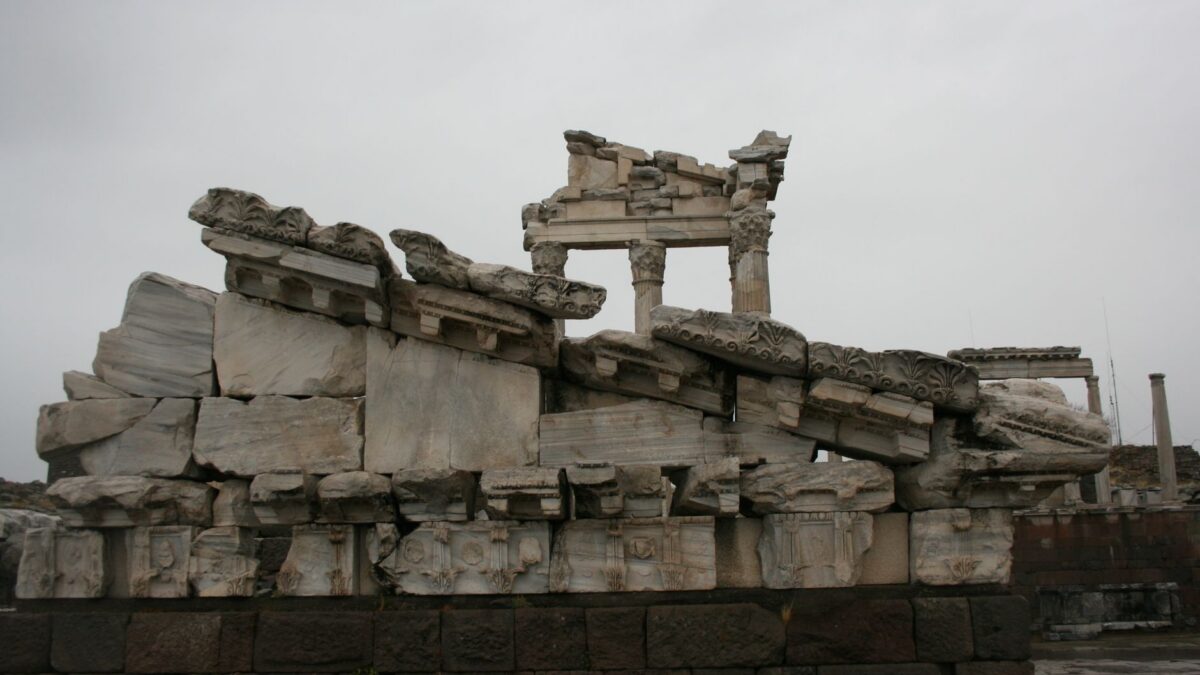
Archaeologists in Germany have proposed a reconstruction of the Parthenon’s lost east pediment, a scene of 39 marble figures that stretched nearly 100 feet above the temple’s eastern entrance. The work is on show at the Liebieghaus Sculpture Collection in Frankfurt, Smithsonian Magazine reports.
The pediment, built some 2,500 years ago, showed Athena being born from the head of a Zeus nearly 13 feet tall, with 37 other figures on either side, including gods and goddesses. Sometime between the fifth century C.E. and 1670, fires, earthquakes and human action largely destroyed it. Only 20 percent of the ruins were recovered, and the fragments are now spread across museums worldwide.
How the team worked out the scene
The effort was led by archaeologists Vinzenz Brinkmann and his wife, Ulrike Koch-Brinkmann. They started from plaster casts that Arthur Hamilton Smith, a British Museum curator, made in the early 20th century of more than 200 small surviving fragments, along with his records of where the pieces fit relative to each other. The pair turned these into digital renderings, which still left large gaps.
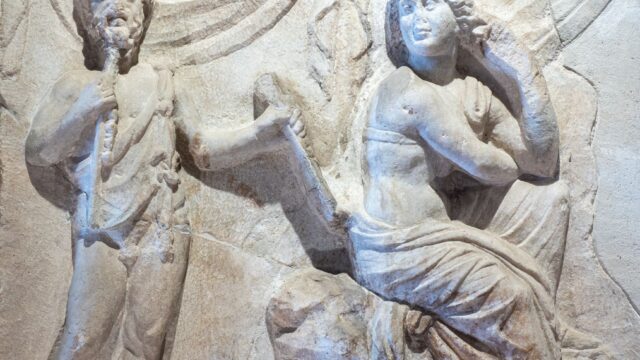
A break came in 2014 at the Hermitage Museum in St. Petersburg, Russia. Brinkmann and Koch-Brinkmann saw a Roman sarcophagus (a stone coffin) whose lid carried a relief of Athena’s birth. Brinkmann told the Art Newspaper it was a chance discovery, and that the composition was clearly closely related to the east pediment. The relief echoed the few surviving corner figures, such as Helios and Selene with their chariots, and figures that scholars have long proposed for the pediment, such as the Horae and Moirai.
The team went on to study nine sarcophagi, mostly in the Vatican Museum and elsewhere in Rome. None showed the full 39-figure scene, but each showed different parts of it. Using 3D scanners, the researchers combined these views digitally. They also examined drill holes and broken edges on the fragments for clues about neighboring pieces, consulted ancient texts about the pediment’s placement and worked with institutions abroad to identify lost sculptures. Earlier scholars had noticed the link between sarcophagus lids and the pediment, Brinkmann told Deutsche Welle.
What visitors see in Frankfurt
The exhibition, “Athena, the Stage is Yours: The Parthenon Puzzle,” presents the pediment as a 13-foot-long 3D-printed model at a scale of 1:7.7 compared with the original. It also has life-size reproductions of the largely missing central figures, Zeus, Athena and Hera, based on surviving fragments and comparable sculptures. Casts of the well-preserved end figures, Helios the sun god and Selene the moon goddess, mark the passing of time from day to night. An animation made for the show retells the myth of Athena’s birth.
It is on view through July 25, 2027. Museum director Philipp Demandt said in a statement that research has sought to reconstruct the pediment’s lost appearance for around 200 years. The museum calls the result the first archaeologically grounded proposal for the scene.
How sure is this?
The result is a proposal, and the museum frames it that way. Four-fifths of the original is gone, so the central figures are rebuilt from surviving fragments and comparable sculptures rather than from the original pieces. The sarcophagi are Roman copies, not the Greek original, which is why no single one gives the whole scene. The sources do not say whether the work has been published in a peer-reviewed journal.
The same couple is also known for recreating the original paint schemes of white marble statues using the mineral and organic pigments available to ancient artists. For more on ancient Greek engineering, see our explainer on the Antikythera Mechanism.
Source: Smithsonian Magazine
Site editor: Nikita Sheikin