ESA’s Hera Arrives at Dimorphos, the Asteroid NASA’s DART Hit
ESA's Hera spacecraft has reached the asteroid pair hit by NASA's DART in 2022 and will spend a year measuring the damage and the moonlet's mass.
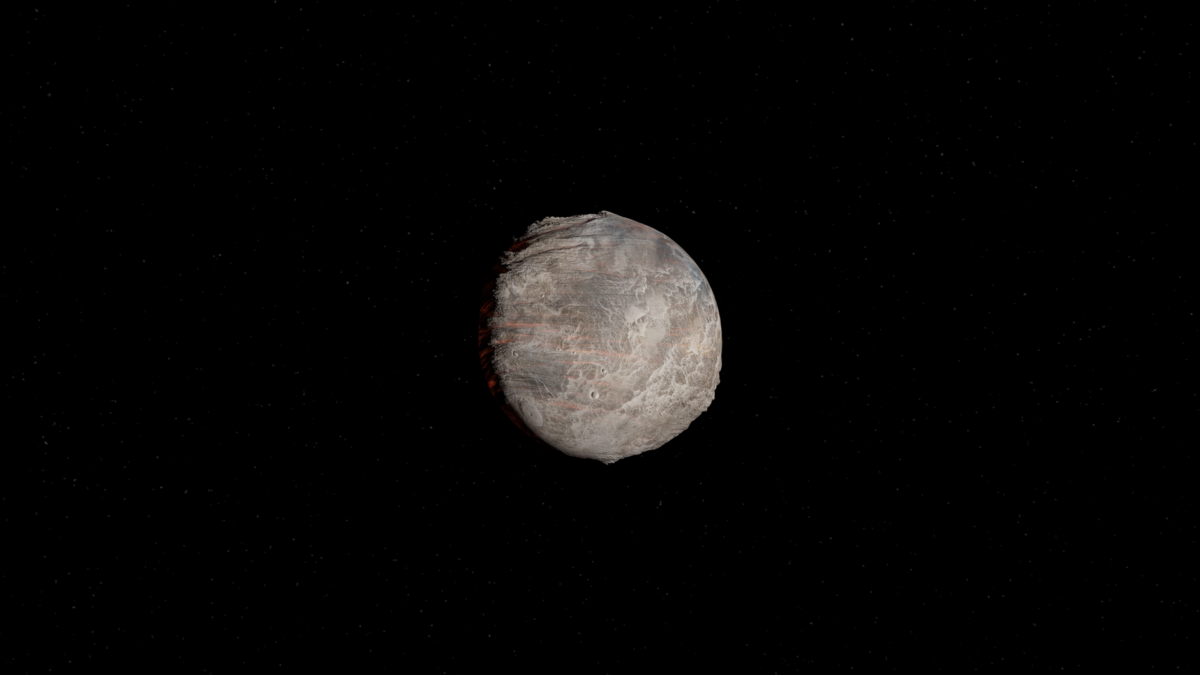
The European Space Agency’s Hera spacecraft has arrived at the asteroid pair where NASA’s DART probe crashed on purpose in 2022, according to the BBC. Hera will spend the next year studying the smaller rock, Dimorphos, which is about 150m (490ft) wide, and will also look at its larger partner, Didymos, about 730m (2,400ft) wide. The first images were due for release on Wednesday.
The asteroids pose no threat to Earth. DART was the first test of a planetary defense technique: hitting a space rock to change its path.
What DART did and what Hera still has to learn
DART struck Dimorphos at 22,000km per hour (14,000mph) and was destroyed on impact. The collision threw out a trail of debris about 10,000km (6,200 miles) long, which telescopes on Earth and in space saw. Before the hit, Dimorphos circled Didymos in 11 hours and 55 minutes. Afterward its orbit was about 33 minutes shorter, which showed that a spacecraft can shift an asteroid’s course.
Nobody has seen the result up close. “Dart exploded in the asteroid, and therefore we don’t have the information of what is its final state,” said Patrick Michel, principal investigator of Hera. The impact could have left a crater, whose size and depth would need measuring, or it may have reshaped the whole asteroid, he said. Michel compared Hera to “Inspector Columbo going back to the crash scene.”
How Hera will examine the site
Hera carries a range of instruments and two satellites about the size of shoe boxes. They will study the impact site from close range and later land on the asteroid. A central task is to measure the mass of Dimorphos, which will show how effective DART’s push was.
Simon Green, a planetary scientist on Hera’s science team, said the data would help predict what a future deflection would need. Scientists could measure an asteroid’s properties and work out what spacecraft mass, speed and lead time would make it miss Earth.
How sure is this?
The orbit change and the debris trail are measurements already made by telescopes after the 2022 impact. The state of the impact site and the mass of Dimorphos are not yet known, and those are what Hera is there to find out. The BBC report does not describe any peer-reviewed results from Hera itself, since the mission has only just arrived.
Carolyn Ernst of the Johns Hopkins Applied Physics Laboratory, who works on both missions, said the biggest asteroids have been found and none are heading for Earth. The smallest are not much of a threat because the atmosphere protects us. In the middle size range, she said, scientists do not know where all the objects are, and an impact could cause problems for humanity. Asteroids over a kilometer across could cause global devastation, the BBC reported, while medium-sized ones about the size of Dimorphos could wipe out a city.
What comes next
A space telescope called NEO Surveyor is due to launch in 2027 to track potentially hazardous asteroids. Two spacecraft are also planned for Apophis, an asteroid about 450m (1,480ft) long. Discovered in 2004, it was once thought it might hit Earth on 13 April 2029. Scientists now understand its orbit better and say it will not hit for at least 100 years. In 2029 it will pass about 32,000km (20,000 miles) above Earth’s surface.
The Apophis missions are NASA’s Osiris-Apex, which previously collected a sample from the asteroid Bennu, and Ramses, a joint project of ESA and Japan’s space agency JAXA. Readers who want to follow missions as they happen can find tips in our guide to watching NASA missions live.
Source: BBC News
Site editor: Nikita Sheikin