Meteor Showers 2027: Peak Dates, Rates and Moonlight
Which 2027 meteor showers get dark skies and which fight the Moon, using the International Meteor Organization's peak times and rates.
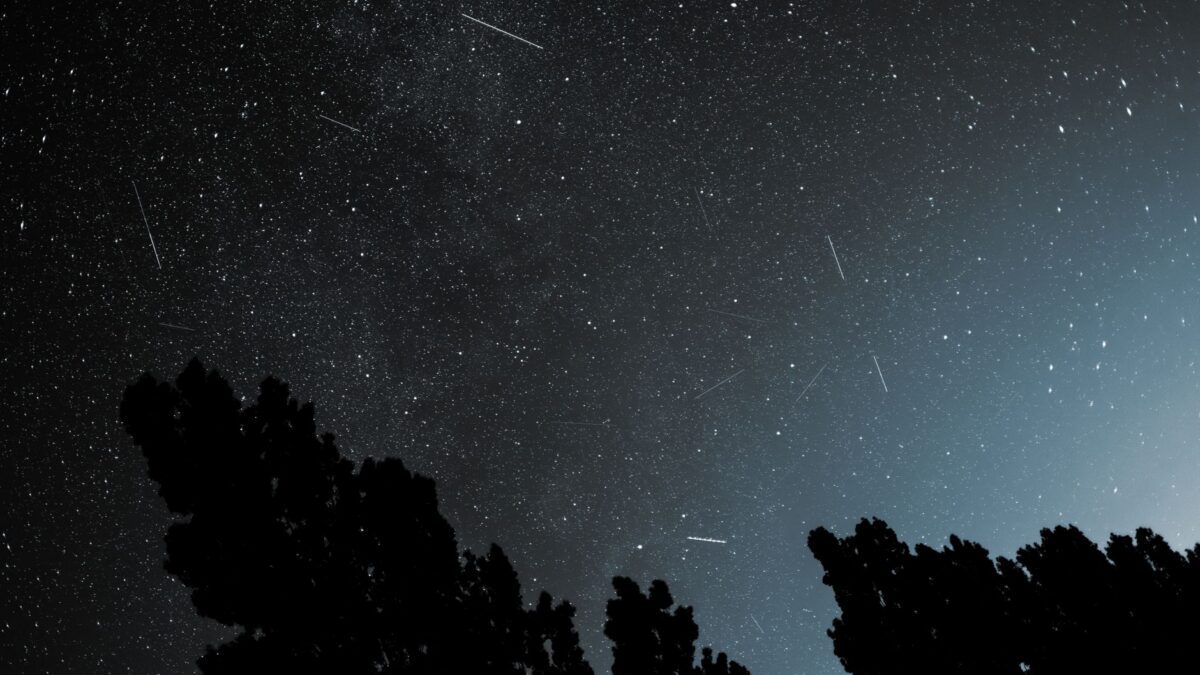
The strongest meteor showers of 2027 are the Perseids (peak around August 13, ZHR 110+), the Geminids (December 14, ZHR 150) and the Quadrantids (January 4, ZHR 80+), according to the International Meteor Organization (IMO). The Quadrantids and Ursids get dark skies, while the Perseids are partly moonlit and the Geminids peak at full Moon.
Updated November 2026. We will update this page as 2027 details are confirmed.
All peak times below come from the IMO 2027 Meteor Shower Calendar (PDF), which lists its data as correct for June 2026. Times are in UTC, with US Eastern time added for the peaks. Peak times can shift by hours, and the IMO says many maxima are not known more precisely than about a degree of solar longitude.
When are the main meteor showers in 2027?
The table lists the showers worth planning around, in calendar order. ZHR is the zenithal hourly rate: what one observer would count under a perfectly dark sky with the radiant overhead. Real counts are lower, often much lower from a suburb.
| Shower | Peak (UTC) | Peak (US Eastern) | IMO ZHR | Moon at the peak |
|---|---|---|---|---|
| Quadrantids | Jan 4, 03:25 | Jan 3, 10:25 p.m. EST | 80+ | Thin crescent, new Moon Jan 7 |
| Lyrids | Apr 23, 01:40 | Apr 22, 9:40 p.m. EDT | 18 | Bright, 3 days after full |
| Eta Aquariids | May 6, about 09:00 | about 5 a.m. EDT | 50 | New Moon May 6 |
| Southern Delta Aquariids | Jul 31 | Jul 31 (time not given) | 25 | Dark, new Moon Aug 2 |
| Perseids | Aug 13, 08:00 to 10:00 | about 4 to 6 a.m. EDT | 110+ | Gibbous, between first quarter and full |
| Aurigids | Sep 1, 15:30 | 11:30 a.m. EDT | 6 | New Moon Aug 31 |
| Draconids | Oct 9, about 07:00 | about 3 a.m. EDT | 5 | Waxing, first quarter Oct 7 |
| Orionids | Oct 22 | Oct 22 (time not given) | 20 | Waning, last quarter Oct 22 |
| Leonids | Nov 18, 06:00 | 1 a.m. EST | 15+ | Waning gibbous |
| Geminids | Dec 14, about 20:00 | about 3 p.m. EST | 150 | Full Moon Dec 13 |
| Ursids | Dec 23, 04:00 | Dec 22, 11 p.m. EST | 10 | Dark, new Moon Dec 27 |
Moon dates come from the US Naval Observatory moon phase data (new Moons Jan 7, May 6, Aug 2, Aug 31, Dec 27; full Moons Apr 20, Aug 17, Dec 13; UTC). The IMO’s own summary says the Quadrantids, Eta Aquariids, Southern Delta Aquariids, Aurigids and Ursids have favorable conditions, while the Perseids, Geminids, Draconids, Orionids, Leonids and Lyrids are affected by moonlight.
Which 2027 meteor showers are worth staying up for?
The Quadrantids and Ursids are the best-placed northern showers, because the IMO calls their Moon conditions perfect or Moon-free. The Quadrantid peak is short, and the IMO notes a timing uncertainty of about 2.5 hours, so watch the hours around 03:25 UTC on January 4. For North America, that is the late evening of January 3 into the early hours of January 4.
The Eta Aquariids favor the Southern Hemisphere and the southern US. The IMO says useful results come from places south of about 40 degrees north, and the meteors only show in the hours before dawn. With a new Moon on May 6, 2027 is a good year for them.
The Perseids are the summer favorite and the IMO sets their peak at August 13, 08:00 to 10:00 UTC. The Moon sits midway between first quarter (August 9) and full (August 17), so the Moon-free window is short and depends on your latitude. The IMO adds that mid-northern sites are best, since the radiant is reasonably high from about 10 to 11 p.m. local time.
The Geminids are the year’s strongest shower on paper, with a ZHR of 150. In 2027 they peak around 20:00 UTC on December 14, one day after the full Moon, which the IMO says severely disturbs visual observing. Expect far fewer meteors than the headline number. Bright Geminids can still cut through moonlight.
Could any 2027 shower produce extra meteors?
The IMO lists several possible enhancements, all of them model predictions and uncertain. For the Perseids, it says Earth passes through a part of the stream shifted by Jupiter, which may raise rates by 10 to 20 percent (ZHR 110 to 120). It also lists possible dust-trail encounters on August 12 at 19:18 and 23:46 UTC, with an unsettled strength. The IMO says the shift grows by 2028.
The Leonids follow a nodal peak on November 18 at 06:00 UTC. The IMO notes the activity may rise to a ZHR of 40 to 50 around November 17 at 22:00 UTC, and mentions an old 1167 trail that could add a ZHR near 50 on November 20 at about 04:20 UTC. It calls that encounter “really uncertain.”
Other items the IMO flags are weaker or far from the US. A comet 252P/LINEAR encounter between March 31 and April 2 carries an estimated ZHR of 10 to 20, and comet 15P/Finlay trails on October 23 and 24 are best seen from the Southern Hemisphere. The IMO also states that for the Draconids and the Ursids there are no predictions of enhanced rates.
What is not announced yet for 2027?
Nothing beyond the IMO’s calendar is final. The IMO notes that its working list is subject to change and points readers to its journal WGN and website for updates. Peak hours may also be revised after new model runs for the Perseids, the Leonids and the minor comet-related events. We will revise the table here if the IMO publishes new peak times.
How do you watch a 2027 meteor shower?
- Pick the night with the least moonlight within a day or two of the peak, and check the Moon phase for your date.
- Go to a dark site away from streetlights and give your eyes 20 to 30 minutes to adapt.
- Lie back and look at a wide patch of sky about 40 to 60 degrees from the radiant, rather than at the radiant itself.
- Dress for the cold and bring something to lie on. Do not use a phone screen at full brightness.
Our meteor shower calendar carries the running list from late 2026 into 2027, and our guide to finding dark skies for the Milky Way helps with site choice. The 2027 full Moon calendar shows which nights are bright. Weather, light pollution and the Moon decide what you see, and nobody can promise a count in advance.
Bottom line
For 2027, plan around the Quadrantids on January 4, the Eta Aquariids on May 6 and the Ursids on December 23 for dark skies, and treat the Perseids on August 13 as a good but partly moonlit show. The Geminids will be washed out by the December 13 full Moon. All dates here follow the IMO calendar as of November 2026.
FAQ
What is the best meteor shower in 2027?
The Perseids have the highest rate of the easy-to-see showers, with an IMO ZHR of 110 or more at the August 13 peak, though the Moon is gibbous. The Quadrantids, with a ZHR of 80 or more and a thin crescent Moon, may give the cleaner sky.
Will the Moon spoil the 2027 Geminids?
Yes, at least partly. The full Moon falls on December 13, and the IMO says the Geminid night is severely disturbed. You will still see some bright meteors, but far below the ZHR of 150.
What does ZHR mean?
ZHR is the number of meteors an observer would see per hour under a perfect, dark sky with the radiant overhead, as the IMO defines it. Actual counts depend on your sky, the Moon and the radiant height, and are usually lower.
Site editor: Nikita Sheikin