NASA Shortens Reactor Boom on SR-1 Freedom, Its 2028 Nuclear Mars Craft
NASA finished a design review for SR-1 Freedom, a nuclear electric spacecraft aimed at a 2028 launch to Mars with three helicopters. Here is what changed.
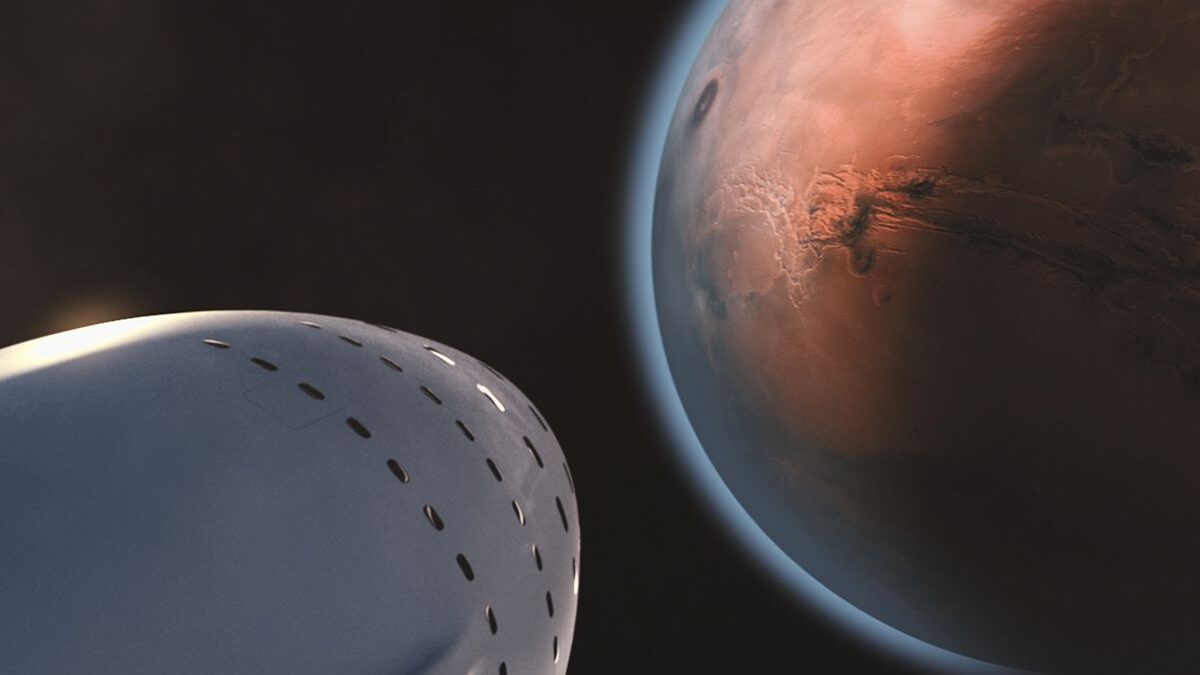
NASA has fixed the main design choices for SR-1 Freedom, a spacecraft meant to fly the first nuclear electric propulsion system in deep space. The agency said it completed a major mission design review in October and is targeting a launch in late 2028. The craft will carry SkyFall, a capsule holding three next-generation helicopters, to Mars.
Nuclear electric propulsion uses a fission reactor (a device that splits atoms to make heat) to generate electricity, which then powers the spacecraft’s engines. SR-1 will use both nuclear and solar power, according to NASA.
What the design review changed
Experts from NASA, the U.S. Department of Energy and industry met at NASA’s Glenn Research Center in Cleveland for the review. NASA said it moved the mission from an early concept toward a defined spacecraft design.
The boom, which separates the reactor from the main body of the spacecraft (called the Power and Propulsion Element), will be shorter than the one in early illustrations. NASA said this reduces weight and simplifies assembly. NASA and DOE experts also concluded that better shielding and design let the reactor sit closer to the rest of the craft while still protecting the electronics and the SkyFall payload from radiation.
The communications system is also being updated. SR-1 Freedom will carry larger X-band antenna dishes to send data back to Earth across deep space.
Several choices remain open. Teams are still evaluating the number of radiator panels, the output power of the nuclear power module and how long the reactor will run.
Heat rejection contract
NASA awarded a $39.3 million contract to the Johns Hopkins University Applied Physics Laboratory to develop the system that sheds excess heat from the nuclear power module. The lab will design, build, test and evaluate the system and produce flight hardware. It is working with Advanced Cooling Technologies, which will supply heat pipe and composite radiator technology. The award was made under the Aerospace Research, Development, and Engineering Support II contract.
How the flight is planned
After the spacecraft leaves Earth orbit, it will switch on the reactor and raise its power gradually. The reactor will run for an initial period, then shut down while the craft collects performance data and sends it to Earth. Solar arrays will power the cruise to Mars.
Once SkyFall is delivered to Martian orbit, the spacecraft will restart the reactor to gather more data on how it performs in deep space. The helicopters are intended to study Martian geology and climate history, explore new terrain and search for signs of subsurface ice. For background on current spacecraft at the planet, see our guide to NASA’s Mars missions.
NASA says future spacecraft and surface operations will need much more power than current systems supply, especially where sunlight is limited or absent. The agency describes SR-1 as a step toward surface power for its planned Moon Base.
How sure is this?
This is a program update from NASA, not a peer-reviewed study, and no flight hardware has flown. The concept was introduced by NASA Administrator Jared Isaacman in March at the agency’s Ignition event, and the design has changed since then. Reactor power levels, operating time and radiator count are undecided. The 2028 date is a target, and NASA said further work will focus on reducing risk, simplifying the design and staying on schedule.
Steve Sinacore, the SR-1 Freedom program director, called the mission “the first freight run on the railroad of the solar system.”
Source: NASA
Site editor: Nikita Sheikin