47-Million-Year-Old Owl Fossil Died With a Cockroach in Its Stomach
A fledgling owl fossil from Germany's Messel Pit suggests owls hunted by day 47 million years ago and turned nocturnal later, a Current Biology study says.
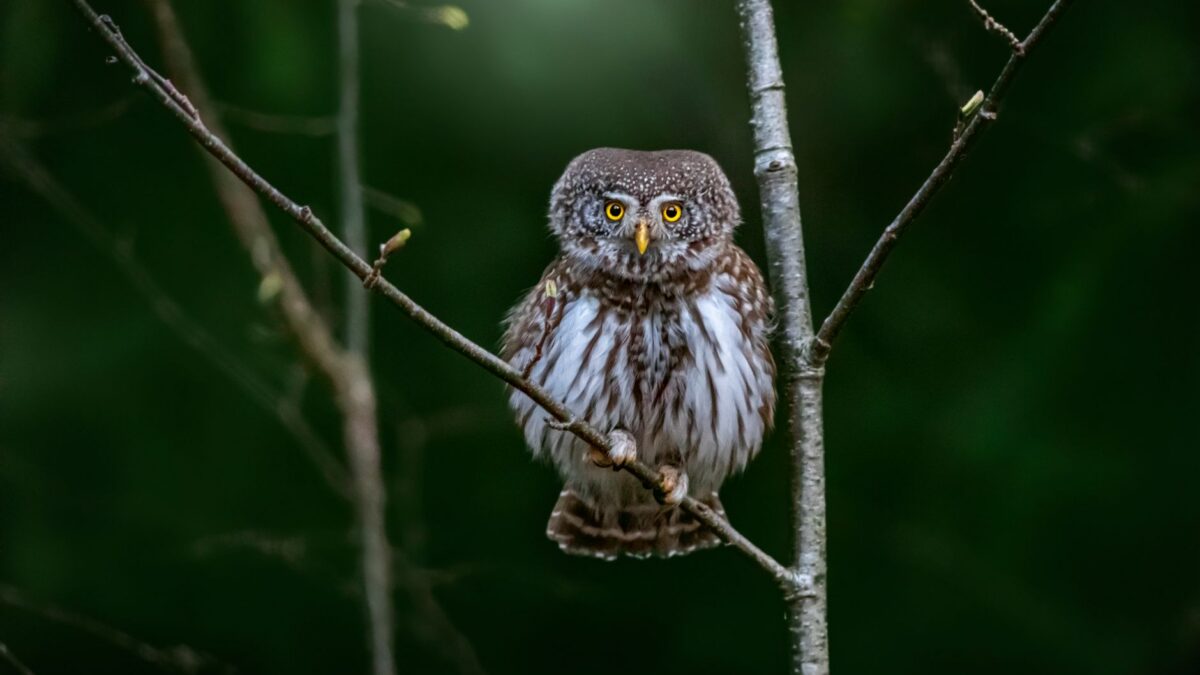
A young owl that died 47 million years ago in what is now Germany still has its last meal in its stomach: a shiny, greenish-blue cockroach. Researchers say the insect and the bird’s bones suggest this owl hunted in daylight, which would mean owls switched to a night lifestyle later than 47 million years ago.
The study, published Nov. 2 in the journal Current Biology, describes a new species named Masillastrix blattophaga. Its lead author is Gerald Mayr, a paleontologist who heads ornithology at the Senckenberg Research Institute and the Natural History Museum Frankfurt, Live Science reported.
A nearly complete fledgling from the Messel Pit
The fossil was dug up in 2025 at the Messel Pit, an ancient lake that was once ringed by forest. The site is now the richest fossil site in the world for understanding life in the Eocene epoch, which ran from 56 million to 34 million years ago. The owl measured less than 5 inches (12 centimeters) long. Its skull is missing, but the rest of the body survived in such detail that the team could see what was in its stomach.
To identify that meal, the researchers had help from a second fossil. A cockroach identical to the one inside the owl turned up in sediments just a few feet from the bird, and that better-preserved specimen let the team match the two.
How a cockroach points to daytime hunting
Iridescent coloring in insects tends to go with daytime activity, so a bright, shimmering cockroach suggests the owl caught its prey when there was light to see it. The researchers point out that the owl could have eaten the insect at dawn or dusk, which leaves room for doubt.
Other clues lean toward a day-active bird, according to the study. The look of some feathers is one. The upper wing bones, called humeri, are another. In the Messel owl they are stout. Modern nocturnal owls have slim humeri and fly almost silently, Mayr said, while daytime fliers gain little from silence because there is enough light to spot predators. He and his colleagues think humerus shape tracks when an owl is active, though that idea is still a hypothesis.
Mayr also said a consensus already holds that owls came from a day-active ancestor. Some early owl fossils have head-rotation structures like those of daytime raptors and bony ridges above the eyes that may have shaded them from the sun. “There exists a consensus that owls must have evolved from a diurnal ancestor,” he told Live Science.
What this means for the owl family tree
If the wing-bone idea is right, the earliest known nocturnal owls lived about 35 million years ago, in the Late Eocene. Owl fossils from then on look much like modern owls, with long humeri. The oldest owl in the fossil record, Ogygoptynx wetmorei, dates to around 60 million years ago.
That puts the switch to night hunting somewhere between 47 million and 35 million years ago. The authors call this the best current estimate and note that the owl fossil record is very sparse, with many species known from only a few isolated bones.
Why owls went nocturnal is still unknown
The new dates make the older explanations harder to accept. One theory held that owls moved to the night to avoid competing with daytime birds of prey. Another said they followed a boom in nocturnal mammals. Studies show both groups expanded much later, around 20 million to 25 million years ago, so neither gives a clear reason for owls to change habits by 35 million years ago.
Mayr said narrowing the time frame may eventually help solve that puzzle, and that each new fossil can still overturn settled ideas. “We still know so little about the early evolution of modern birds,” he said. The paper’s DOI is 10.1016/j.cub.2026.09.079.
Source: Live Science